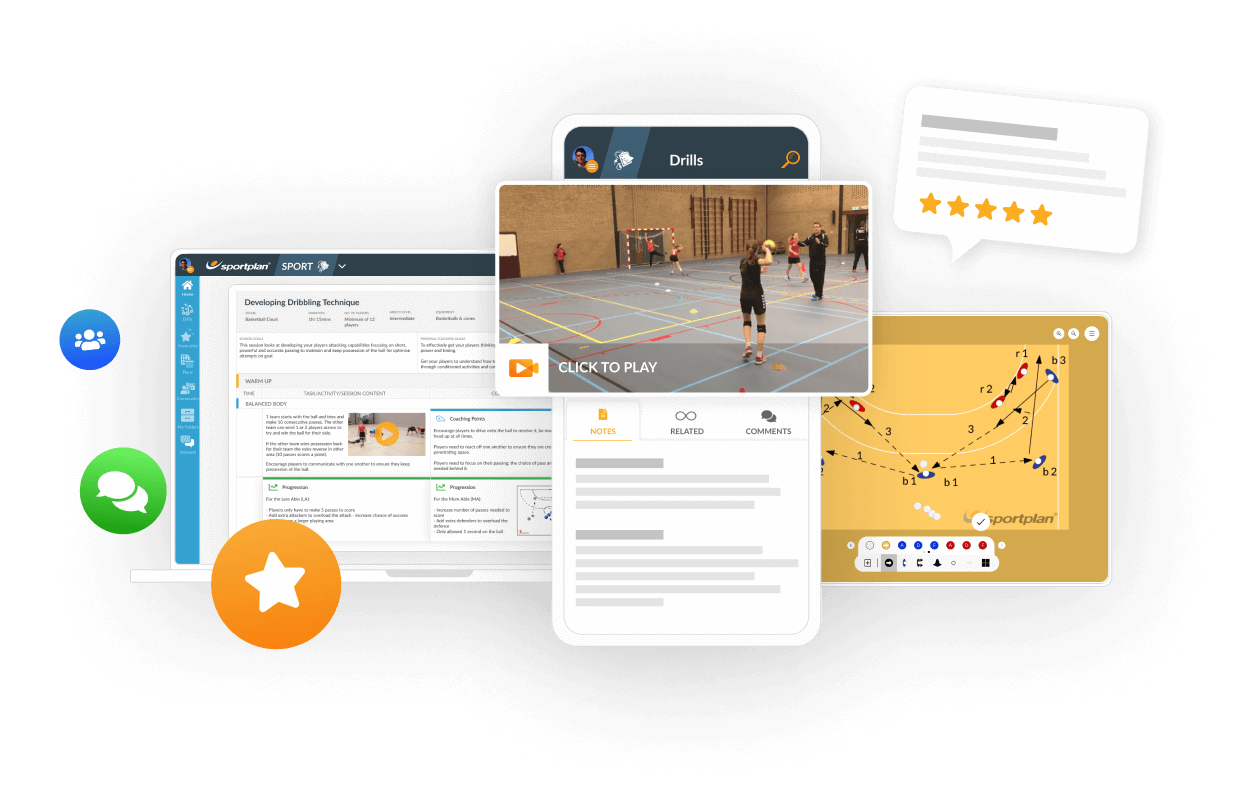
In this move the winger start with the ball and passes the keeper who returns the pass to the center back.
At this point the wing back and the winger both make a forward run. Once the wing back receives the pass from the center back the defender is then free to run forward to put pressure on the wing back.
The wing back must read the situation and decide on the best way to progress the attack. They can either pass the ball to the winger who has made a looping run behind them or they can carry the ball forward themselves for the shot on goal.
Drill continues until a shot/interception has been made.
This exercise is a test of your players' attacking decision making. They will need to read the situation to pick out the best option.
If the defender is committed to marking the wing back then the best option will be the pass to the winger in space. However, if the defender is not committing your wing back should capitalise on this indecision and run into the space.
Handball demands explosive power, repeated sprint ability, and the strength to compete physically for 60 minutes. Sport-specific conditioning develops the athletic qualities that underpin elite performance.
Handball matches are won and lost in critical moments. Mental toughness determines who executes under pressure, who recovers from setbacks, and who maintains concentration throughout 60 intense minutes.
Deception is the great equaliser in handball. Smaller, less powerful players can beat defenders through feints and misdirection. Mastering these skills creates breakthrough opportunities against even the most organised defences.