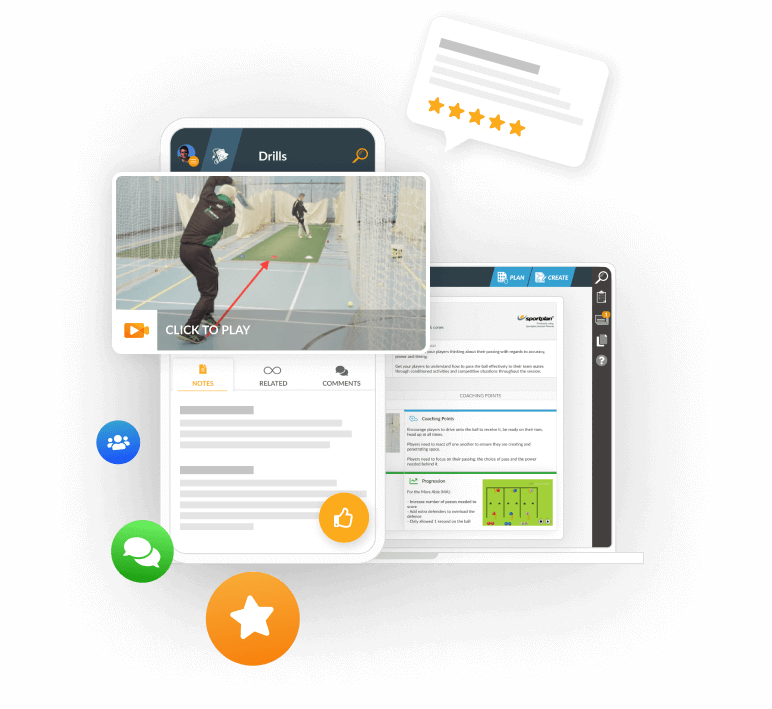
Split the group so there is between 3-6 people in each net (including thrower or use coach). The thrower stands at the stumps whilst the rest queue up to bat at the other end. Two cones are placed to provide the target to drive the ball through. Each batsmen gets 2-3 consecutive balls then must go to the back of the queue. If the ball is left they may have another go. Once the batsmen drives the ball through the cones he must run to the stumps and back.
Feeding: Each batsmen receives 24 balls and must be from a kneeling or standing position (depending on age and height). The ball should be short of a length, away from the batsmen, bouncing between knee and waste height.
Competition: To score 30 runs without getting out, with any shot played into the air being out. Competitions can also be set up between groups to see which group of batsmen can get the highest score with the thrower being from an opposition group.
Pre-season is the best time to rebuild and refine batting technique without the pressure of match results. This article covers the fundamental batting positions that underpin consistent run-scoring, provides a progressive session framework from shadow batting to live bowling, and highlights the common pre-season mistakes that coaches should avoid.
Fielding placement in limited overs cricket is a tactical chess match that changes with every phase of the innings. This article breaks down how captains should set fields during the powerplay, middle overs, and death overs, and provides practical coaching sessions for developing game-aware fielders who anticipate rather than react.
With IPL 2026 starting this month, we break down the art of powerplay bowling - field placement, line and length, and how to turn the fielding restrictions to your advantage.