Rounders Is the Easy One to Start
Of all the team sports you could set up from scratch, rounders is about the gentlest. You do not need a clubhouse, a floodlit pitch or thousands of pounds of equipment. You need a flat patch of grass, a couple of bats, a few balls, four posts, a backstop who does not mind a bruised hand - and some people who fancy a game. Plenty of clubs begin exactly like that, as a group of friends, a workplace team or a few parents at the school gate who decided to make it regular.
That simplicity is the whole appeal, and this guide is written to protect it. The aim is not to turn your friendly summer side into a bureaucracy. It is to walk you through the handful of things that genuinely matter when you go from "a kickabout" to "a club" - so that you are properly insured, your money is safe, and, above all, any children who play are safe. Treat the list below as a menu, not a mandate. Take what your club actually needs and leave the rest until you grow into it.
The Start-a-Rounders-Club Checklist
Here is the full sequence in one place. Some of it is a single afternoon's work; some of it only applies once juniors are involved. Work down it roughly in order, skipping anything that does not apply to your set-up yet.
Your Club Start-Up Checklist
- 1. Gather a few players and an organising group. You need a core of willing players and two or three people to share the jobs - fixtures, money and, if children play, welfare. It does not have to be a formal committee on day one.
- 2. Find a space and the minimum kit. A flat field, park or school playing field, plus bats, balls and four posts. That is genuinely enough to start.
- 3. Open a club bank account. Keep the club's money separate from anyone's personal account. Two named signatories is the simple, sensible default.
- 4. Affiliate with Rounders England. Club membership typically brings insurance, official rules and resources, coaching and officiating pathways, and access to affiliated leagues and competitions.
- 5. Sort public liability insurance. Often bundled with affiliation - check exactly what is and is not covered before you rely on it.
- 6. Put safeguarding in place where juniors are involved. A Welfare Officer, DBS checks for coaches in regulated activity, a safeguarding policy and codes of conduct. Non-negotiable wherever children play.
- 7. Set up membership and communication. A clean way to register players, capture emergency contacts and consents, and message everyone - without subs and parents getting lost in a noisy group chat.
- 8. Recruit players. Social media, local Facebook groups, the school gate, workplace noticeboards and word of mouth. Rounders sells itself once people turn up.
- 9. Join a local league or festival circuit. Summer leagues and one-day festivals give you fixtures, a calendar and a reason to keep training.
- 10. Keep the admin proportionate. Add a constitution, committee roles and policies as you grow - not before you need them.
1. Your Organising Group (and Later, a Committee)
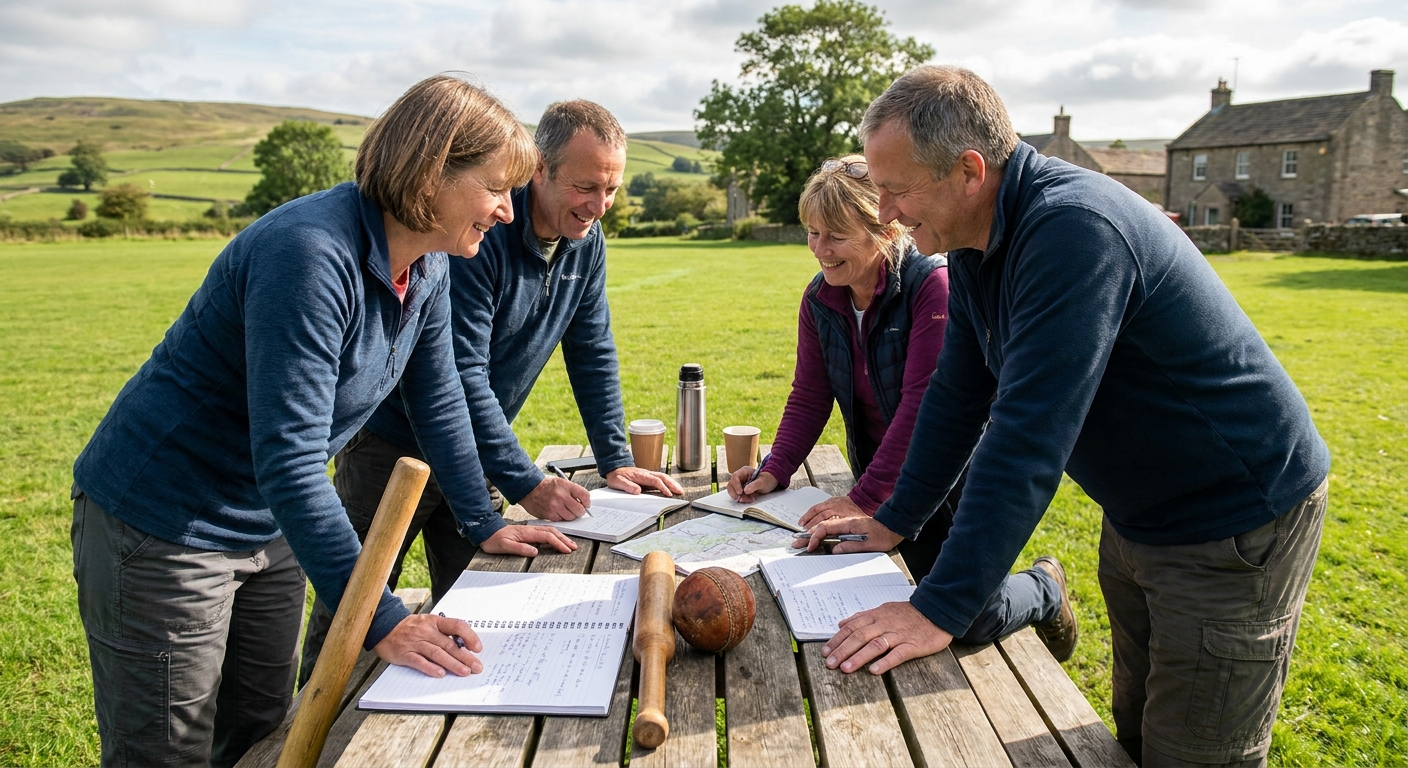
Every club, however casual, needs more than one person holding it together - otherwise it collapses the week that person goes on holiday. You do not need a formal committee straight away. To begin with, just name a few people to share the obvious jobs: someone to arrange fixtures and bookings, someone to look after the money, and - the moment children are involved - a Welfare Officer.
As the club settles, a light committee with a chair, a treasurer and a secretary, plus a one-page constitution, makes life much easier. It spreads the load, it is usually required for Rounders England affiliation and for opening a proper club bank account, and it is what most grant funders want to see. Keep it as simple as your club genuinely is; a four-team community club needs more structure than a six-a-side workplace side, and that is fine.
2. A Space to Play and the Minimum Kit
Rounders is wonderfully cheap to equip. The essentials are bats, balls, and four posts to mark the pitch - plus a backstop willing to crouch behind the batter. For a space, a flat field, a public park or a hired school playing field all work; you only need enough room to run the posts safely and keep fielders clear of each other.
Buy a little spare - a couple of extra balls and at least two bats so play does not stop - but resist kitting out like a county side. The bowler bowls underarm, the equipment list is short, and you can always add bibs, cones and a scorebook later. If you are hiring a pitch or a hall for wet weather, factor that into your sums early, because hire is usually the biggest running cost a small rounders club faces.
3. A Bank Account and the Money
The day you start collecting subs or session fees, get the club's money out of anyone's personal account. A dedicated club or community bank account - with two named signatories - keeps things transparent, protects your volunteers, and makes the treasurer's job honest and simple. Most banks offer free community or treasurer accounts for small clubs.
Keep the bookkeeping light but real: record what comes in and what goes out, so anyone can see the club is run cleanly. This matters more than it sounds. Clear accounts build trust with members, are essential for affiliation and grants, and save a great deal of awkwardness at the end of the season. Our guide to setting rounders club and team fees covers how to pitch subs and session charges so they cover your costs without putting people off.
4. Affiliating with Rounders England
Rounders England is the national governing body for the sport, and affiliating your club is the step that turns a friendly side into a recognised one. You do not legally have to join - casual and workplace teams play happily without it - but once you are a settled club it is usually worth it.
Membership typically gives you access to insurance cover, the official rules and playing resources, coaching and officiating qualifications and pathways, and entry into affiliated leagues, festivals and competitions. It also connects you to a wider network and to safeguarding guidance you will want if you run junior rounders. Check the current membership tiers and exactly what each includes on the Rounders England website before you commit, as the detail changes from season to season. If your ambitions are purely a relaxed park game, you can skip affiliation; if you want league or festival rounders and proper cover, it is the sensible route.
5. Public Liability Insurance
If you organise sport where people - and balls - are flying about, you need public liability insurance in case someone is hurt or property is damaged. For many clubs this comes bundled with Rounders England affiliation, which is part of what makes affiliating attractive. Do not assume, though: read what the policy actually covers, what the limits are, and whether it extends to the venues you use and the activities you run. If anything is unclear, ask before your first session rather than after an incident.
6. Safeguarding: Get It Right Where Children Play
This is the one part of the checklist where "proportionate" does not mean "relaxed". If children play in your club - junior teams, mixed family sessions, a school-linked side - you have a duty to keep them safe, and that duty is taken seriously by Rounders England, by leagues, and by the law. A small, casual junior club still needs the basics in place from day one.
The Junior Safeguarding Essentials
- A named Welfare Officer. One identified person responsible for safeguarding, who members and parents know how to contact, and who knows how to act on a concern.
- DBS checks. Anyone coaching children in regulated activity needs an enhanced DBS check with the children's barred-list check, obtained through the appropriate route for your club.
- A safeguarding policy. A clear, written policy setting out how the club protects children and what to do if there is a concern, in line with Rounders England and NSPCC Child Protection in Sport Unit guidance.
- Codes of conduct. Short, plain expectations for coaches, players, and parents or carers - so everyone knows the standard the club holds.
- Consents and emergency contacts. For every junior: an emergency contact, medical information, and photo and communication consents, captured and stored properly under GDPR.
- Child-safe communication. Make sure the way adults message juniors is appropriate and visible to a parent or guardian - never a private, unmonitored adult-to-child channel.
None of this is meant to scare a small volunteer-run club off having juniors. It is genuinely manageable, and the guidance from Rounders England and the NSPCC's Child Protection in Sport Unit walks you through it. Get the Welfare Officer, the DBS checks and the policy in place, treat children's data and contact details with care, and you have the foundations right. If your club is adults only, most of this does not apply - but the moment a child joins, it does.
7. Registration and Communication: One Clean System
Once you have more than a handful of players, the admin of who is registered, who has paid, who is available and how you reach everyone quickly becomes the real work. You can absolutely run a casual single team on a group chat and a shared spreadsheet - and for a relaxed park side, that is fine. But the two jobs that catch small clubs out are capturing player details properly and keeping junior communication safe.
A simple club app or membership platform takes that off your plate: online registration that captures emergency contacts, medical notes and consents in one place under GDPR; subs you can collect without chasing; and messaging that keeps important notices out of a 200-message group chat. One option worth a look here is Teamo, which handles online member registration with safeguarding built in - a quick honest aside that Teamo comes from the Sportplan team behind this site, so weigh that accordingly. It is mobile-first (most members use it on their phone), captures emergency contacts and consents properly under GDPR, and offers child-safe communication with guardian visibility rather than private adult-to-child chats. On the safeguarding point specifically, it was nominated best safeguarding app by England Athletics' Head of Safeguarding - that recognition was for England Athletics, a different sport's governing body, so we are stating it accurately rather than implying any rounders endorsement. Your Rounders England membership and affiliation are a separate matter and remain so; an app handles your day-to-day registration and communication, not your governing-body record.
8. Recruiting Players
Rounders has a real advantage when it comes to recruitment: almost everyone played it at school, so the barrier to turning up is low. Spread the word through local Facebook groups, your social media, the school gate, workplace noticeboards and plain word of mouth. A friendly "come and try" session with spare bats for anyone who fancies a go converts curious onlookers into regulars faster than any poster. Once you have a steady group, the how to run a rounders team guide covers turning a collection of players into an organised side across a season.
9. Joining a League or Festival Circuit
Nothing keeps a club training like having fixtures in the diary. Most areas have summer rounders leagues and one-day festivals - some affiliated, some run by local councils or sports partnerships - and joining one gives your season shape and your players something to aim at. Rounders England and your local network are the place to find affiliated competitions; a quick search for your county or town plus "rounders league" usually turns up the casual ones too. Festivals in particular are perfect for a new club: low commitment, a full day of games, and a great way to gel.
10. A Few Drills to Get You Going
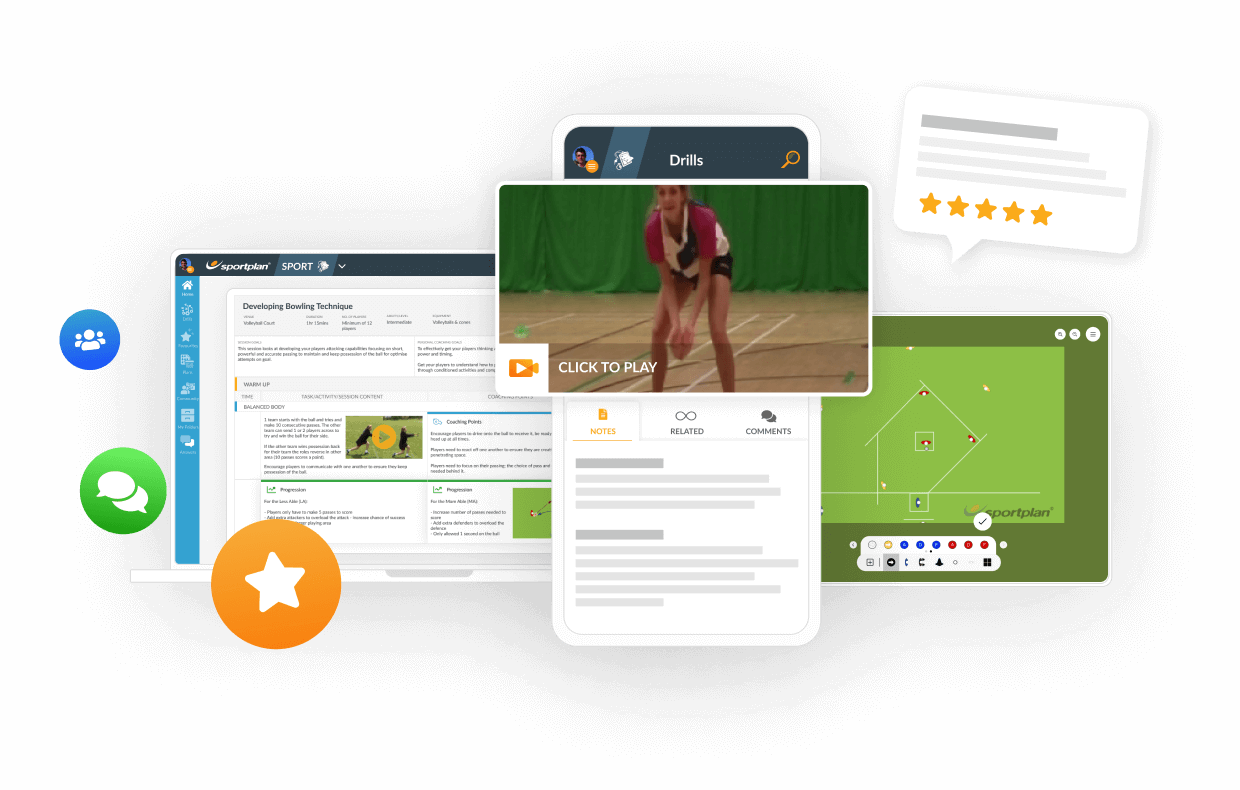
Once the admin is sorted, you actually have to coach a session - and rounders sessions are easy to make fun. A couple of simple, high-energy practices to start with:
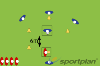
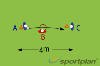
Browse the full Rounders drills library for hundreds more practices sorted by skill, from bowling and backstop work to ground fielding and conditioned games.
Keep It Proportionate
The honest summary is this: starting a rounders club is far less daunting than it first looks. Get the basics in place - a few organising volunteers, a space, the minimum kit, a bank account, affiliation and insurance - and you have a real club. Get registration and communication onto one clean system and the weekly admin stops eating your evenings. And wherever children play, take safeguarding seriously: a Welfare Officer, DBS checks, a policy and codes of conduct, every time. Beyond that, add structure only as fast as the club grows into it. Most rounders clubs are small, friendly and run by a couple of dedicated volunteers - and the sport is all the better for it.
When you are ready to keep parents and players informed without drowning in messages, our guide to club and school communication covers getting your notices, fixtures and reminders to the right people. And to set fair subs that cover your costs, the rounders club and team fees guide walks through the numbers.
Frequently Asked Questions
How do I start a rounders club?
Start small and keep it proportionate. Find a handful of players and a space to play, gather a small organising group to share the jobs, and open a separate bank account so the money is not in anyone's personal name. Affiliate with Rounders England for insurance, league access and resources, sort public liability insurance, and pick up the minimum kit - bats, balls and posts. If juniors are involved, put basic safeguarding in place from the start: a Welfare Officer, DBS checks for anyone coaching in regulated activity, a short safeguarding policy and codes of conduct. Then recruit players and find a local summer league or festival to play in.
Do I need to join Rounders England?
You do not legally need to, and plenty of casual and workplace teams play happily without it. But affiliating with Rounders England is usually worth it once you are a settled club: membership typically gives you access to insurance cover, official rules and resources, coaching and officiating pathways, and entry into affiliated leagues and competitions. If you only ever want a relaxed kickabout in the park, you can skip it; if you want to play league or festival rounders and protect yourself with proper cover, affiliation makes sense.
Do you need a DBS to coach junior rounders?
If you coach children in what the law calls regulated activity - broadly, coaching juniors regularly and unsupervised - then yes, an enhanced DBS check (with the children's barred-list check) is expected and is part of good safeguarding practice. For purely adult teams it is not generally required. A sensible club appoints a Welfare Officer, has its coaches DBS-checked through the appropriate route, adopts a safeguarding policy and follows Rounders England and NSPCC Child Protection in Sport Unit guidance. When in doubt, check your specific situation rather than guess.
How much does it cost to set up a rounders club?
Less than most sports. The unavoidable costs are usually Rounders England affiliation, public liability insurance (often bundled with affiliation), and basic kit - bats, balls and posts - which can be a modest one-off outlay. After that it is pitch or hall hire if your space is not free, and DBS check fees if you have juniors. Many small clubs cover the lot from a low membership sub or a small charge per session. You do not need a clubhouse or expensive equipment to start; a field, a few players and the basics will do.
Do I need a committee to run a rounders club?
Not a formal one to begin with, but you do need a few people sharing the jobs. Even the smallest club benefits from naming someone to organise fixtures, someone to look after the money, and - if children play - a Welfare Officer. As you grow, a simple committee with a chair, treasurer and secretary, plus a basic constitution, makes the club easier to run, helps with affiliation and grant applications, and stops everything resting on one volunteer. Keep it as light as your club actually needs.