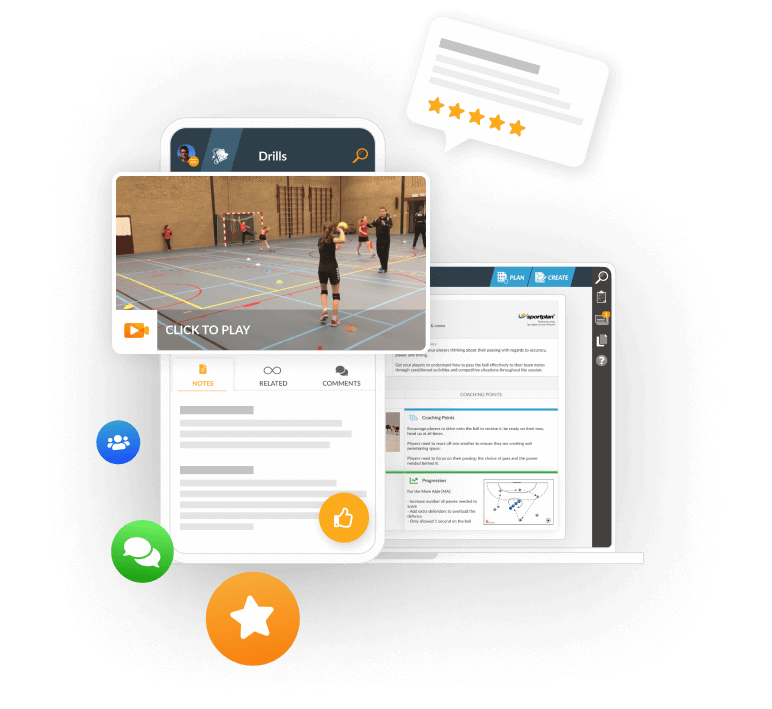
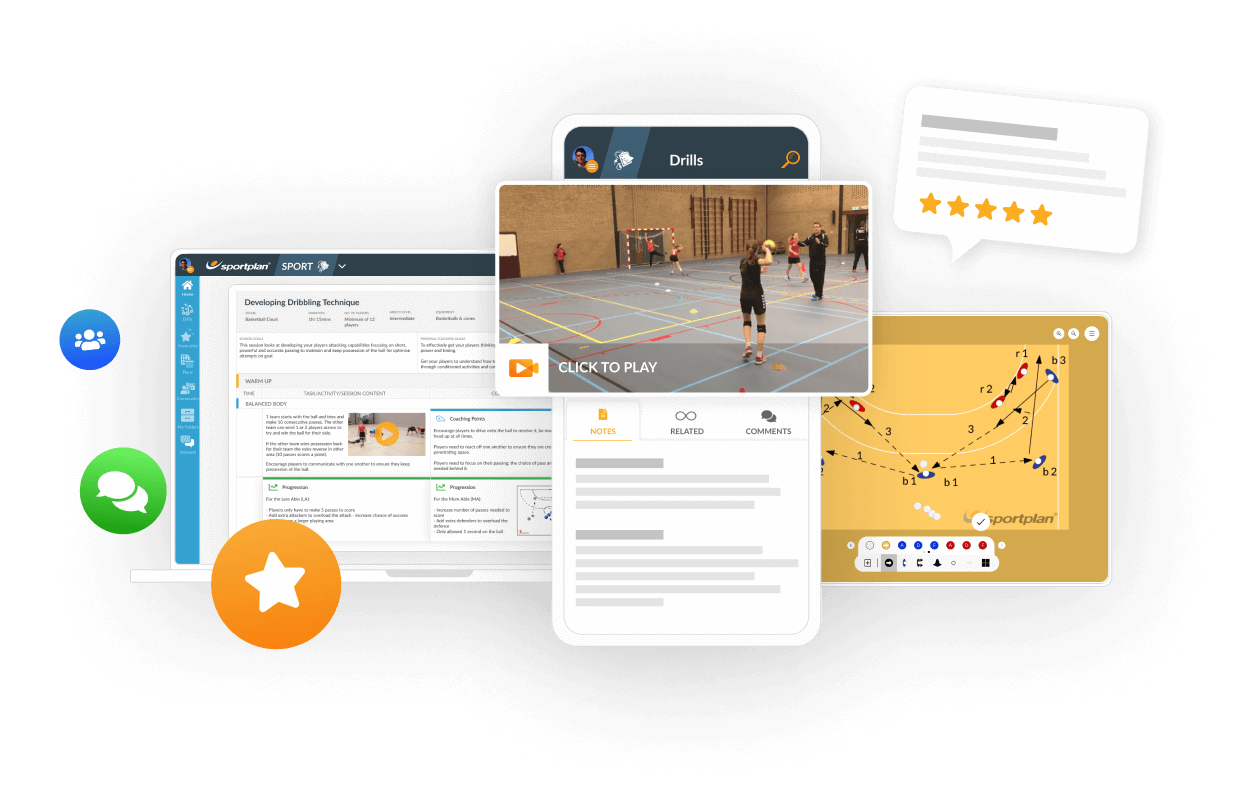
Player 1 (the feeder) stands in the middle of the court and passes the ball to player 3.
Player 3 then tries to break through the defence and defender 1 tries to prevent the shot on goal.
Straight away after the attack has finished (with an interception or a shot on goal) the feeder passes to player 2 who also now tries to break through.
Repeat this four time (8 attacking moves in total) and then rotate positions and give the defending players the chance to catch their breath.
This is a tiring defensive drill that will test your defender's ability to run out and block the attacker in a 1v1 duel.
Key Points - defending in a personal duel:
- Arms slightly bent and slightly in front of you
- Prevent attackers from coming between your arms and move sidewards along with your attacker and stay between goal and attacker
- Pressure the attacker's movements
- Never jump, keep close contact with the floor and lots of small, quick steps to shadow the attacker!
Wing players operate in the most demanding shooting position on a handball court, where acute angles and a close goalkeeper make finishing a specialist skill. This article breaks down the technique, decision-making, and training progressions that coaches need to develop elite wing finishing.
The transition from attack to defence is the most vulnerable moment in handball. This article examines the 3-second recovery principle, the specific roles players must adopt during transition, and the training scenarios that build a team's ability to recover defensive shape under pressure.
Handball demands explosive power, repeated sprint ability, and the strength to compete physically for 60 minutes. Sport-specific conditioning develops the athletic qualities that underpin elite performance.