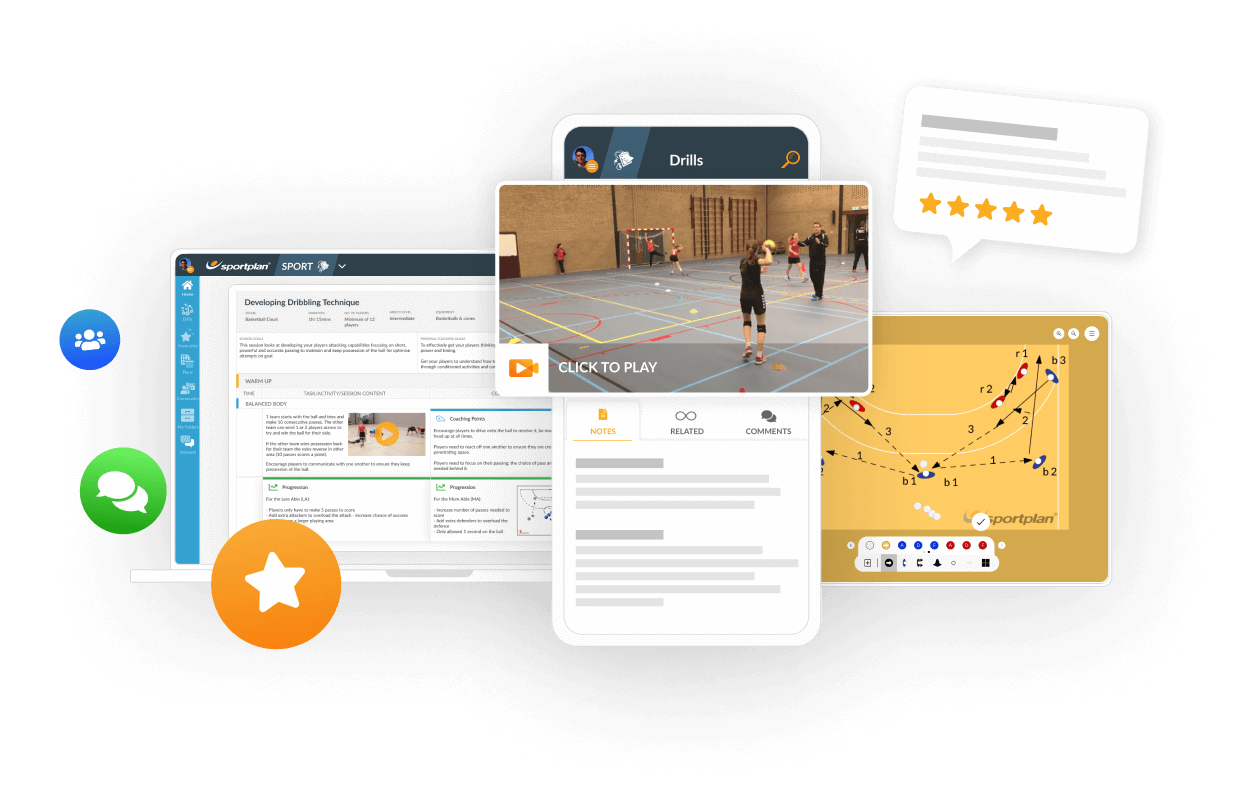
1. Pass, shot into goal, pass into the goal area by trainer.
2. Goalkeeper 1 (face to the goal) receives the ball, picks up de ball, gets it out of the goal and passes to one of the attackers 1 or 2 in the area close to his goal.
3. Attackers 1 and 2 pass the ball to each other (3 passes 5 passes, bounce pass, 1 pass) and then to one of the attackers 3-4-5, on the other half of the court. After every action, one attacker changes positions with 6.
4. They pass to eachother while defenders C-D and E try to prevent the goal shot. (as quickly as possible to score a goal, they set up an attack)
5. When a goal is scored, goalkeeper 2 gets the ball and passes to one of the attackers who quickly goes to the throw off point. After every action a defender changes position with E.
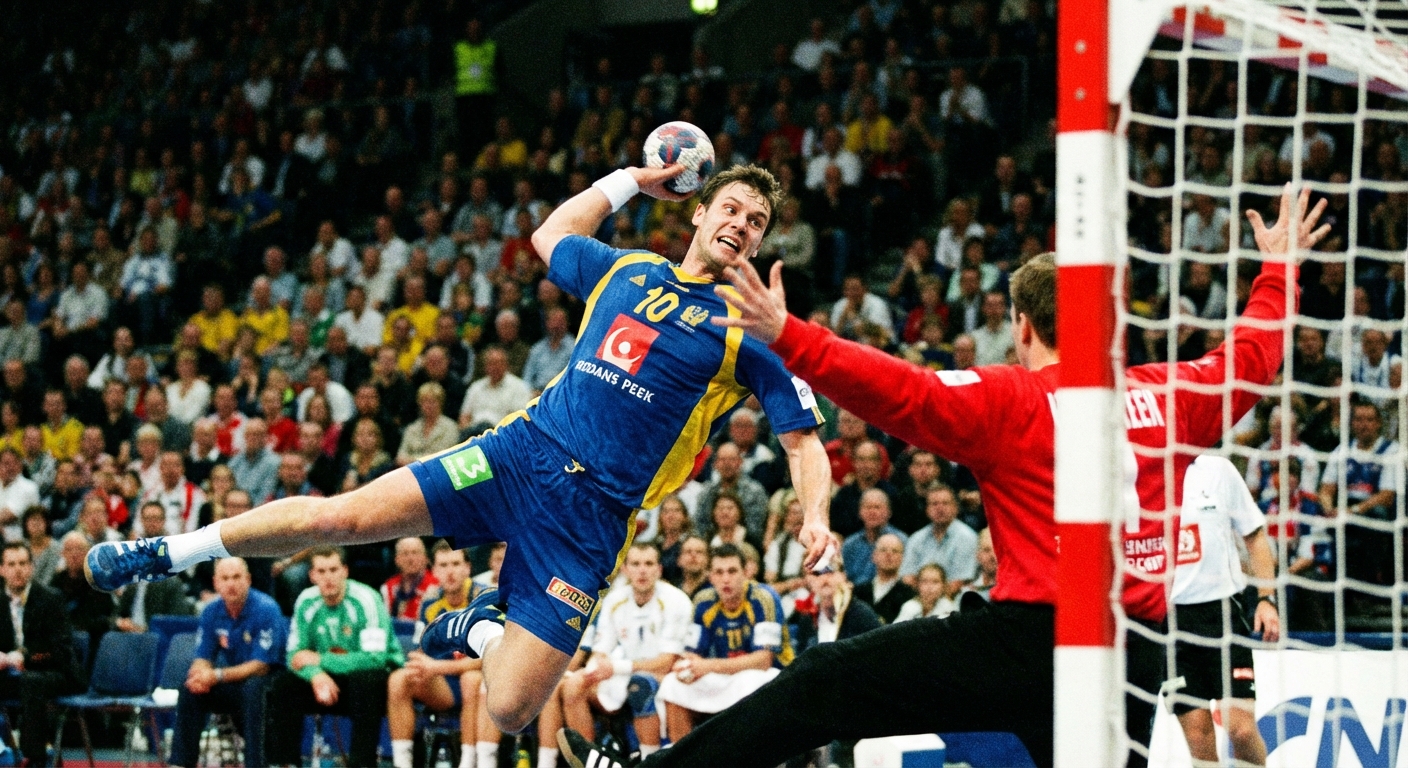
Wing players operate in the most demanding shooting position on a handball court, where acute angles and a close goalkeeper make finishing a specialist skill. This article breaks down the technique, decision-making, and training progressions that coaches need to develop elite wing finishing.
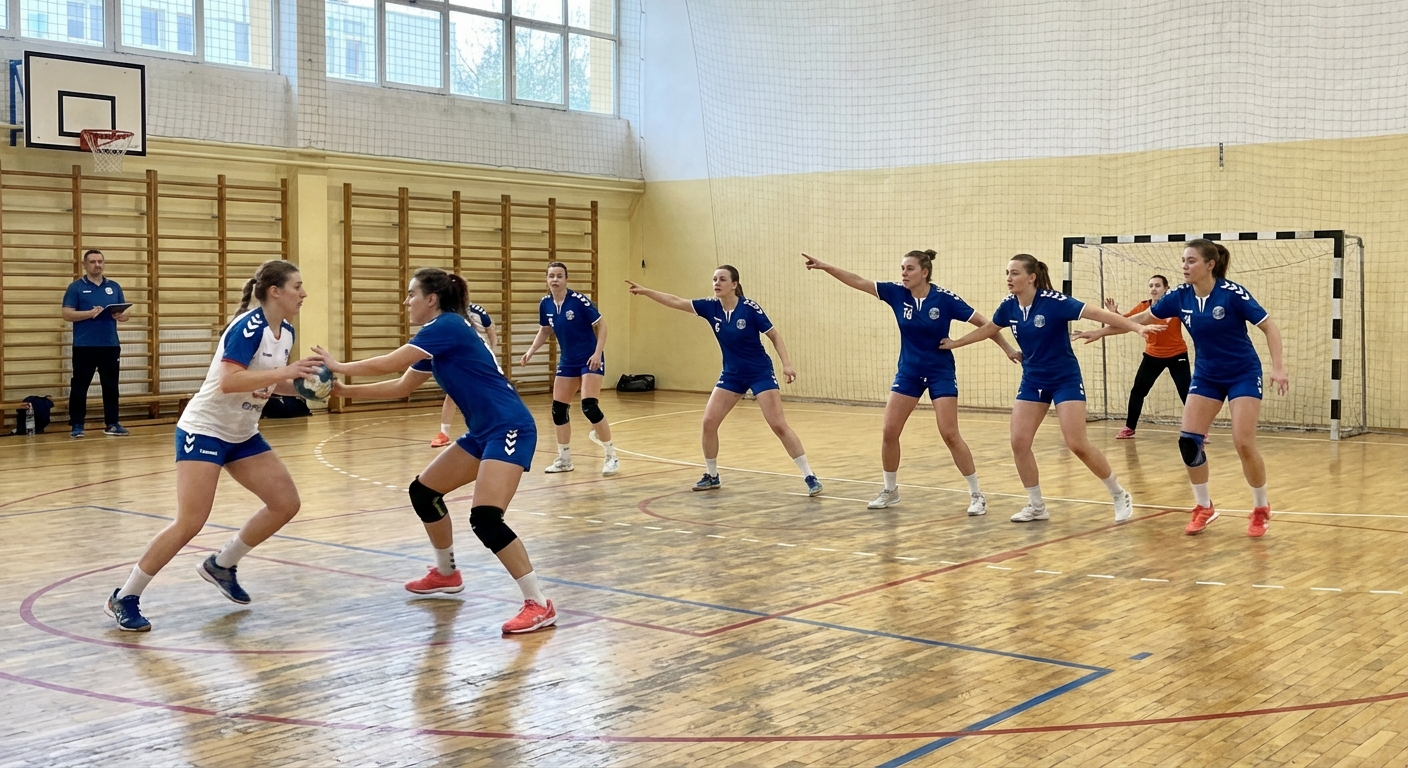
The transition from attack to defence is the most vulnerable moment in handball. This article examines the 3-second recovery principle, the specific roles players must adopt during transition, and the training scenarios that build a team's ability to recover defensive shape under pressure.
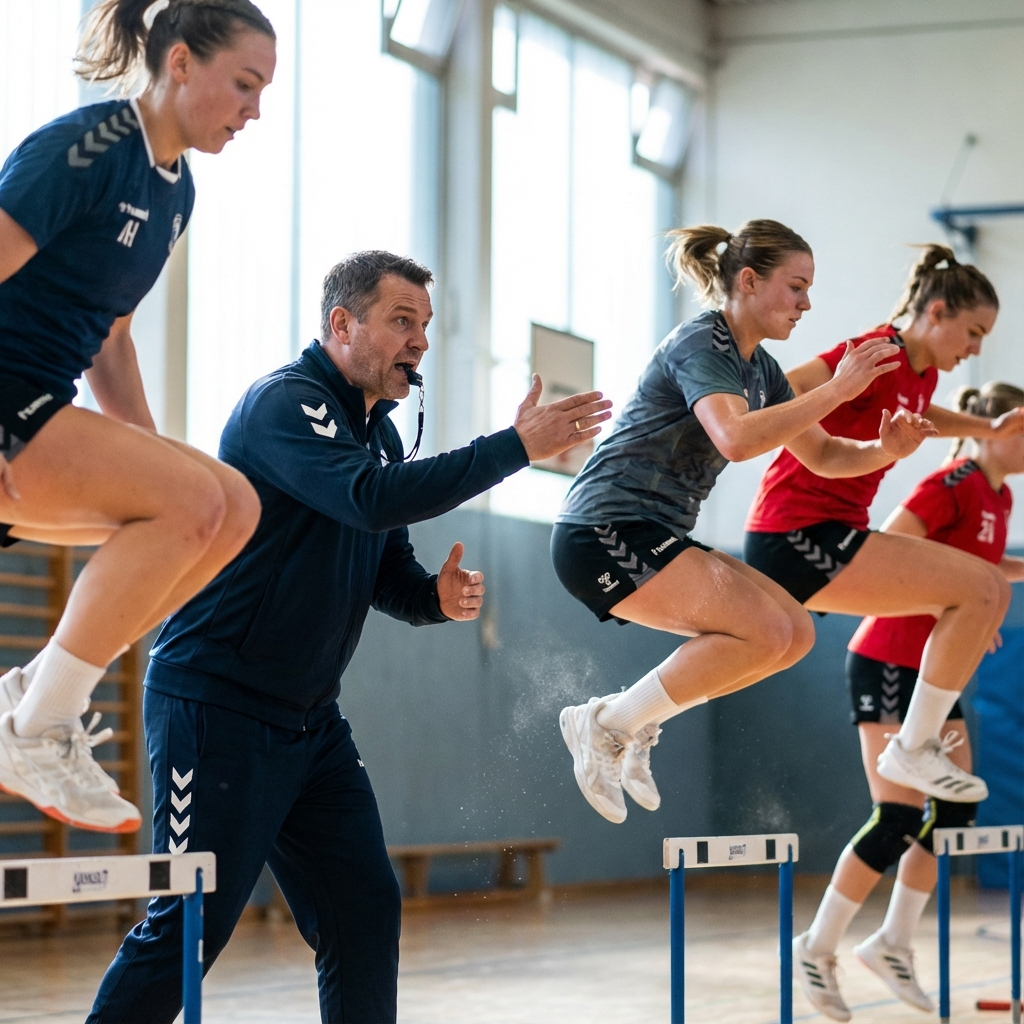
Handball demands explosive power, repeated sprint ability, and the strength to compete physically for 60 minutes. Sport-specific conditioning develops the athletic qualities that underpin elite performance.


Register for FREE and get coaching tips, top drills, session and more every week!