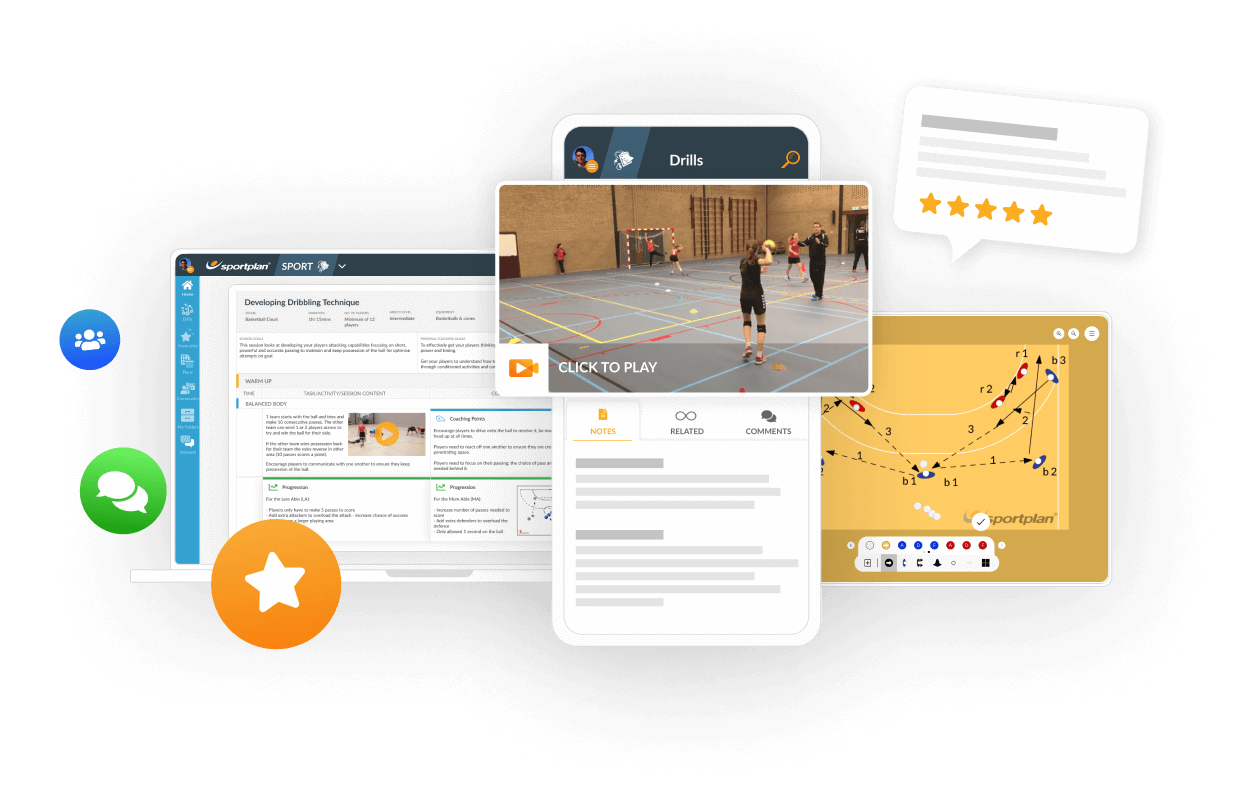
Pass B2-B1-B2.
B2 runs forward to W1 or W2.
Defenders make a choice :
- who takes pivot
- who attacks back court player
side steps
- small, fast steps
- low to the floor
- as much contact to the floor as possible
running forward to defend
- small, short steps
- arms slightly bent,forward
- low to the floor
- as much contact to the floor as possible
- never jump
back into defence
- always keep watching the ball
- small, short steps
- arms wide open to prevent players to pass to pivot
defending pivot :
- static pivot : stand in front
- agile pivot : try to defend when standing, moving behind him
- one hand in the back of pivot
- other hand between the hands of the pivot (his eye height)
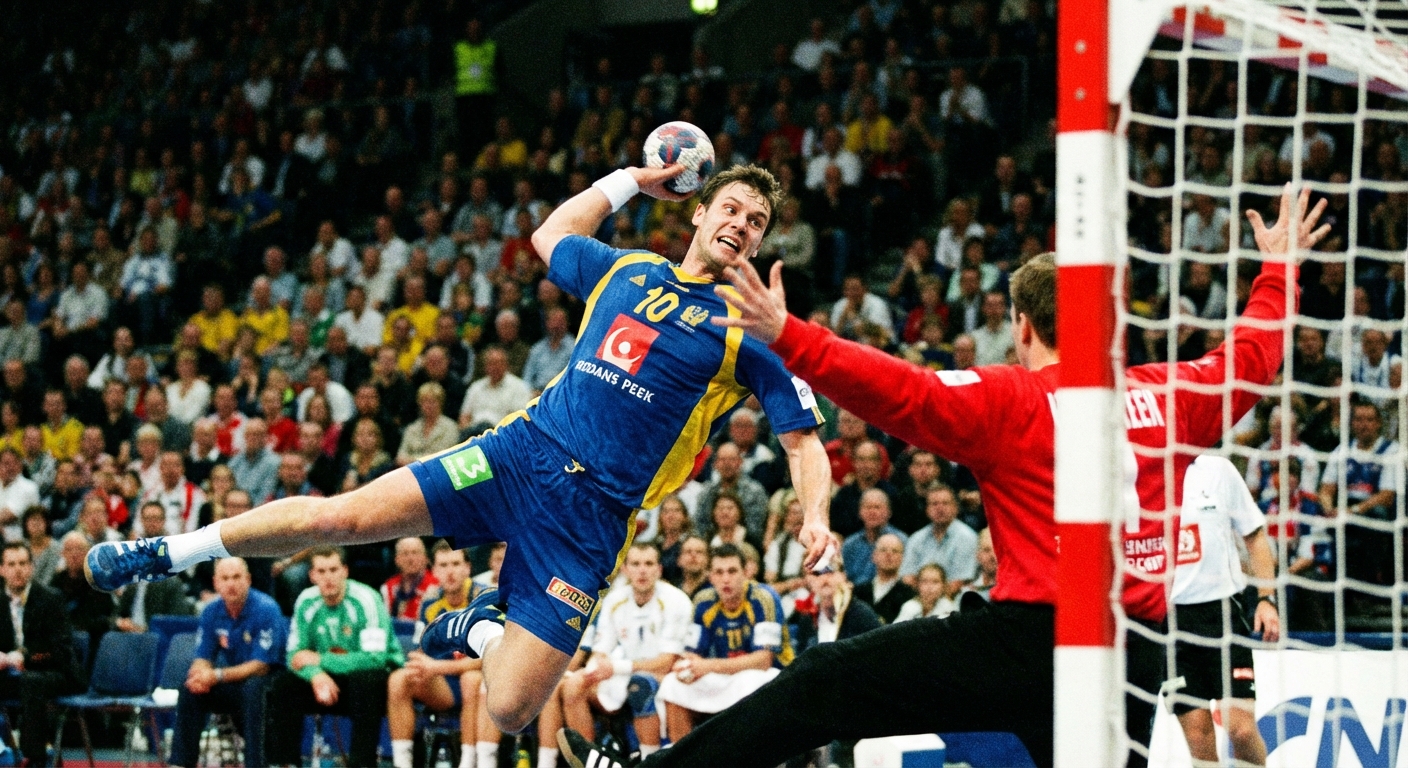
Wing players operate in the most demanding shooting position on a handball court, where acute angles and a close goalkeeper make finishing a specialist skill. This article breaks down the technique, decision-making, and training progressions that coaches need to develop elite wing finishing.
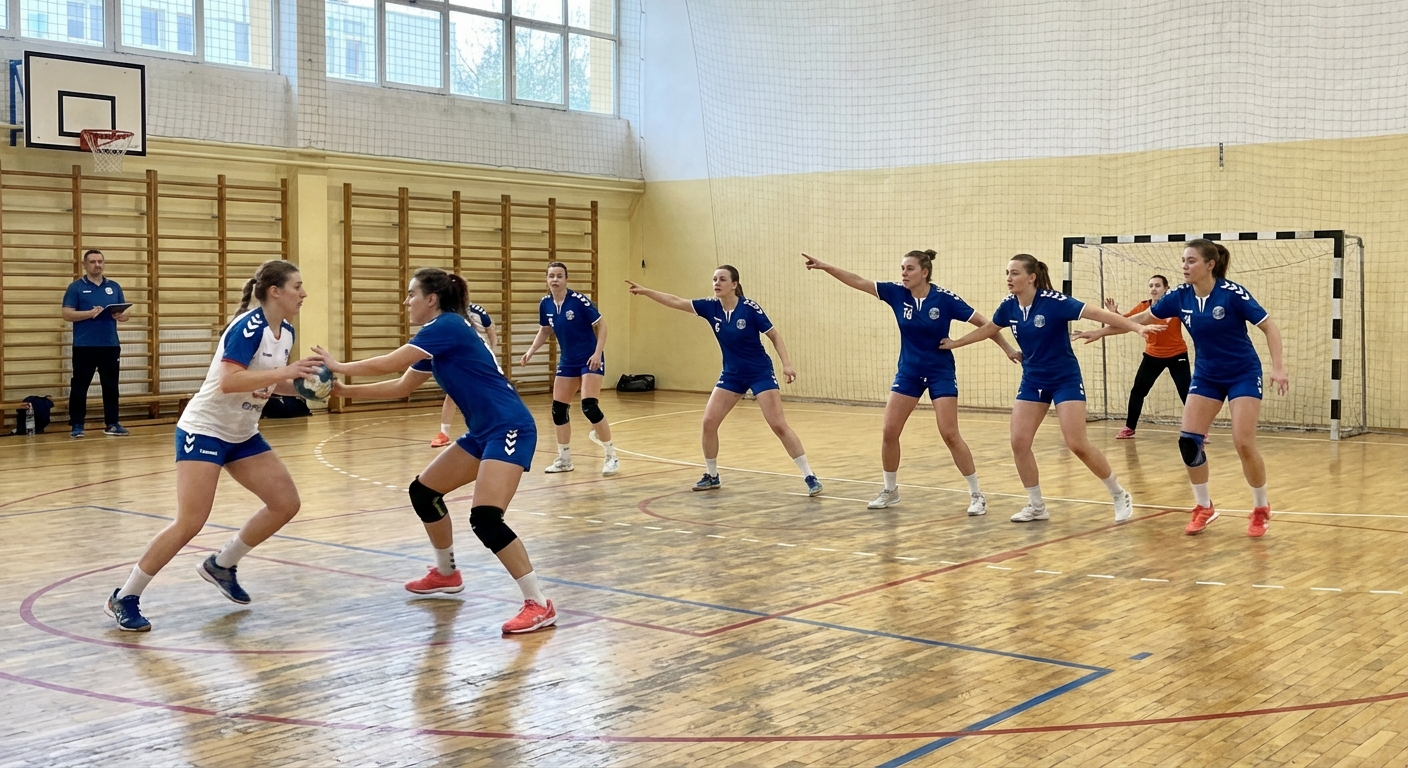
The transition from attack to defence is the most vulnerable moment in handball. This article examines the 3-second recovery principle, the specific roles players must adopt during transition, and the training scenarios that build a team's ability to recover defensive shape under pressure.
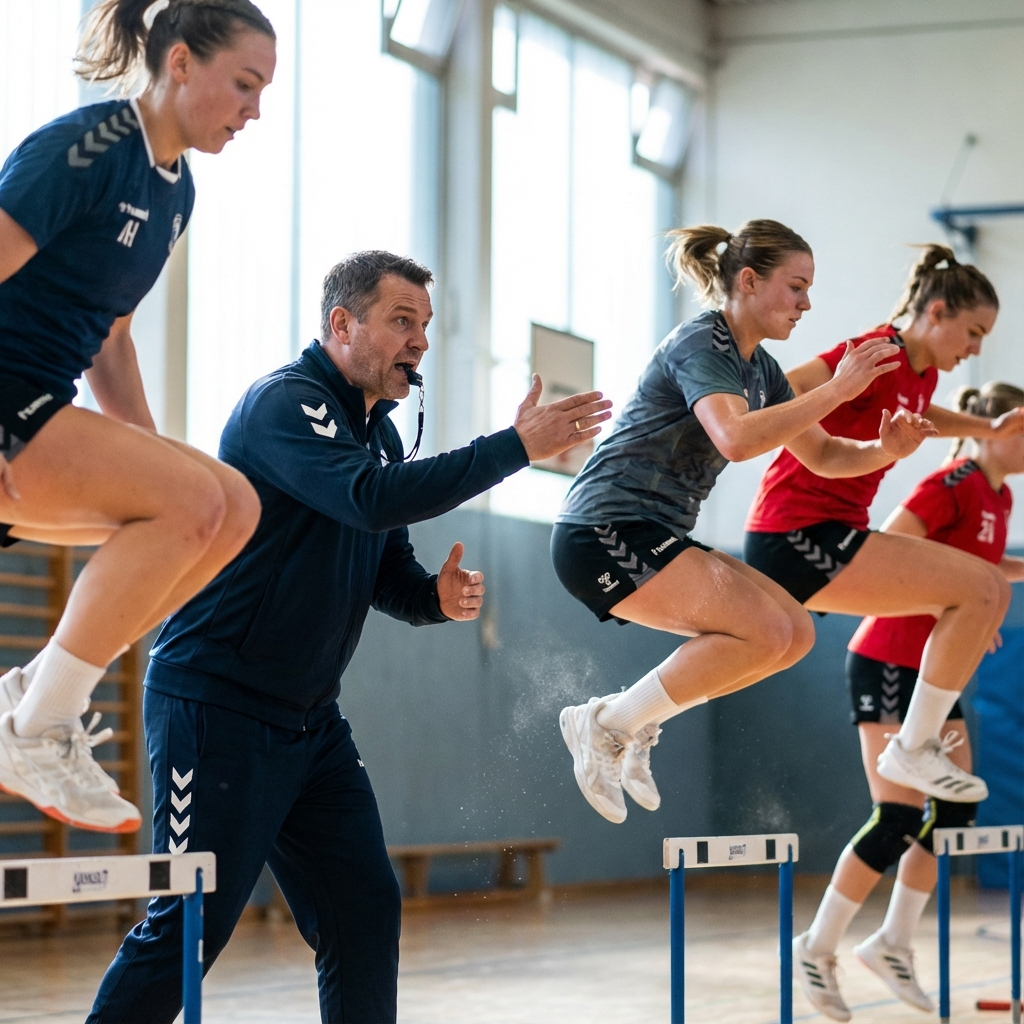
Handball demands explosive power, repeated sprint ability, and the strength to compete physically for 60 minutes. Sport-specific conditioning develops the athletic qualities that underpin elite performance.


Register for FREE and get coaching tips, top drills, session and more every week!