All players are running freely on a badminton court or an area limited by cones.
1 or 2 are catchers.
The catchers must try to catch the free players by touching them.
If a player is caught, she must lie down and can only be 'liberated' if 4 of her team-mates lift her in her arms and legs and carries her to the nearest side line (hospital) where a mattress can be placed (or on the floor if mattresses are not available).
A player, who is in contact with a 'patient', cannot be caught.
The game can also be performed as a competition, where the players are divided in 2 teams and 2 catchers, 1 for each team.
The play is timed and the team, which has been caught the most, has lost.
The coach, who counts how many 'patients' are brought out, makes account.
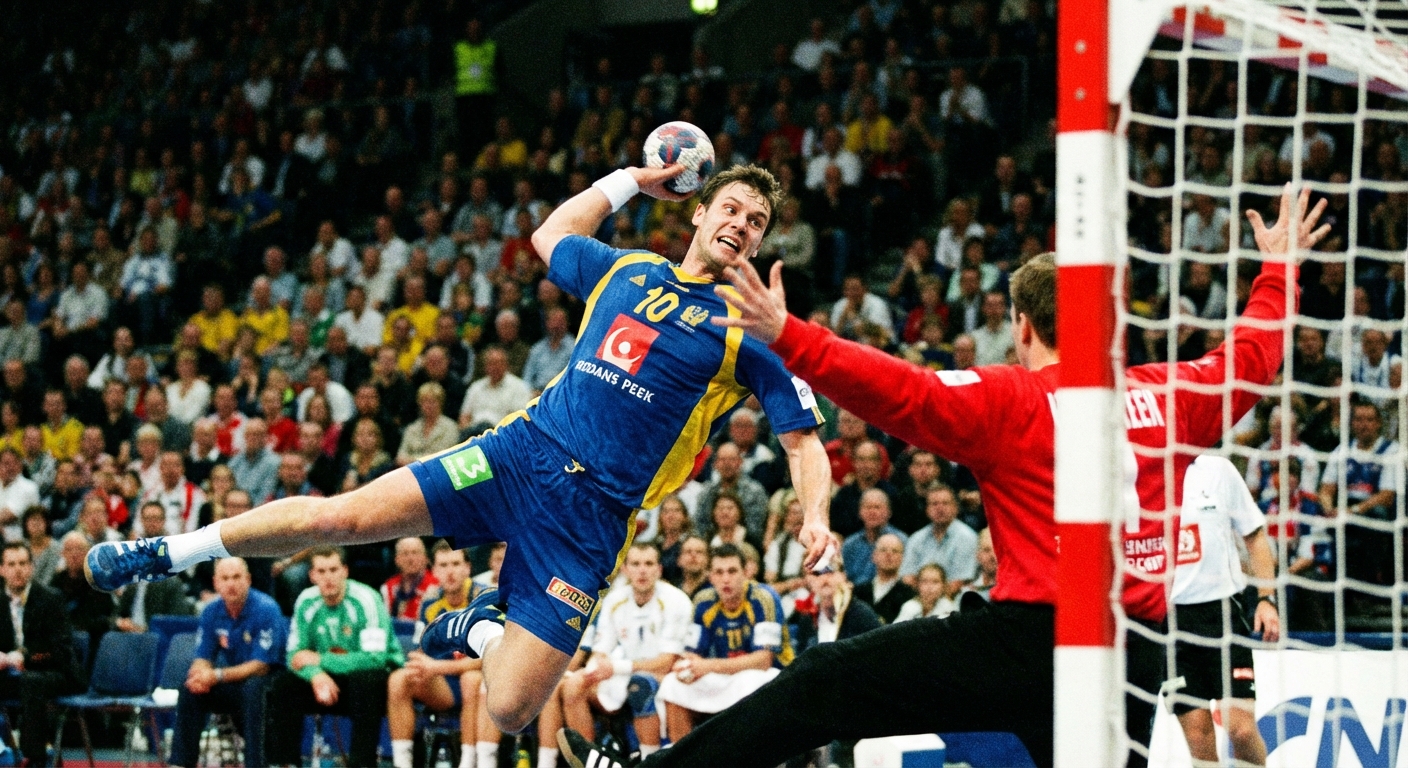
Wing players operate in the most demanding shooting position on a handball court, where acute angles and a close goalkeeper make finishing a specialist skill. This article breaks down the technique, decision-making, and training progressions that coaches need to develop elite wing finishing.
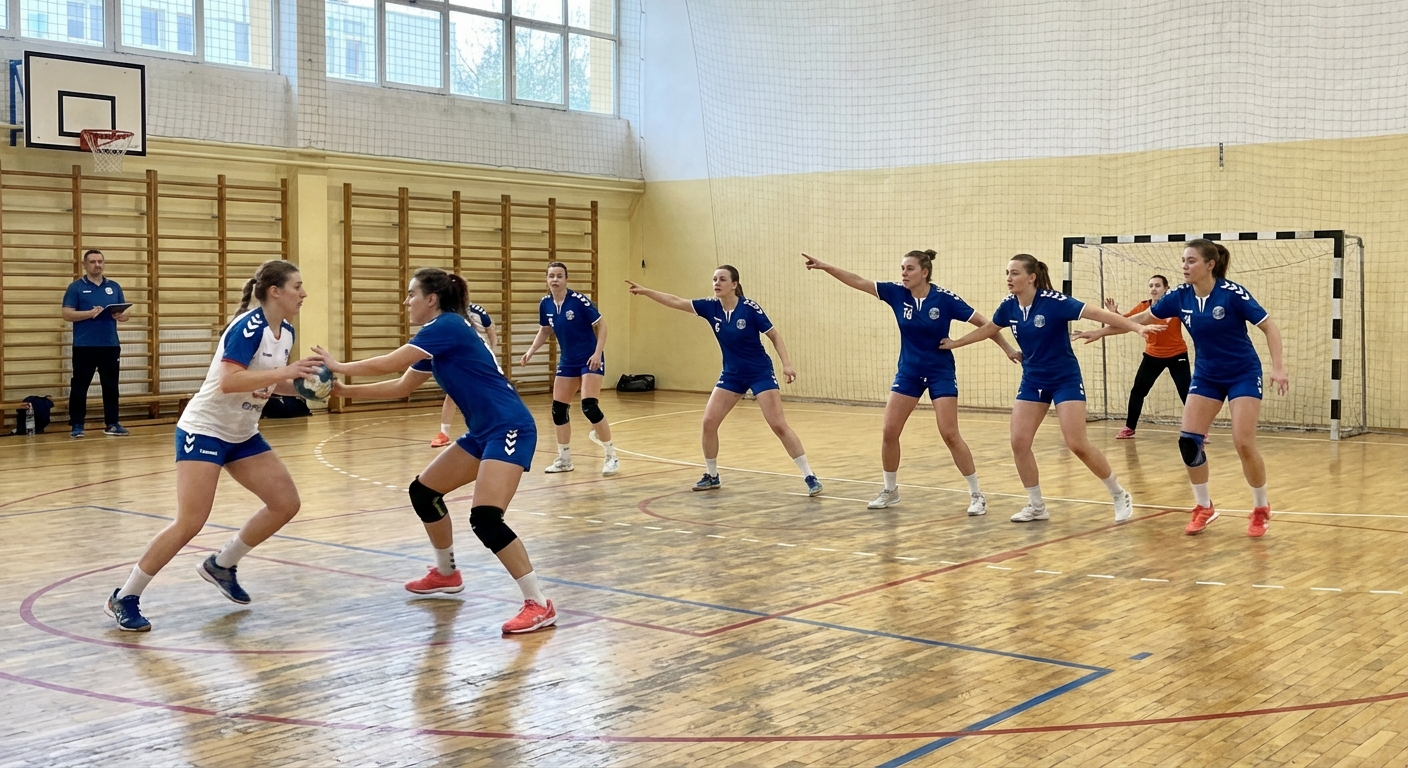
The transition from attack to defence is the most vulnerable moment in handball. This article examines the 3-second recovery principle, the specific roles players must adopt during transition, and the training scenarios that build a team's ability to recover defensive shape under pressure.
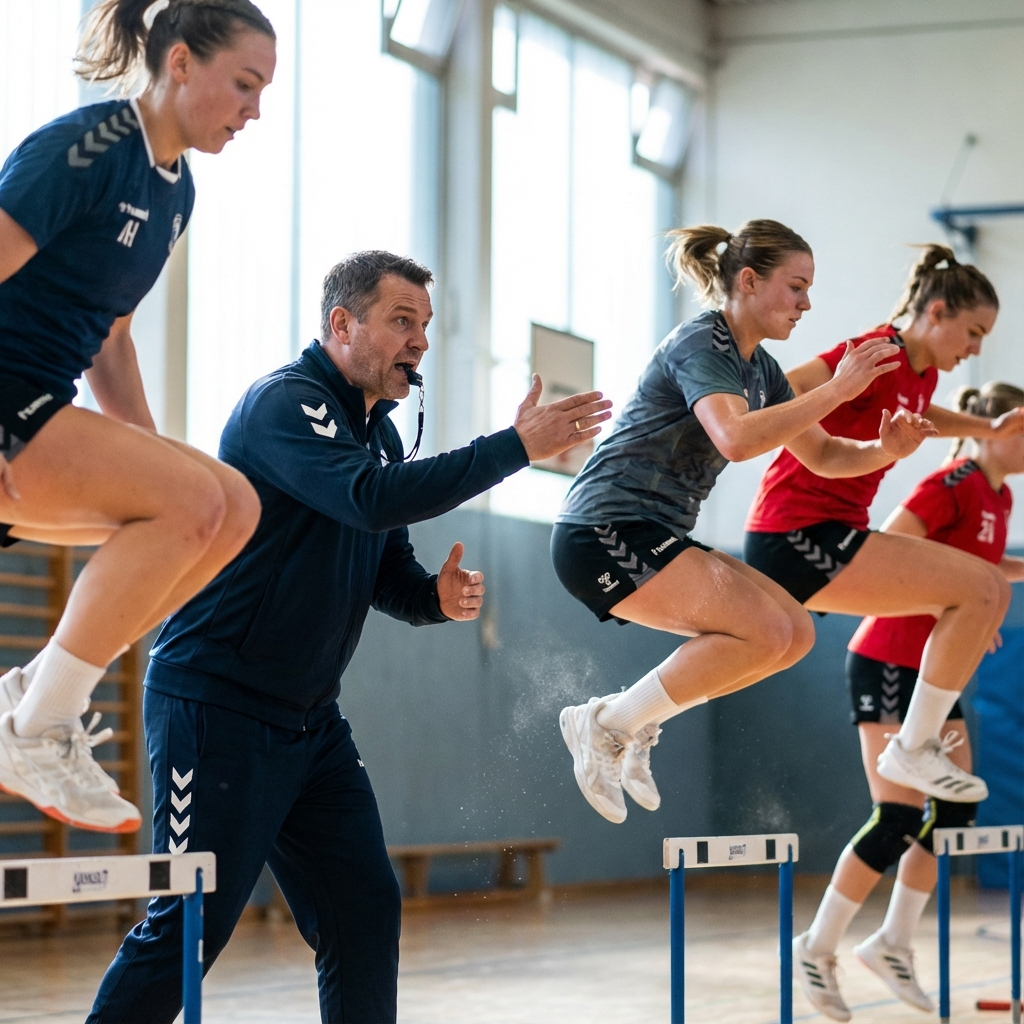
Handball demands explosive power, repeated sprint ability, and the strength to compete physically for 60 minutes. Sport-specific conditioning develops the athletic qualities that underpin elite performance.


Register for FREE and get coaching tips, top drills, session and more every week!