2v1 break

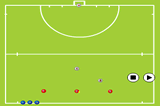
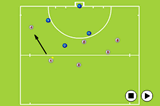
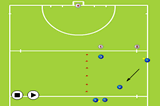
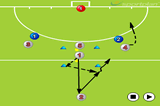
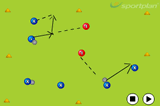
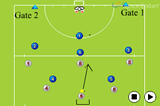
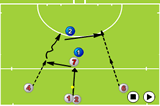
One attacker and one defender stand at the top of the circle. The 2nd defender stands wide outside the 23m area and passes the ball to a 2nd attacker level in the middle of the pitch. Once they have receivied the ball this attacker can take the ball and try and score a goal using the other attacker the defender that started the exercise can run back and help prevent the 2 attackers from scoring.

Overload situations

3 v 1 Pattern to score

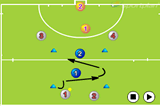
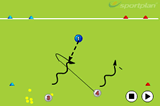
3 blue and 1 white player start from between the gates (2 cones). Set in the specific areas on the pitsh. Blue 1 starts with the ball and passes the ball to blue player 2 coming out of the gate. The defender (white) can now try to stop the players scoring. Player 2 passes the ball back to player 3 and the 3 blues continue to the goal and try to score.

Overload situations

Outletting

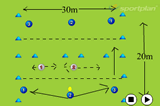
create forward passes by transferring the ball The 3 blue players are trying to pass the ball through one of the 3 goals in the middle of the area to one of the three players on the opposite side. They can do this by running with the ball, dummy passing or transferring the ball between them to draw to two defenders out of position and create space for the pass. The 2 defenders can only intercept the ball. When they do so they have to try and and pass the ball over the back line behind the 3 blue players who just lost the ball.

Overload situations

two 2v1

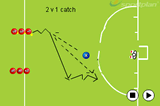
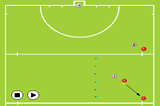
Players 1 and 2 play 2v1 against the first defender then second defender, to then run in to the circle and try and score. Players 3 and 4 go into the circle to help with the rebounds.

Overload situations

2 vs. 1 Tag defence

Players start in pairs on the 23 meter line. The attackers have to try and score a goalĀ againstĀ the defender. The defender has no stick and to stop the players scoring they have to tag the player in possession of the ball. As soon as a player has been tagged both attackers must stop and join the queue again.

Overload situations

3 v 2 and score

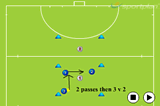
3 players with a ball play 3 v 1 in the first grid. After a minimum of 2 passes they can go towards the goal and play a 3 v 2.

Overload situations

3 vs 2 - Get to Goal

The middle attacker starts with the ball. The drill starts with one of the other attacking players making a diagonal run forward to try and get ahead of the ball carrier. It is important that the ball carrier does not run forward. Instead they should run in-field to draw one of the defenders and leave space behind defender 1. If defender 2 does not go with the player running diagonally through, the pass should be given to this player. However if the defender 2 does go with the runner the player square should be on for a pass.

Overload situations

3v2 Overload

- 3 vs 2 - Ball bounced off the defenders - Free play - Key is to gain an outcome in the D (be it a penalty corner, shot on target, or a goal)

Overload situations

3v2

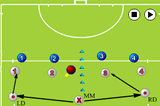
Coach feeds the ball to MM who plays the ball to RD or LD. These in turn play the ball in to the forwards on their side and play 3v2, (defenders have to play man to man marking for the first pass). Progression - introduce sweeper into the defence and let the MM join in the game after his pass, making it 4v3.

Overload situations

3v3 to break 4 v 2

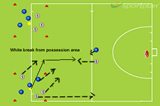
Set up two grids wide on the half way line. Tell the players to play 3v3 possession in the box. Have two player waiting in the 23m area. When the ball is played outside the 2 areas on the halfway line it is the team that did not push the ball out to break. The team mate on in the 23m area has to come to the ball to receive the first pass. (other player can try to defend. The player that touched the ball out of the grid is the defender that can try to stop the breaking team scoring. The other 2 players wait in the grid.

Overload situations

Attack against defence 6 v 3

With the exercise starting with a pass from the left midfield to the left wing. Defenders have to start in the circle each new attack. The attackers can only score after receiving a pass from right to left.

Overload situations

Attack from midfield

The compulsOry pass is a free hit from the RM to the RD. As soon as the pass is given the 3 attackers can try and score a goal. (Tip when the RM passes the ball he/she should try and run diagonally in front of the RD. RD should in turn run into the space created by the RM running out).

Overload situations

Attacking Shoulder of D

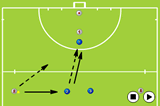
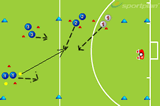
*** AUDIO DESCRIPTION ON *** Objective : Players to make the correct decision in attacking situations and ensure correct attackers are in correct position to affect the game. Purpose : Increase the chances of threatening the opposition goal and coming away with a positive result. Set-up :  Midfielder plays ball across the pitch from left to right. Receiving midfielder will start to carry the ball forward and should threaten to play the ball directly into the D. Attacker runner on the D will initially run towards the passer to show for the ball, then peel off, aiming their run towards the baseline. A defender will decide whether to follow the attacking runner or block the ball from the receiving midfielder going into the D. The pass that receiving midfielder makes, should be influenced by the defenders movement as to where the space is. 2 attackers in the D should initially look for a deflection if the ball is flung directly into the D. If the ball is played to the attacker running the D, they should reposition themselves to receive a pass or be at the far post for a deflection.
Overload situations

call in support

Set out the grid as shown with 2 goals either side of the defender. 1 player starts with the ball and has to run into contact with the defender (draw the defender) on doing so the player with the ball can decide to continue and try to run round the defender or turn away from the defender keeping possession of the ball and pass the ball to the supporting player who is only allowed to come into the grid and help if they have received the ball. Now the 2 player can play a 2 v 1 and try to score a goal.

Overload situations

Close Circles: 5 vs 3 Overload

- 5 vs 5 - Played in small area with marked D's - Must have 2 players in the D whilst defending - High intensity drill

Overload situations

Conditioned play

With 3 v 2 with a compulsory pass (hit in from the side line) RW feeds the ball to RM and then all 3 attackers have to try and score a goal. Tip: things will open up for the attack if after the RW passes the ball he/she runs infield to create space down the wing for a pass to the CF who might run out or the RM to run in to this space. After each attack 2 out of the 3 attackers become the next defenders for the next attack.

Overload situations

Creating 2 v 1

Player 1 passes the ball back to the supporting player. Player 1 then runs in the opposite direction to which he/she wants to receive the ball. The supporting player plays the ball back, first time, into the space created. Player 1 should time the run so that after receiving the return ball, he/she can play a fast 2v1 with the attacker.

Overload situations

Early 2 vs 1

Players get into pairs with 1 ball per pair. The player with the ball dribbles around the area until one of the two defenders in the area comes towards them. At this point they need to pull the ball back and pass to their partner. Defenders in the area are not allowed to tackle or intercept the ball, they can only put pressure on players with the ball.

Overload situations

exploit the overload

two teams  1/2 pitch. Ball starts on the half way line each time. The practice starts each time after the coach calls which two players of the defence have to run thorugh which gate before joining in the defence again. As soon as the coach calls out the numbers the attackers can start the attack and try to exploit the overload depending on which defenders have to do the gate run. and through which gate before being able to defend.

Overload situations

holding up the ball against defence

Feed the ball from the half way line to the player being marked (7). The marked player has to receive the ball and try and keep possession, allowing the 2 supporting players from the half way line to run up. The ball should then be passed to one of the players who should run into the cirlce with the ball, the player should then shoot or pass to score a goal. A second defender is in the circle, so the two players running through play a 2v1 at the top of the circle.

Overload situations