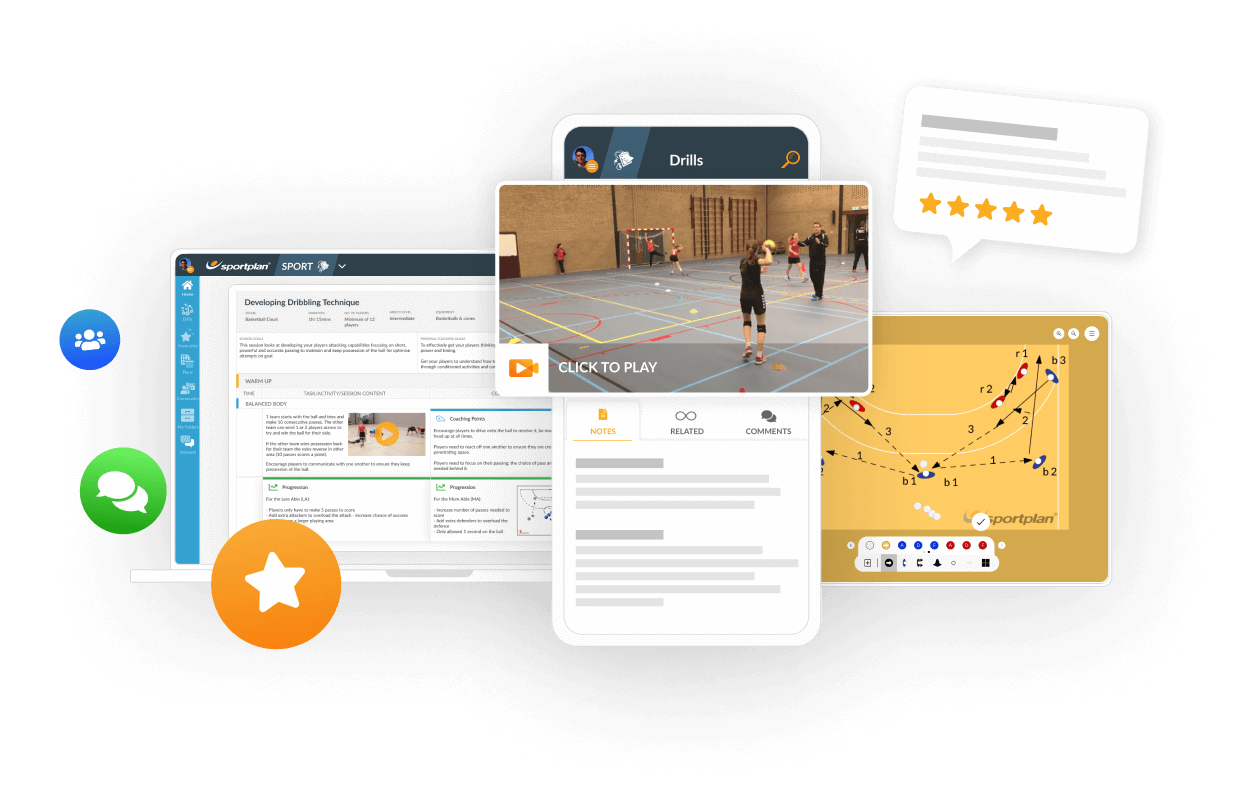
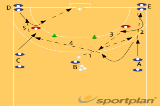
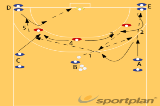
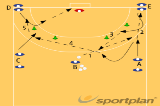
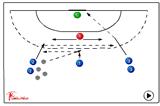
B is the feeder who throws the introduction pass 1 (either to A or to B).
Player A runs towards wingplayer E and passes to E.
E goes in between the two defenders and passes to A only when the defender really 'grabs' E. A retreated backwards in the meanwhile and comes in again at full speed in between defender 2 and 3 receiving the pass from E and passes the ball after being attacked by 2nd and 3rd defender, to the incoming C, who goes directly to the 4th defender and passes to D when the defender really attacks him, if not then C throws at the goal himself. D throws at the goal if C hasn't done so.
B now plays his first pass to C and the shot will finally come from player E.
Passing and receiving should always occur in full motion after being attacked by defender.
Before passing always look forward to the goal, to keep pressure on the defence.
If passes A-C and C-A are too long: decrease the distance between them.
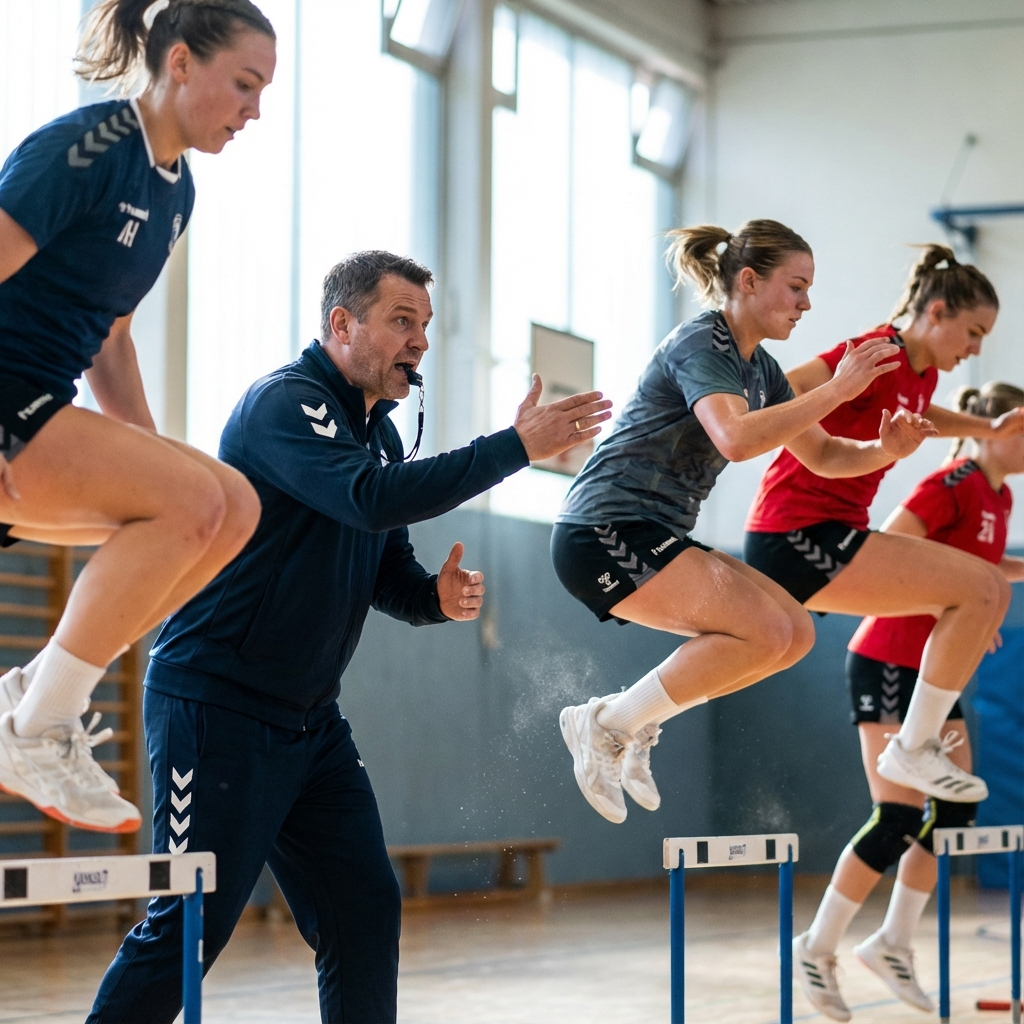
Handball demands explosive power, repeated sprint ability, and the strength to compete physically for 60 minutes. Sport-specific conditioning develops the athletic qualities that underpin elite performance.
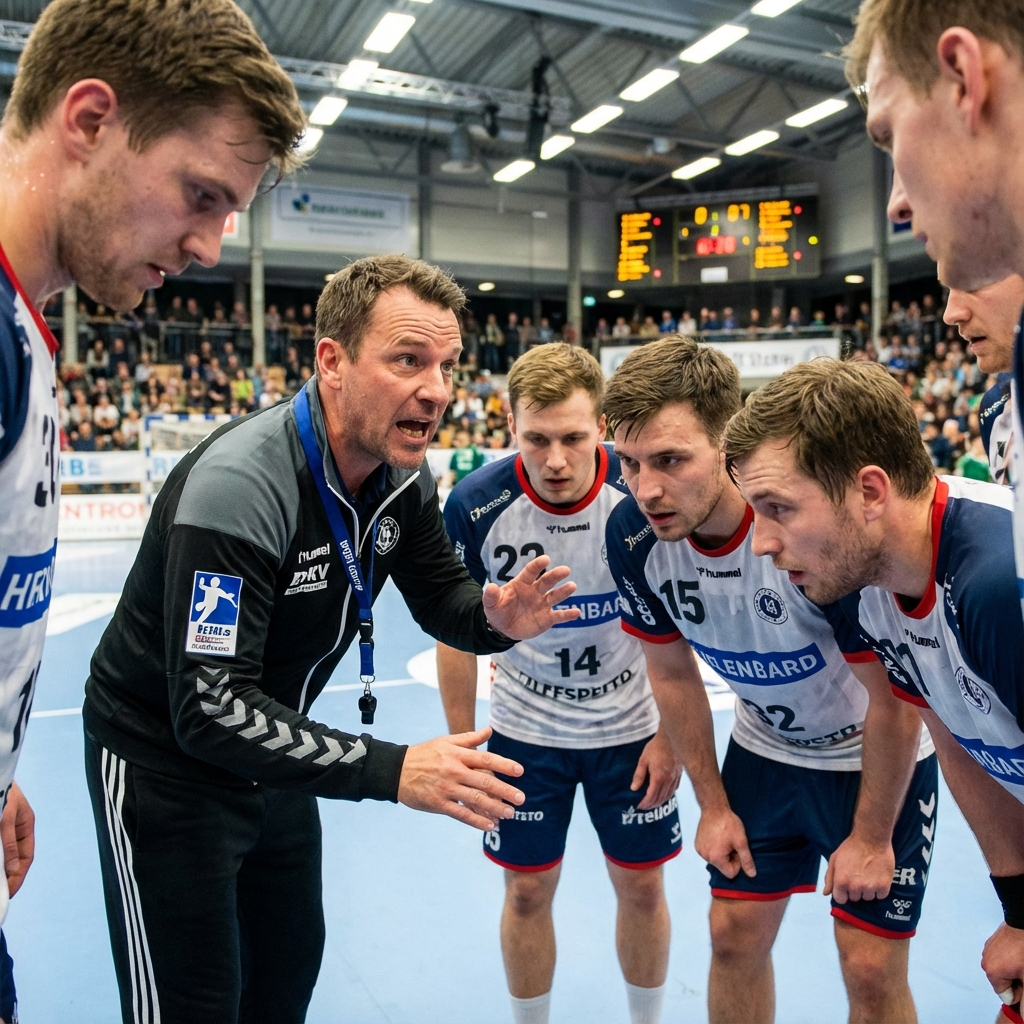
Handball matches are won and lost in critical moments. Mental toughness determines who executes under pressure, who recovers from setbacks, and who maintains concentration throughout 60 intense minutes.
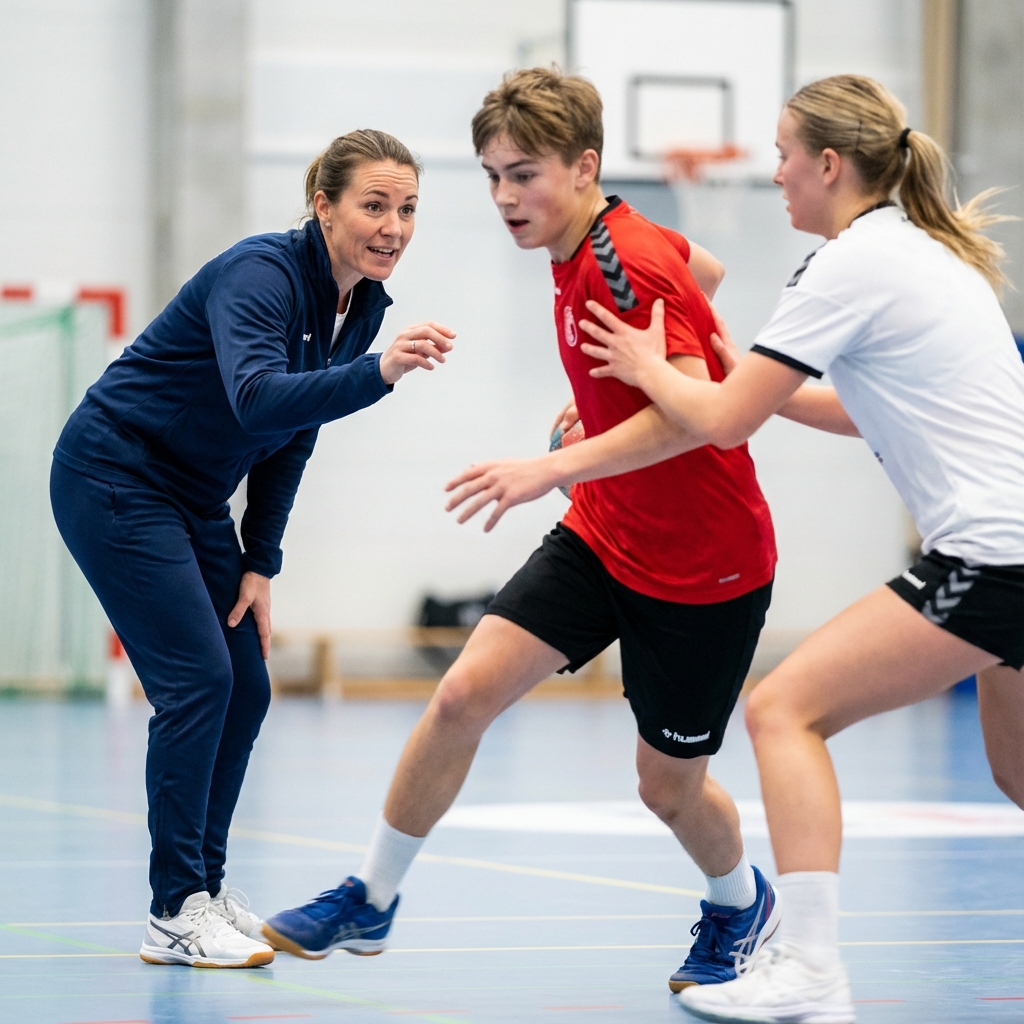
Deception is the great equaliser in handball. Smaller, less powerful players can beat defenders through feints and misdirection. Mastering these skills creates breakthrough opportunities against even the most organised defences.


Register for FREE and get coaching tips, top drills, session and more every week!