The Finishing Problem
Your team creates chances. You dominate possession. You hit the woodwork three times. But you lose 1-0 to a team that had one shot on target. Sound familiar?
Clinical finishing isn't about luck - it's a trainable skill. The best finishers don't hope the ball goes in. They know where it's going before they strike it. That certainty comes from deliberate practice and mental conditioning.
Why Most Finishing Drills Don't Work
The typical shooting practice: line up, wait your turn, strike a stationary ball into an open goal. You might score 9 out of 10. But in a match? The same player shanks it wide under pressure.
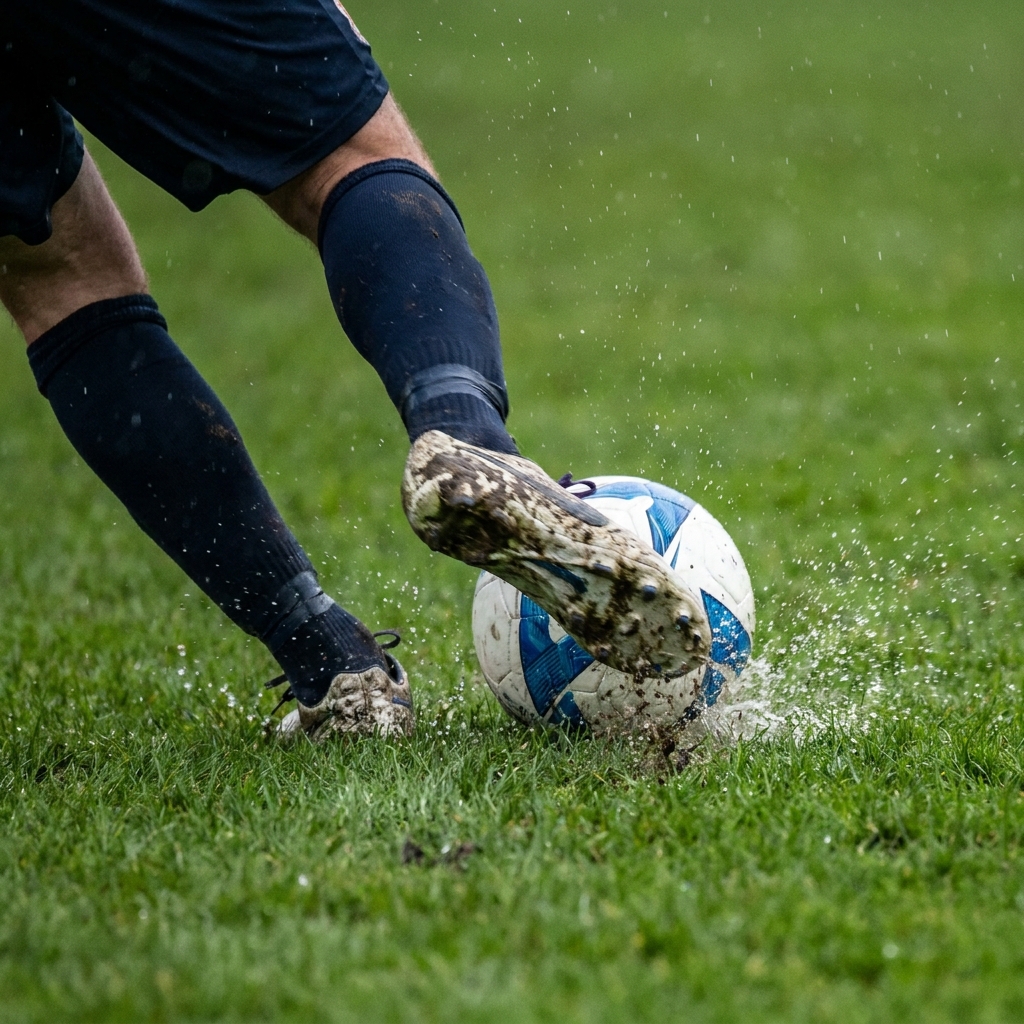
The problem is context. Match finishing involves defenders closing, goalkeepers reading, time pressure, and tired legs. Training must replicate these conditions or it's just feel-good practice.
The 4 Pillars of Clinical Finishing
1. Decision Before Arrival
Elite finishers make their decision before the ball arrives. They've scanned, they know where the keeper is, they know their target. When the ball comes, execution is automatic. Train your players to look at the goal before the final pass arrives.
2. Composure Under Pressure
Pressure creates tension. Tension creates poor technique. The clinical finisher has trained their nervous system to stay relaxed in front of goal. This comes from high-repetition practice in pressured scenarios, not open-goal shooting.
3. Placement Over Power
Young players often try to blast the ball. But most goals are scored with placement, not power. The corner of the goal is always open - teach your strikers to find it rather than trying to break the net.
4. First-Touch Finishing
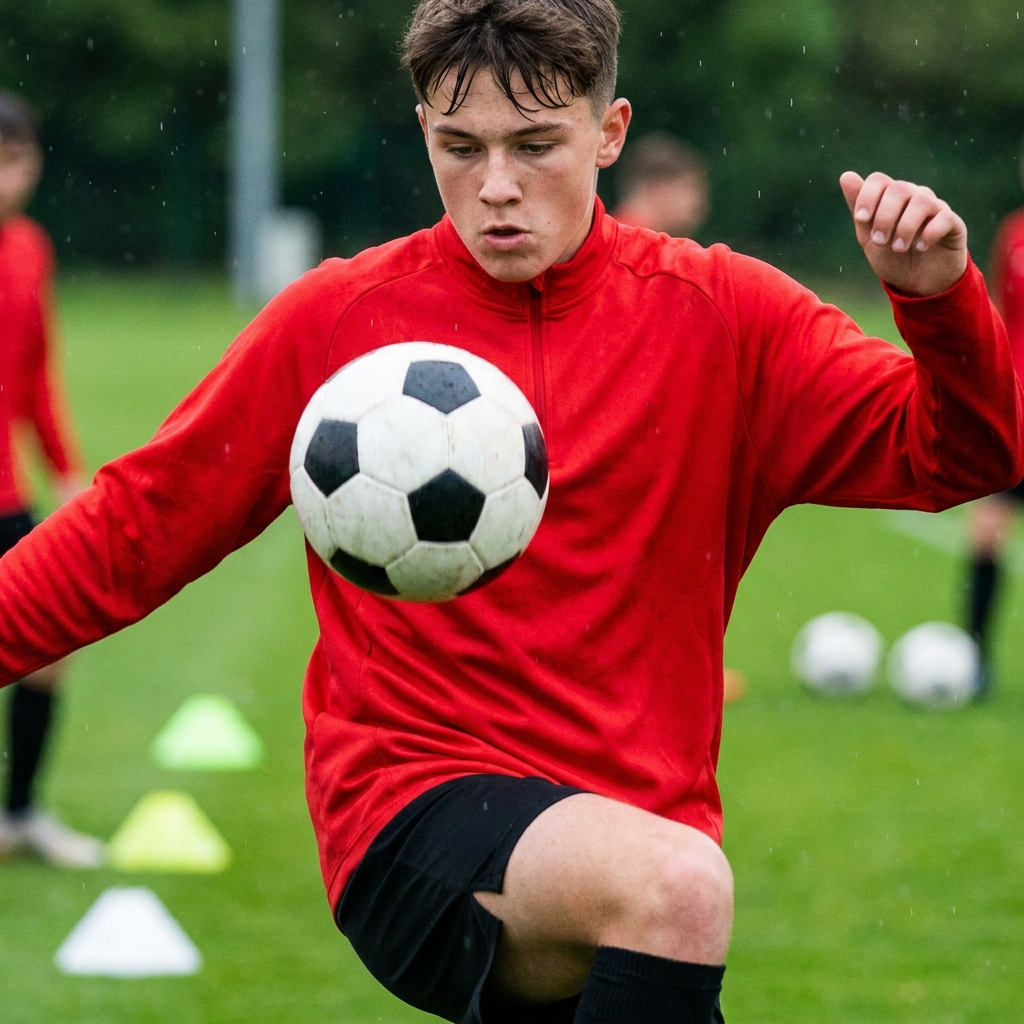
In modern football, you rarely get two touches in the box. The first touch must either set up the shot or be the shot itself. Train finishing where control and strike are one movement.
Training the Scoring Mindset
Finishing is as much psychological as technical. Here's how to develop both:
Stage 1: Target Practice (10 mins)
Use target zones in the goal (cones or markers in corners). Players must call their target before shooting. This builds the habit of aiming, not hoping.
Stage 2: Decision Drills (15 mins)
Create scenarios with multiple finishing options: go early, take a touch, square it, round the keeper. Coach calls out defenders' positions and players must choose instantly. Speed of thought before speed of foot.
Stage 3: Fatigued Finishing (15 mins)
After intense running, players go straight into finishing scenarios. This replicates match conditions where chances often come after sprints. Technique under fatigue is the real test.
Recommended Drills
These drills will sharpen your team's finishing edge:
Sample Session: Clinical Finishing
A 60-minute session focused on developing ruthless finishers:
- Warm-up (10 mins): Technical ball work leading to target shooting at walking pace
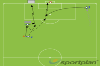
- Technical (15 mins): 1v1 finishing - attacker receives with back to goal, turns and finishes against passive keeper
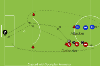
- Game-Related (20 mins): 4v2 box finishing - quick combinations leading to shots, 3-second time limit from entry to shot
- Game (15 mins): Small-sided game where goals from inside the box count double
Common Finishing Mistakes
- Looking at the ball too long: Scan the goal before the ball arrives, not as you shoot
- Opening the body early: Stay side-on until the last moment to keep options open
- Snatching at chances: Smooth technique beats rushed technique every time
- Same finish every time: Keepers read patterns - vary your finishing
- Ignoring the weak foot: Defenders give you your weak side - make it a weapon
Frequently Asked Questions
How do I coach a player who always misses 1v1s with the keeper?
1v1 nerves are common. Have them practice the decision tree: if keeper stays, go round them; if keeper rushes, dink or slot past. The problem is usually indecision, not technique. Drill the scenarios until the choice is automatic.
Should strikers always aim for the corners?
Not always. Against a set keeper, corners are gold. But a rushing keeper opens the space they've left. Teach players to read the keeper first, then choose their target. The best finish changes based on the situation.
How much finishing practice should we do each week?
Quality over quantity. 15-20 minutes of focused, pressured finishing practice beats an hour of shooting at an open goal. Build finishing elements into your passing and possession work rather than isolating it.
My goalkeeper gets demoralised in finishing practice - any tips?
Rotate goalkeepers frequently and include GK wins (saves = points for their team). Use finishing practice to develop goalkeepers too - it's realistic shot-stopping for them. Everyone benefits from game-realistic scenarios.
 sportplan_football