Ball Retrieve Fitness

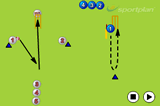
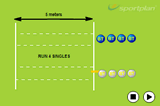
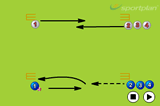
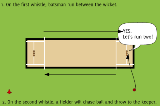
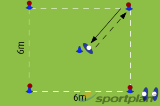
Player 1 starts on the middle cone, and aims to collect all 4 balls in as quickly as possible. Player must go out to retrieve the ball and back to the middle, before moving onto next cone. Once all the balls have been collected in, player then reverses the drill, putting all the balls back out onto the cones. Player 1 has now finished set 1, and returns to the back of the queue to recover. Player 2 begins and so on... Players perform 3 sets each and then change over.

Running between the wickets
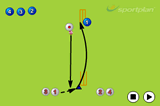
Batsmen vs Fielders

When the batsman (1) calls Yes the coach rolls the ball towards the fielder stood by the stumps. Fielder (1) runs across, picks up the ball and then tries to run out the batsmen. Repeat with the next fielder and batsman. Each batting team has a certain number of wickets (eg. 3 wickets). The teams change over once the batting side have lost all their wickets.

Running between the wickets

Batter vs 2 handed pick up and throw

The drill starts when the batsman calls Yes . At this point the batter must run with the bat in hand and try to complete two runs. However, the batter is racing against the fielders. Fielder 1 rolls the ball out to the player waiting in line who must then use a two handed pick up before returning the ball over the stumps to the wicket-keeper. After the ball is thrown player 1 joins the back of the queue and player 3 takes their place on the cone. After this the race can start again, this time repeated on the other side for the fielding team.

Running between the wickets

Moving Out Competition Game

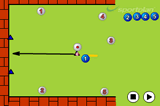
Two teams have 3 shots each (moving out to drive) which they must play as a drive shot. If they don't they will out. Fielders (3), (4) and (5) must collect the rebounds (or direct hits if there are no walls for you to use) and try to run out the batman. Players 1 and 2 are to back up incoming throws. If the ball hits the side wall 4 runs are awarded. If the ball is hit along the ground past the fielders 4 runs are awarded. If the ball is hit over head, six runs are awarded. Batsmen must complete 2 runs if they hit the ball and do not hit a boundary. Teams get a certain number of lives which are lost when out, they keep batting until all their lives are used.

Running between the wickets

Pick up on turn and throw to run out station

The batsman calls 'yes' to start the drill and tries to run 2 lengths whilst the fielder (player 1) runs out to meet the stationary ball, picks it up and throw it back to the wicket keeper (thus trying to run out the batter). The coach decides which team has won and both players return to the back of their respective lines. Drill continues in this way.

Running between the wickets

Running Between the Wickets - Catchers vs Runners

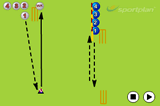
Organisation Organise a group as shown in the diagram. On the command " Yes " the batsman runs up and down the wicket. At the same time players in Team B throw and catch the ball to each other. As the batsman completes the 2nd run the next batsman sets off. Count the total number of catches made when the last better completes the final run. Teams change over and repeat, the winning team is the one with the most catches. Progression Running singles or threes. One handed catches. Rebound catching. Equipment: 2 bats, 2 marked creases a pitch length apart. 1 ball (size and colour may be varied). Lines/cones for catching positions.

Running between the wickets

Running between the wickets relay

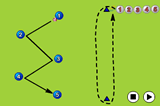
Players line up in two opposing team. Every player in both teams must run four single runs, from crease to crease, before the next player can start. The team that completes their runs first is the winner.

Running between the wickets
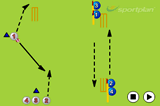
Running Between Wickets Relay

In teams; have a relay race over a short distance, such as 5 metres. Each player must have a cricket bat. Emphasis on getting low and changing the bat from one hand to the other to touch the cone or line on the floor. All players must run a four before the next one in team can go. The first team through wins.

Running between the wickets

Under arm flick run out game

BAT 1) calls YES. BAT 2) runs towards stumps. BAT 1) runs towards other batter On the call of YES F 1) Rolls ball out. F 2) runs in and under arm flicks at stumps. F 2) is trying to run out BAT 2). Each team has 3 wickets, when an individual is out he stays in. When 3 lives are used up the team is out, then batsmen change with fielders.

Running between the wickets

Under arm flick vs batters

5-6 fielders and batsmen will be needed for this circuit. When the batting side is ready they must try and run to the other end before the fielding side have caught the ball behind the wickets. When the batting player (1) shouts YES the fielder (1) rolls the ball out to the next fielder (2) and then runs behind the stumps to back up. If the ball reaches the wickets before the batting players then those players have been run out. Fielder (2) then throws ball to the fielder behind the stumps and Fielder (2) goes to Fielder (1)'s old position on the cone. Fielder (1) throws the ball to fielder (2) before joining the back of the fielding queue and the drill starts again.

Running between the wickets

Working in Pairs - Players Take Responsibilities for Calls

The coach blows their whistle and the batsmen set off, running between the wicket. One the coach's second whistle, the fielder will chase the ball and throw it to the wicket keeper attempting to run the batting pair out. The pairs that are running must call and decide how many runs to undertake. Rotate the group so each player fields and bats, and change the wicket keeper if needed.

Running between the wickets