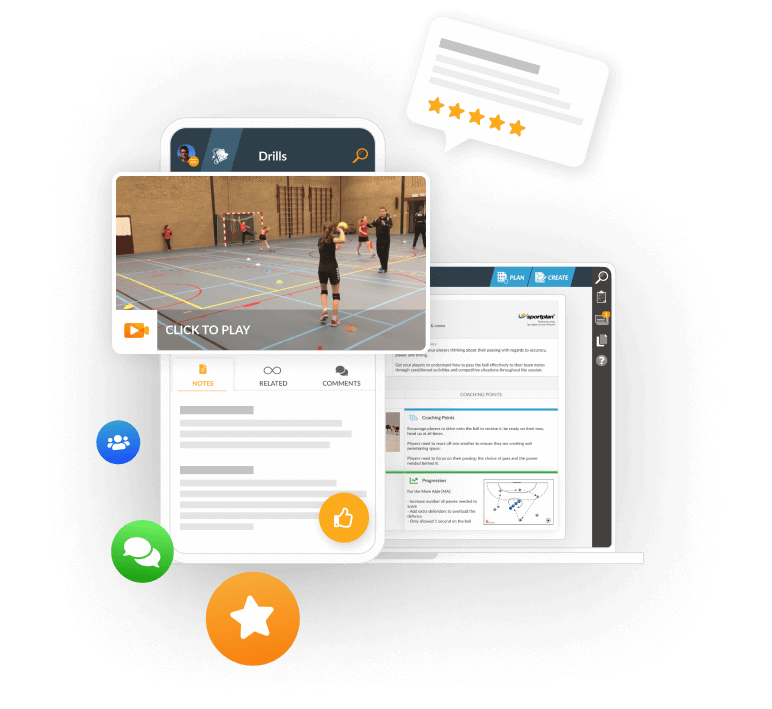
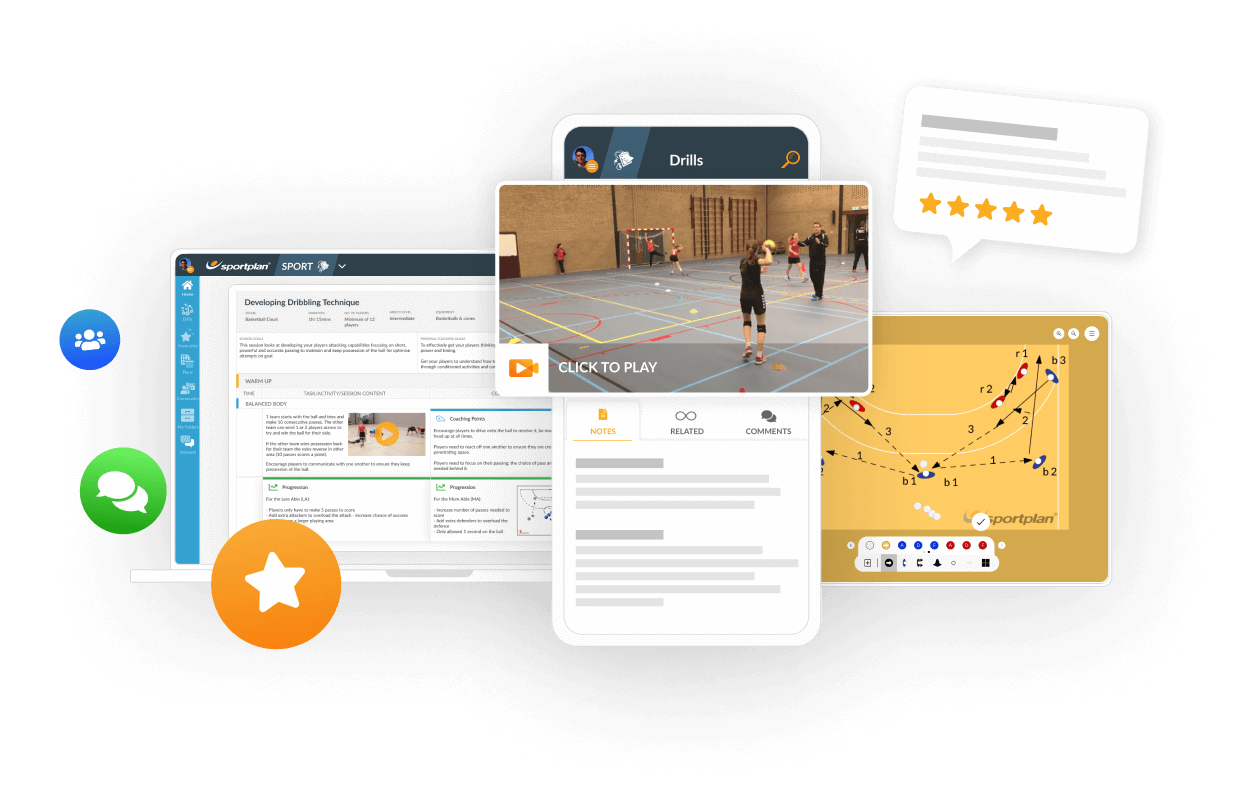
Players run one after the after moving with ball. As they are running with the ball they should try to stay within one meter of the player in front of them.
The coach can dictate what players are doing as they run around the cones.
Variations include:
Dribbling, dribbling only with their right hand, dribbling only with their left hand, dribbling in a left then right combination.
Rolling the ball for a few step before picking up and repeating, throwing the ball into the air then letting it bounce once and catching it, throwing the ball into the air and jumping to catch it.
Running whilst circling the ball around your waist, pass the ball under your knee to the other hand with every step.
Football dribbling - keep the ball in front, perform mini feints (dummy) whist running.
At the end of the drill, defenders can be added at certain positions to additionally train 1:1 duels as a repetition.
Wing players operate in the most demanding shooting position on a handball court, where acute angles and a close goalkeeper make finishing a specialist skill. This article breaks down the technique, decision-making, and training progressions that coaches need to develop elite wing finishing.
The transition from attack to defence is the most vulnerable moment in handball. This article examines the 3-second recovery principle, the specific roles players must adopt during transition, and the training scenarios that build a team's ability to recover defensive shape under pressure.
Handball demands explosive power, repeated sprint ability, and the strength to compete physically for 60 minutes. Sport-specific conditioning develops the athletic qualities that underpin elite performance.