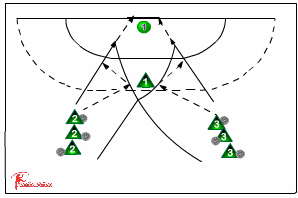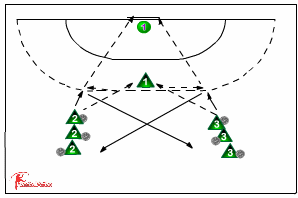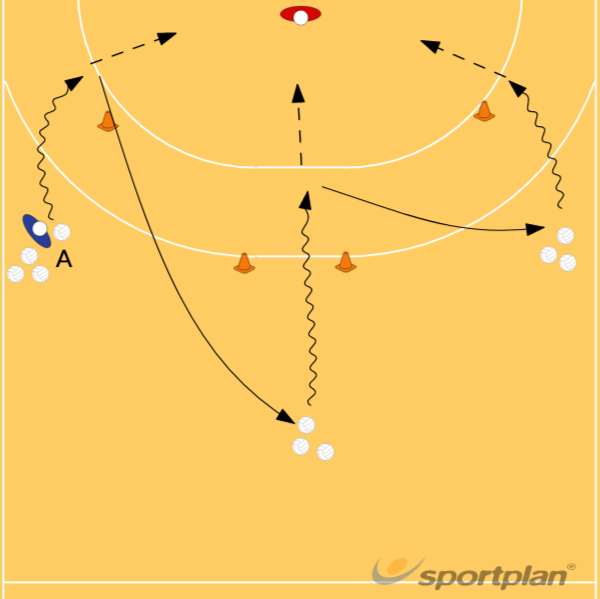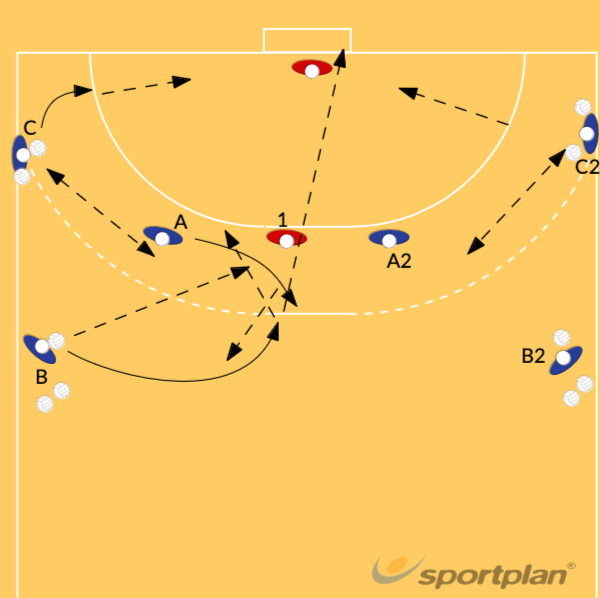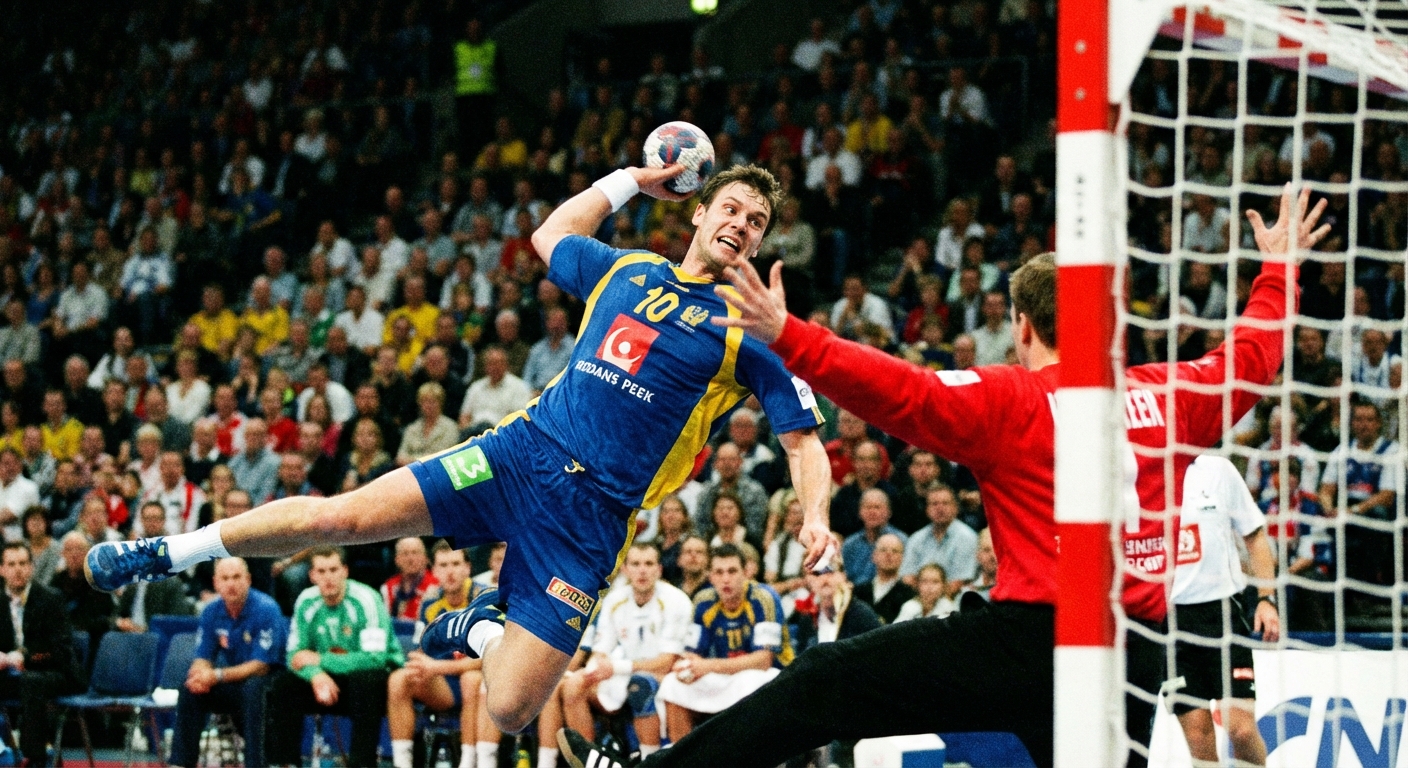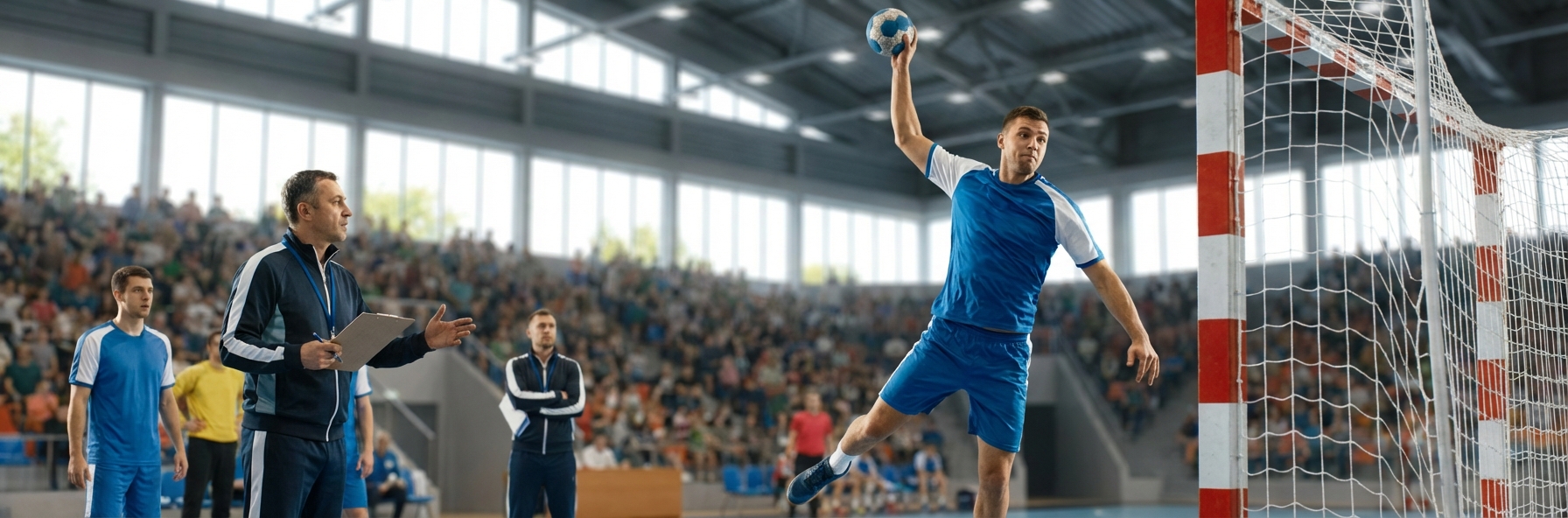
Jump shot mastery requires the integration of multiple physical and technical elements. The modern handball player must develop power, timing, accuracy, and the ability to adjust mid-air based on goalkeeper positioning. Elite shooters convert over 60% of their attempts.
Approach and Takeoff
Building momentum for maximum power:
Three-step approach: The standard pattern for building speed and power.
Penultimate step: The longest step lowers the centre of gravity for explosive upward drive.
Arm swing coordination: Arms drive upward to maximise jump height.
Ball position: Ball held high and back, ready for the throwing action.
In-Air Technique
Execution while airborne:
Body positioning: Slight backward lean creates torque for power.
Hip rotation: Core rotation generates shot velocity.
Arm action: High elbow position leads the throwing motion.
Wrist snap: Final acceleration and direction control.
Shot Selection and Placement
Goalkeeper reading: Identify goalkeeper position and tendencies.
Corner targeting: High and low corners offer highest conversion rates.
Power vs placement: Know when to drive through vs finesse around the keeper.
Bounce shots: Low shots that bounce before the goalkeeper are difficult to save.
Advanced Variations
Spin shot: Adding rotation creates unpredictable ball movement.
Delayed release: Holding the shot forces goalkeeper commitment.
Change of direction: Mid-air adjustment to find open goal space.
Weak hand development: Shooting ability with both hands creates more options.
Key Coaching Points
- Technical consistency comes from repetitive correct practice
- Jump height creates time and space for shot selection
- Read the goalkeeper before committing to shot placement
- Develop multiple shot types to keep goalkeepers guessing
- Physical conditioning supports late-game shooting accuracy