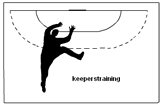
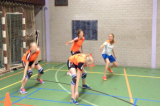
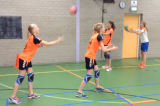
thema's : kracht / techniek
2 tallen
materialen : bal, bank, 2 paaltjes
A voet en hand raken elkaar zo hoog mogelijk naast het lichaam
- li 2 SERIES 10 HERHALINGEN
- re 2 SERIES 10 HERHALINGEN
B paaltjes tegen de muur, 3 mtr uit elkaar, A in doel bij een paaltje, B rolt de bal naar andere paaltje, A uitvalspas hand/voet naar bal
- li 2 SERIES 10 HERHALINGEN
- re 2 SERIES 10 HERHALINGEN
C A in doel, 2 hurksprongen hoog, daarna 2 ballen stoppen li en re laag
2 SERIES 7 HERHALINGEN
D A in doel, hordezit, opstaan, hordezit andere kant en bal stoppen
- li 1 SERIES 10 HERHALINGEN
- re 1 SERIES 10 HERHALINGEN
E A in doel, paaltje li hoog aantikken, paaltje re hoog aantikken, daarna 2 ballen stoppen van B : li laag en re laag
2 SERIES 10 HERHALINGEN
F A in doel, bank dwars voor het doel, 2 benig over de bank springen, daarna met hordezit bal van B stoppen
- li 2 SERIES 4 HERHALINGEN
- re 2 SERIES 4 HERHALINGEN
G met onderarm en hand medicinebal stoppen : licht gebogen arm en goede spierspanning
- li 1 SERIES 8 HERHALINGEN
- re 1 SERIES 8 HERHALINGEN
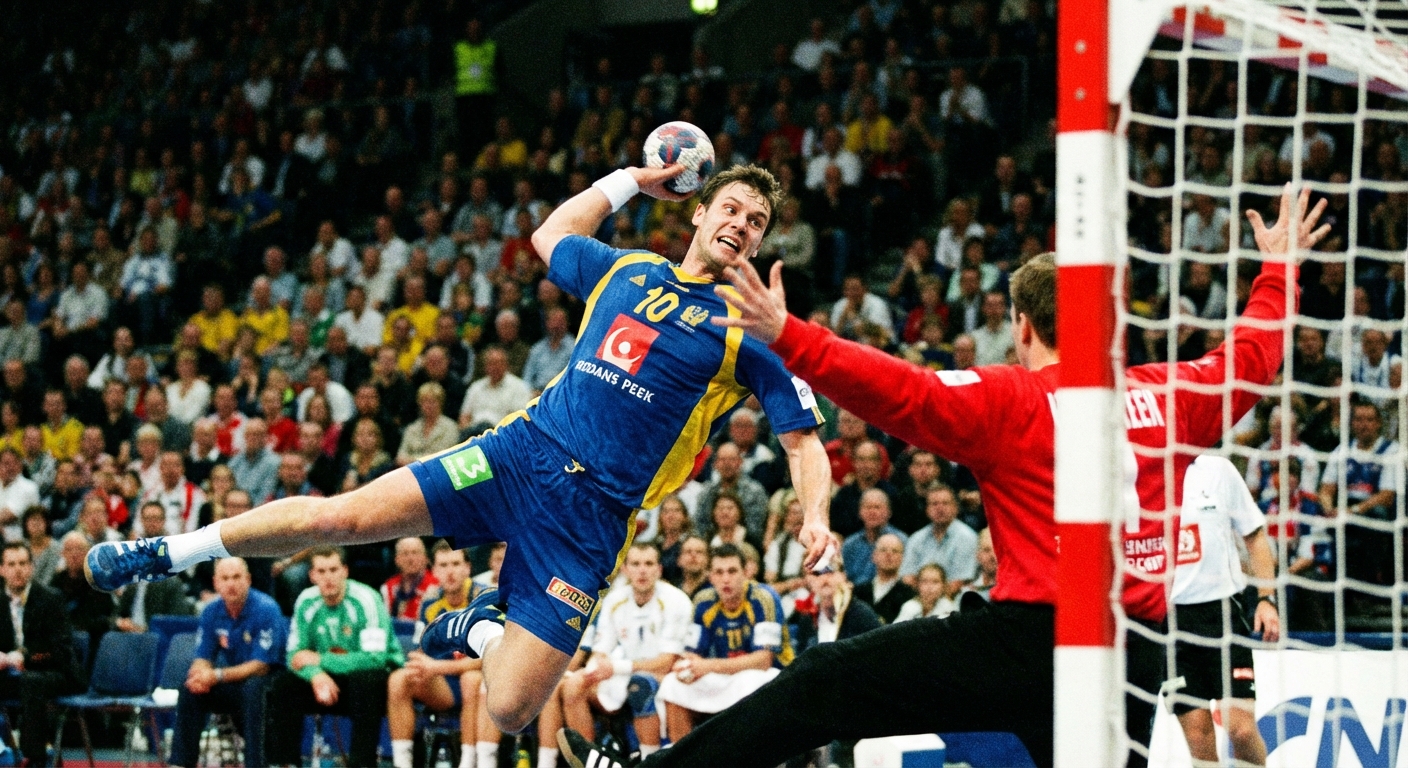
Wing players operate in the most demanding shooting position on a handball court, where acute angles and a close goalkeeper make finishing a specialist skill. This article breaks down the technique, decision-making, and training progressions that coaches need to develop elite wing finishing.
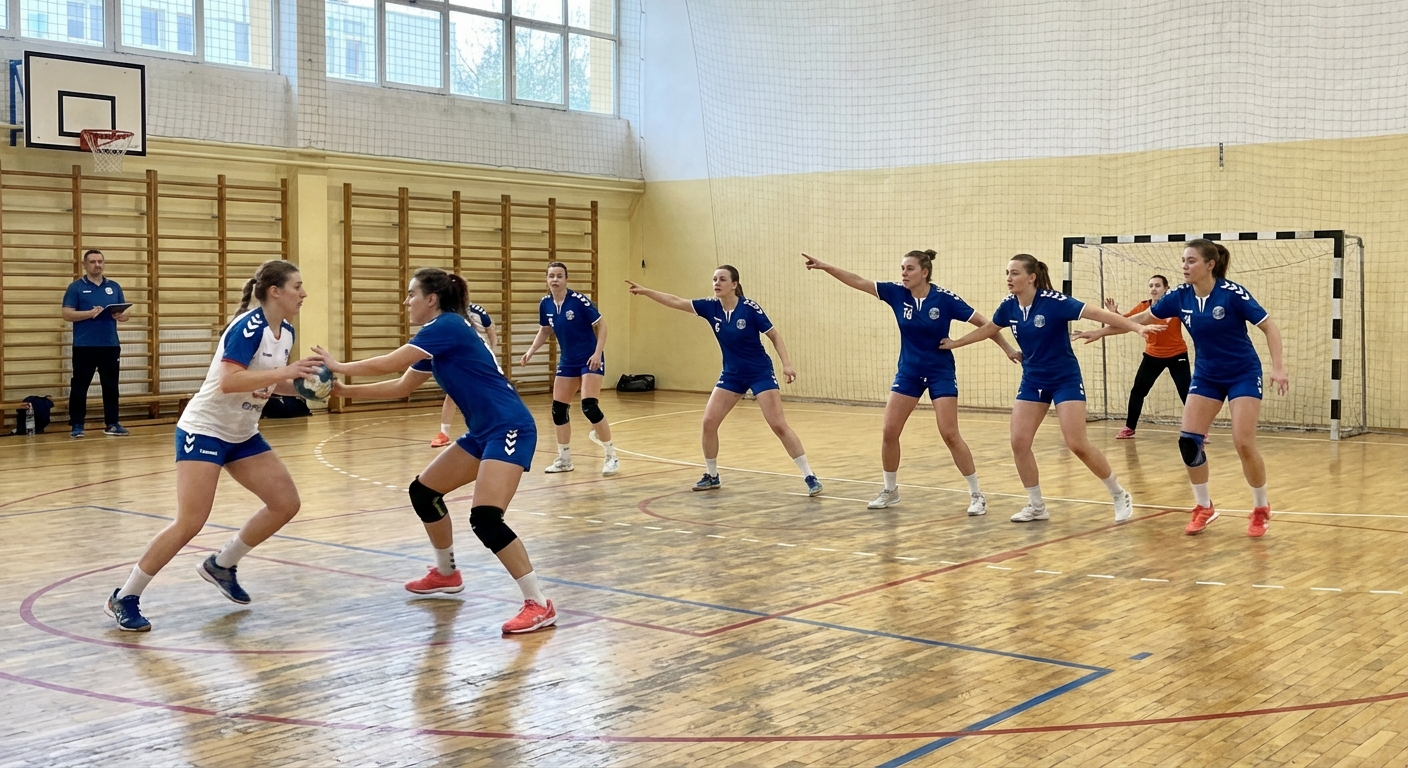
The transition from attack to defence is the most vulnerable moment in handball. This article examines the 3-second recovery principle, the specific roles players must adopt during transition, and the training scenarios that build a team's ability to recover defensive shape under pressure.
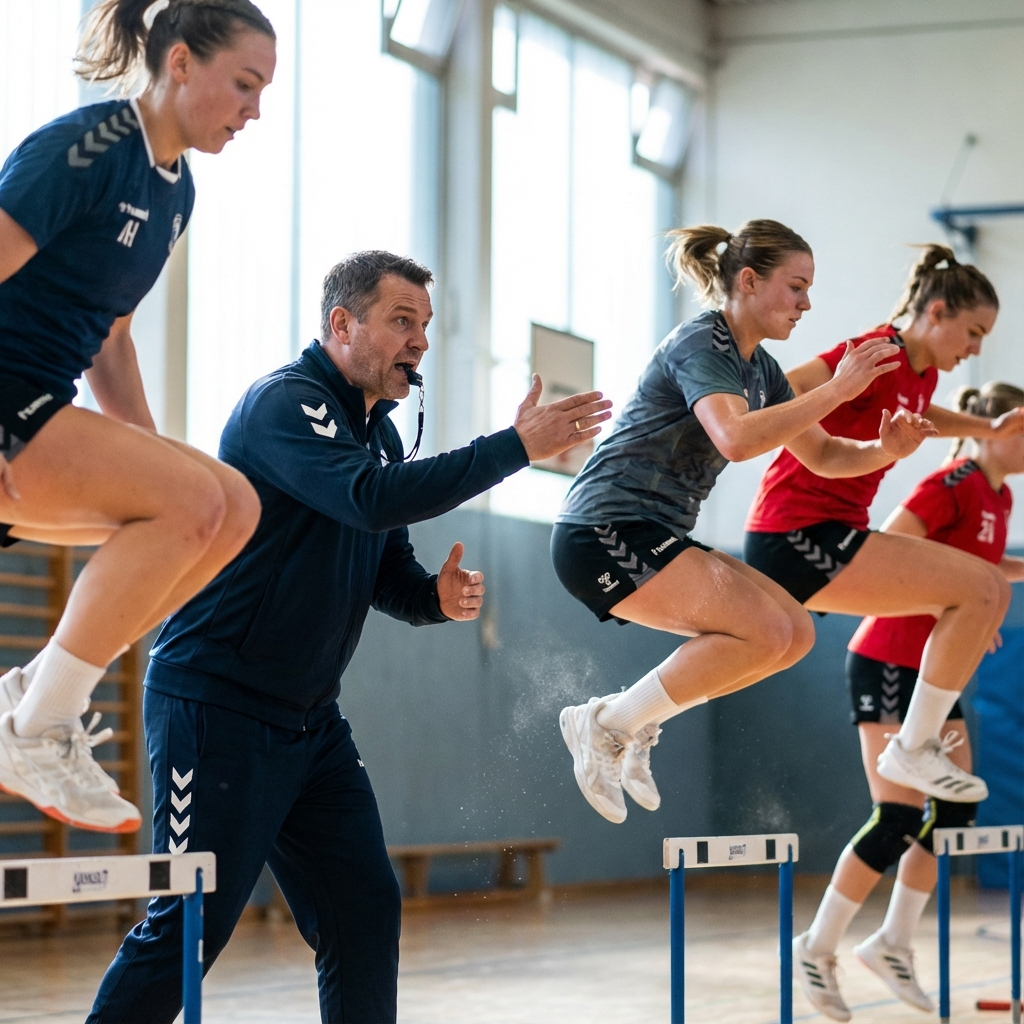
Handball demands explosive power, repeated sprint ability, and the strength to compete physically for 60 minutes. Sport-specific conditioning develops the athletic qualities that underpin elite performance.


Register for FREE and get coaching tips, top drills, session and more every week!