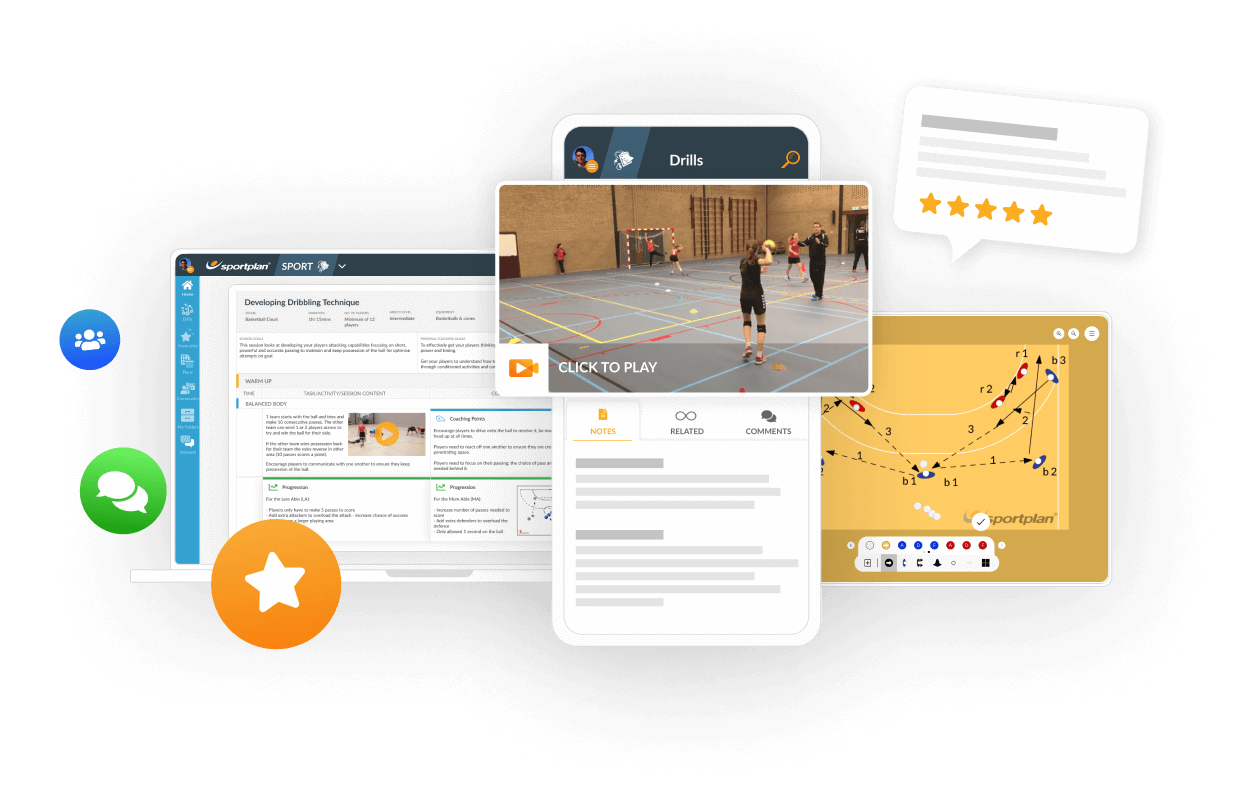
Set up two equal lines of players on both side of the baseline and two defenders just beyond the half way line. All baseline players have a ball each.
The move starts with a one-two pass from the player on the baseline to the keeper. Upon playing the pass the players should run forward and receive the pass from the keeper on the run.
After this players dribble the ball up court at speed. Once the attackers cross the half way line the defenders are allowed to put pressure on the attacker.
Drill continues until a shot/interception has been made.
In this drill the attackers have a running start, so they should also win the foot race between attacker and defender to the goal.
Look for strong positive running, forward bouncing of the ball in the dribble and a good shot on target (even when under pressure).
For the less able:
Let players attack in pairs against one defender (2v1)
For the more able:
Let the defender start to apply pressure earlier.
Wing players operate in the most demanding shooting position on a handball court, where acute angles and a close goalkeeper make finishing a specialist skill. This article breaks down the technique, decision-making, and training progressions that coaches need to develop elite wing finishing.
The transition from attack to defence is the most vulnerable moment in handball. This article examines the 3-second recovery principle, the specific roles players must adopt during transition, and the training scenarios that build a team's ability to recover defensive shape under pressure.
Handball demands explosive power, repeated sprint ability, and the strength to compete physically for 60 minutes. Sport-specific conditioning develops the athletic qualities that underpin elite performance.