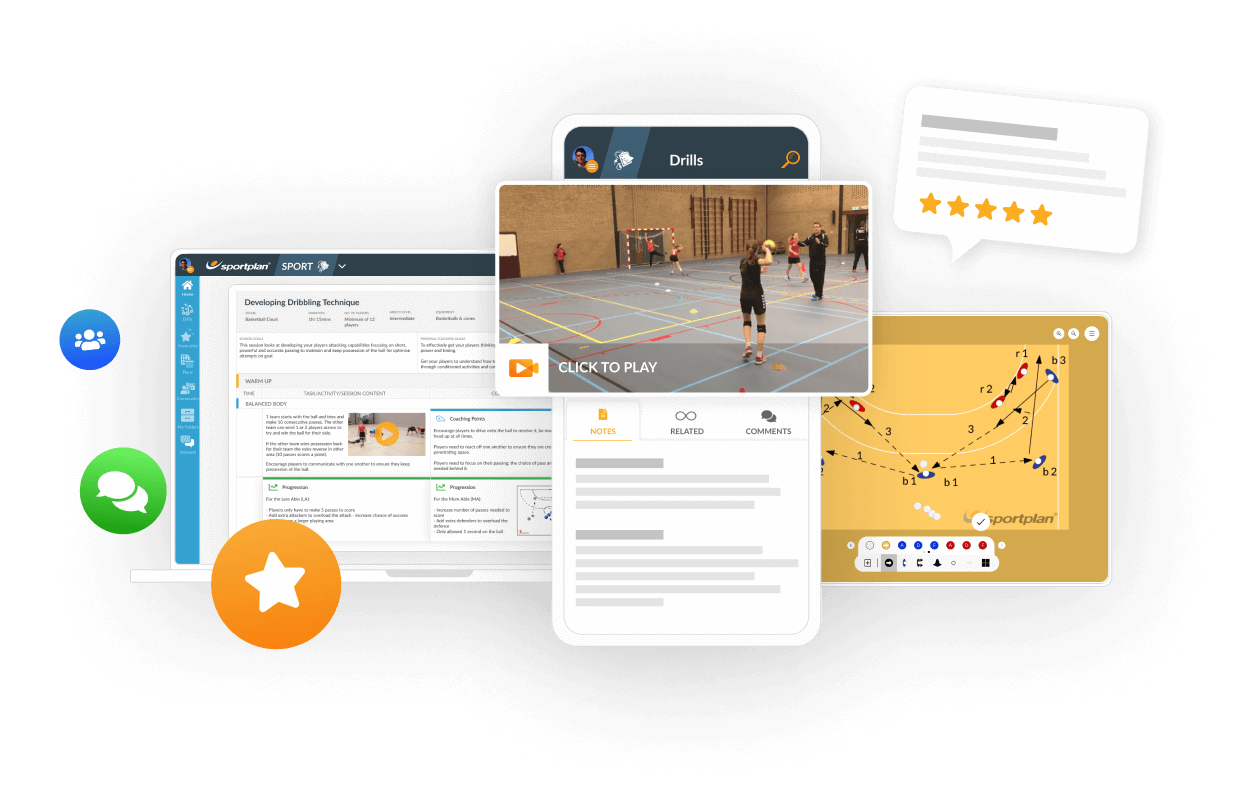
Blue 2 start this practice with a pass out wide to the player on the wing (blue 1).
Player 2 then runs forward, looking for the return pass. At this time blue 3 (your pivot player) should prepare to make their move away from the defender.
Player 2 receives the ball and then then passes to player 3 who then makes space and shoots on goal.
Dive shot:
1. Out of step or turning movement you make a movement forward with your trunk bent forward. Take off with one or two feet and bend forward with your ankle, knee and hip, trunk bent forward - eyes focused on the goal.
2. After the shot both arms touch the floor for the landing.
3. There must be a fast bending of the arms top cushion the fall as the trunk is brought forward and the head is in the neck.
4. Both legs are bent almost 90 degrees, feet upward. Slide forward on the floor when the chest touches the floor. Head tucked into the neck.
5. Chest, belly and upper leg slide on the floor, while the arms push the body along the floor.
6. The body slides forward, while elbows and wrists are completely bent.
Wing players operate in the most demanding shooting position on a handball court, where acute angles and a close goalkeeper make finishing a specialist skill. This article breaks down the technique, decision-making, and training progressions that coaches need to develop elite wing finishing.
The transition from attack to defence is the most vulnerable moment in handball. This article examines the 3-second recovery principle, the specific roles players must adopt during transition, and the training scenarios that build a team's ability to recover defensive shape under pressure.
Handball demands explosive power, repeated sprint ability, and the strength to compete physically for 60 minutes. Sport-specific conditioning develops the athletic qualities that underpin elite performance.