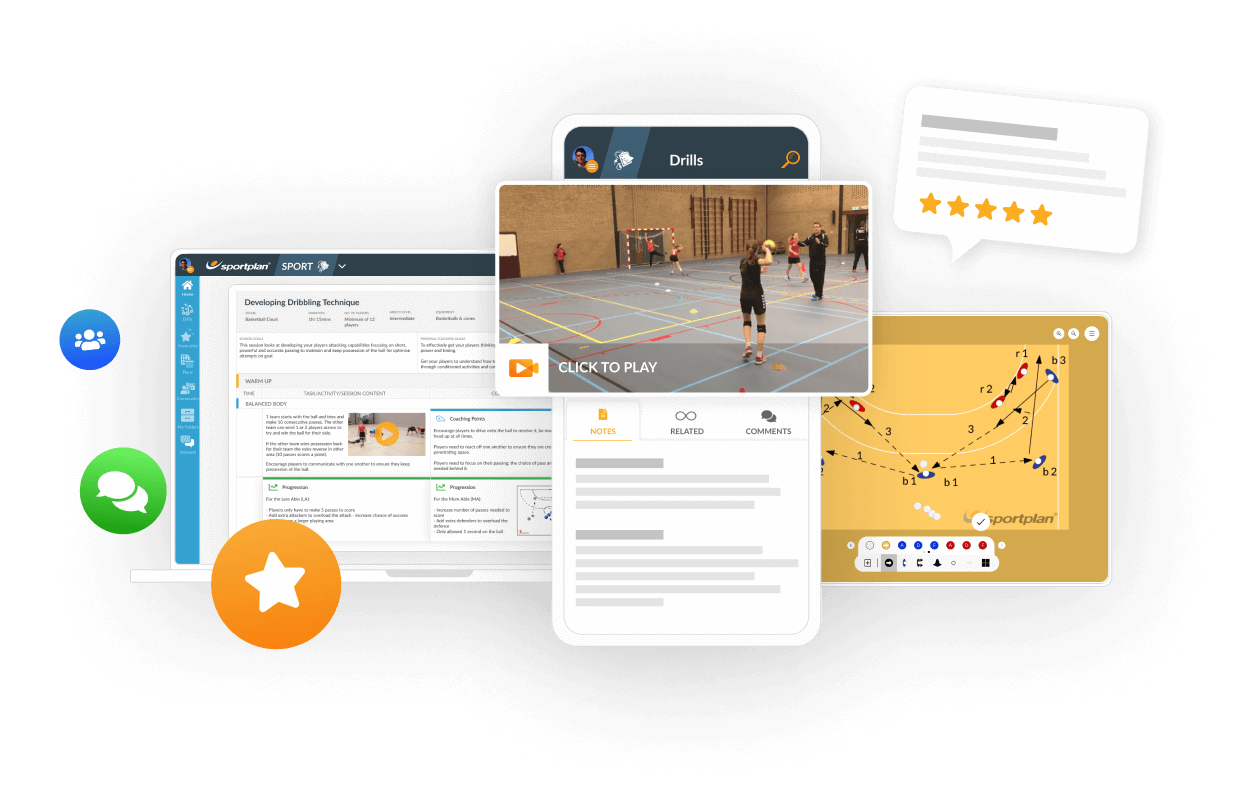
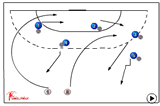
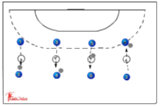
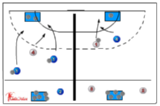
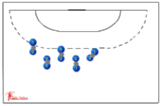
Two or more teams.
Who is back first ?
variations :
- running
- dribbling
- running complete team at once
- vary startpositions (sit,lie etc)
dribbling
pay only attention to the complete technical movement
Only general corrections
- ball must bounce up between hip and chest height
- dribbling must go in accordance with the pace rhythm
- when dribbling push ball diagonally front wards
mistakes often made
- ball bounces up too high
- ball bounces up too low
- dribbling in front of the body in stead of slightly sidewards of the body
- hand must touch the ball just over the horizantal midline of the ball (equator)
- not only look at the ball but also at you opponents and fello teammates
defend the ball when dribbling
- put your hand in between the ball and the opponent's hand when you hear the ball bounce the floor
- attack your opponent from the side he is dribbling the ball
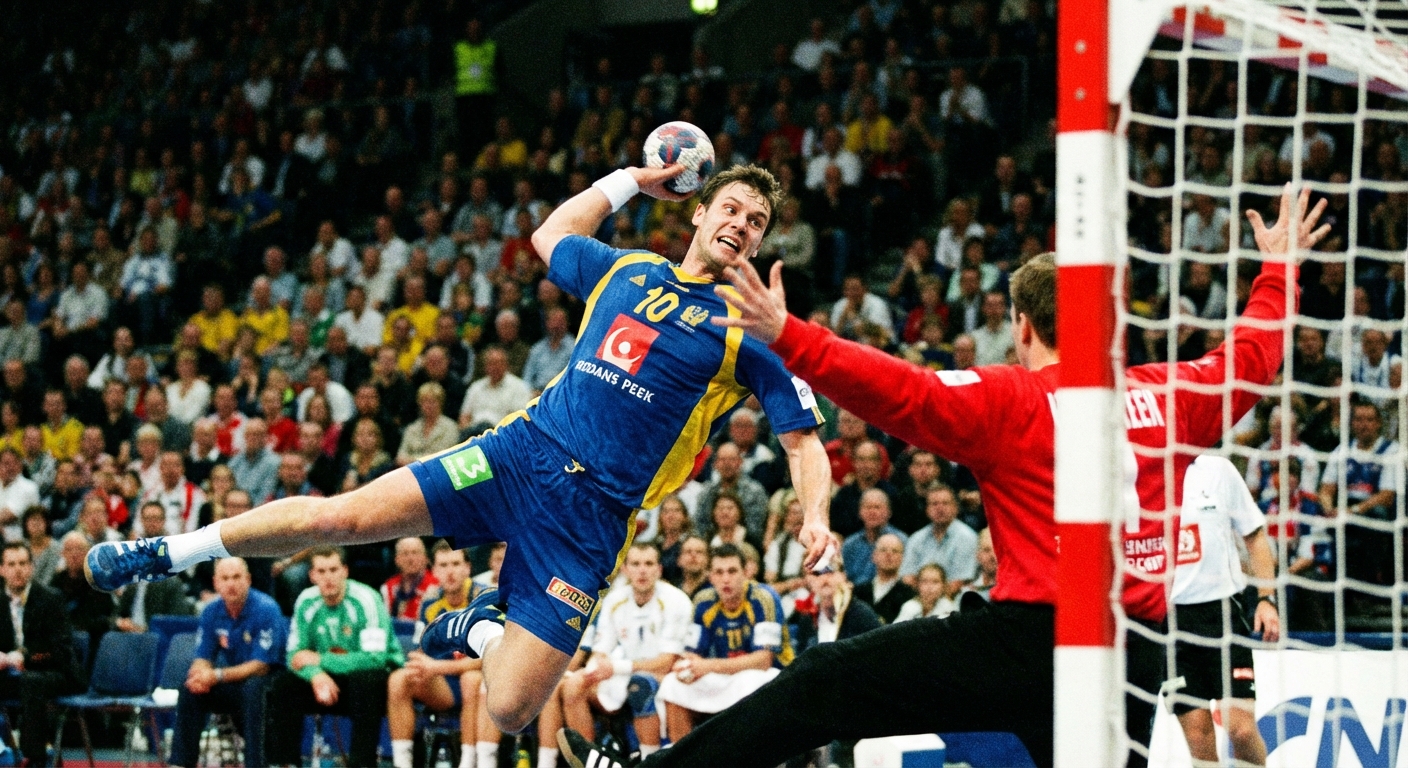
Wing players operate in the most demanding shooting position on a handball court, where acute angles and a close goalkeeper make finishing a specialist skill. This article breaks down the technique, decision-making, and training progressions that coaches need to develop elite wing finishing.
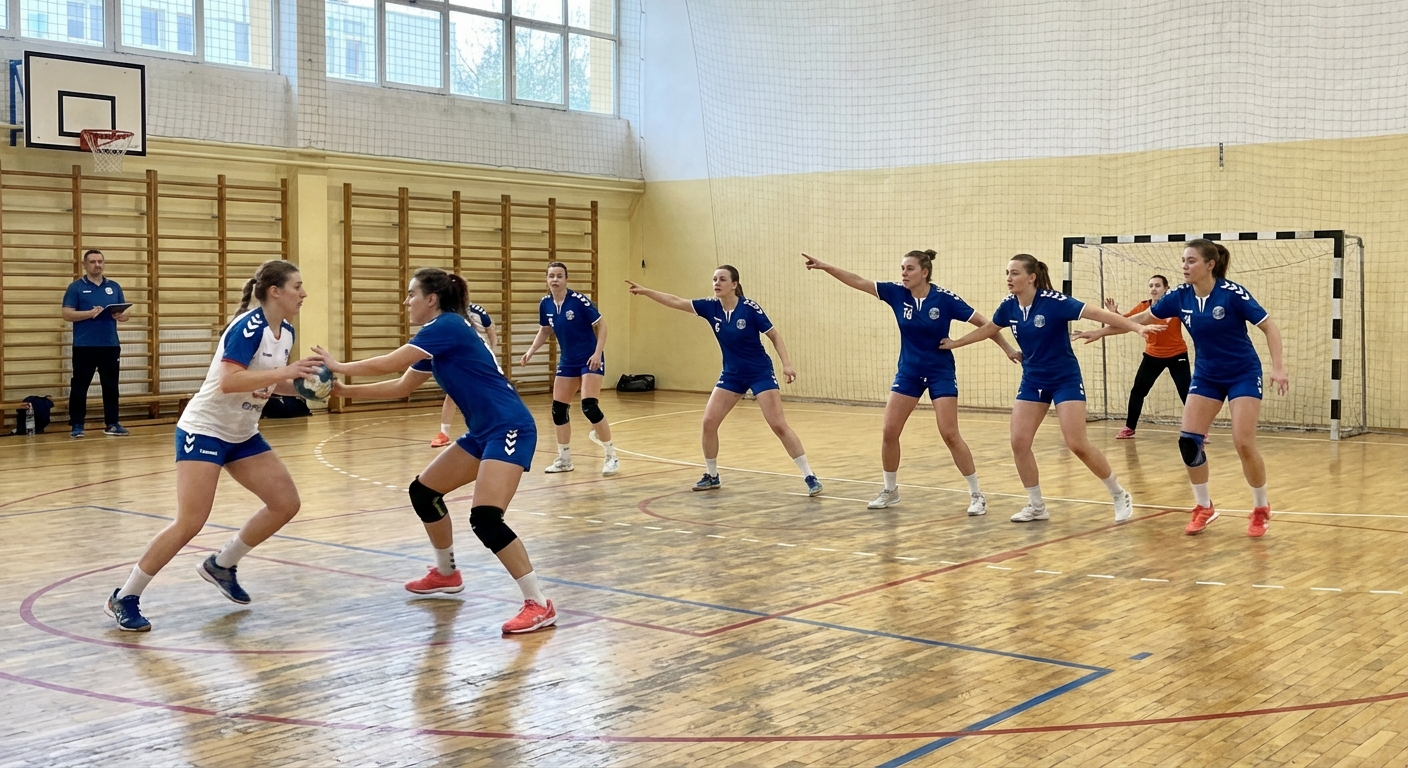
The transition from attack to defence is the most vulnerable moment in handball. This article examines the 3-second recovery principle, the specific roles players must adopt during transition, and the training scenarios that build a team's ability to recover defensive shape under pressure.
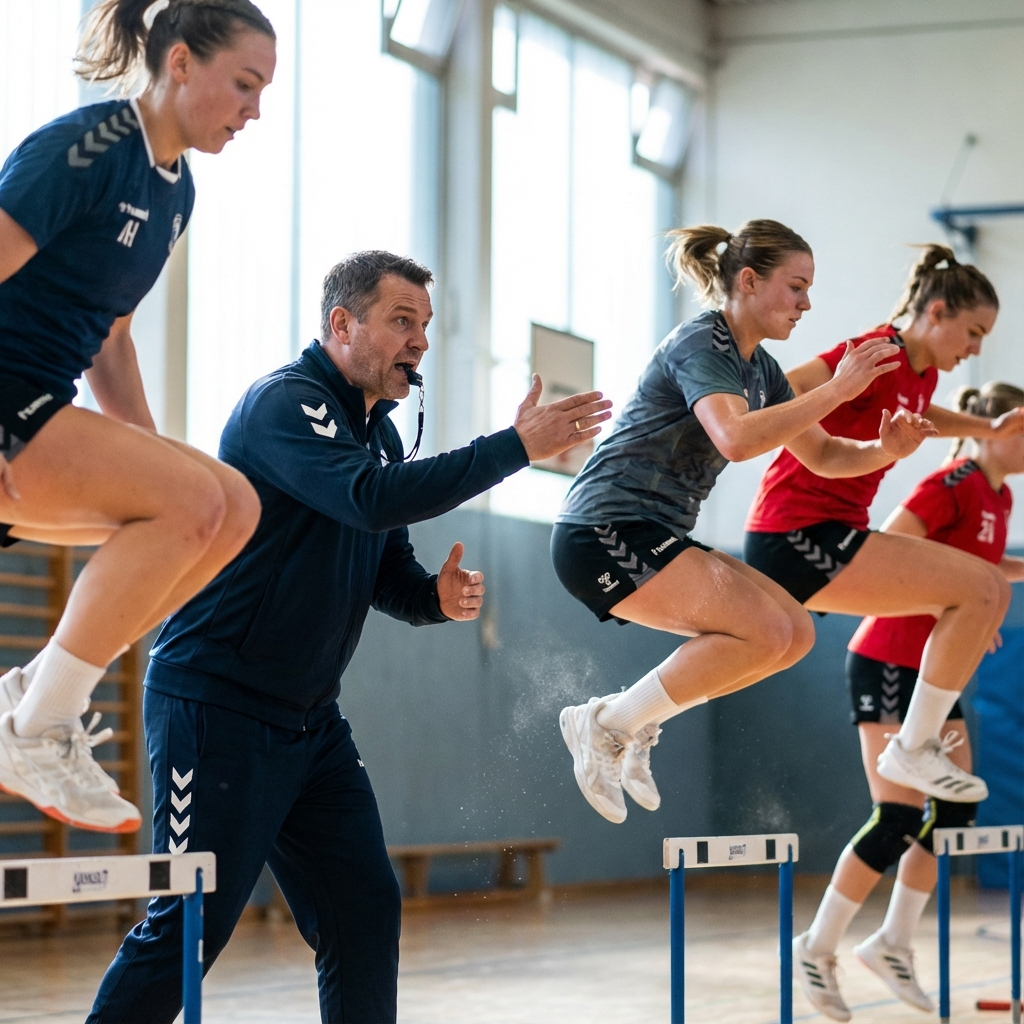
Handball demands explosive power, repeated sprint ability, and the strength to compete physically for 60 minutes. Sport-specific conditioning develops the athletic qualities that underpin elite performance.


Register for FREE and get coaching tips, top drills, session and more every week!