Expired Page

This is a great site. The days of scratching practice drills and back...
Andrew
READ MORE
READ LESS

Whoops - you've found an old page

You have some how come to an old link - please try one of these:

javax.servlet.jsp.JspException: java.io.FileNotFoundException: The requested resource [/relatedContent/drills/sessions_drills_21.html] is not available
4278

SIGN UP NOW FOR FREE

  • search our library of  support drills
  • create professional support coaching plans
  • or access our tried and tested support plans
MORE DRILLS
Support DRILL CATEGORIES
/drills/Support/categoryLinks21.jsp

Key 5 6 Counterbalance

Counter Balances. (mobile) The pair lean away from each other, whilst remaining in contact by means of a  grip or interlock. Once a static balance has been achieved, the state of equilibrium may be disturbed by lowering and raising the C of G of one or both of the gymnasts. The counter balance will thereby become a mobile action. By tilting a static balance to one side, and skittering to move the feet quickly,the original balance will become a mobile spin. By a Base gymnast lowering a Top gymnast out of a static balance, the equilibrium may be disturbed, to become a mobile counter balance, and thereby create an exit idea from static balance.

Key 5 6 Counterbalance
Key 5 6 Counterbalance

Counter Balances. (mobile) The pair lean away from each other, whilst remaining in contact by means of a  grip or interlock. Once a static balance has been achieved, the state of equilibrium may be disturbed by lowering and raising the C of G of one or both of the gymnasts. The counter balance will thereby become a mobile action. By tilting a static balance to one side, and skittering to move the feet quickly,the original balance will become a mobile spin. By a Base gymnast lowering a Top gymnast out of a static balance, the equilibrium may be disturbed, to become a mobile counter balance, and thereby create an exit idea from static balance.

Key 5 6 Counterbalance
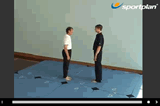
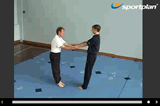
Offset palm to palm - pulling action

Palm to Palm Grip. (the handshake grip) Both partners shake the hand of the other and grip tight. This grip may be used to either pull against each other; or f This grip probably works best diagonally across the bodies of the gymnasts.

Key 5 6 Counterbalance

Single leg lifts and counter balance into a Crown

Counter Balances.(static) The pair lean away from each other, whilst remaining in contact by means of a grip or an interlock. The gymnasts body weights being used as counter agencies to create a final state of equilibrium, and produce a static counterbalance image.

Key 5 6 Counterbalance

Squat Base counter balance

Counter Balances.(static) The pair lean away from each other, whilst remaining in contact by means of a grip or an interlock. The gymnasts body weights being used as counter agencies to create a final state of equilibrium, and produce a static counterbalance image.

Key 5 6 Counterbalance

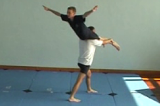
Squat Lift into a Mobile Counterbalance.

Starting situation. Gymnast B, in a lunge base, holding A in a Horizontal counterbalance. Gymnast A holding a tense horizontal straddle shape supported on the shoulders of gymnast B. Grip. Gymnast B, with palms of hands down, presses strongly down on the front of the tense lower legs of gymnast A. Works when gymnast B gradually leans further forwards into a deeper lunge position, whilst pressing even harder down on the tense lower legs of A. Gymnast A changes focus from looking along their horizontal body, to looking for the floormat. Gymnast A slowly lowers gymnast B,into a handstand position. Gymnast A looks for, and stretches towards the floormat and into a Handstand exit from the action.

Key 5 6 Counterbalance

Squat Lift into Horizontal Balance.

Counter Balances. (mobile) The pair lean away from each other, whilst remaining in contact by means of a  grip or interlock. Once a static balance has been achieved, the state of equilibrium may be disturbed by lowering and raising the C of G of one or both of the gymnasts. The counter balance will thereby become a mobile action. By tilting a static balance to one side, and skittering to move the feet quickly,the original balance will become a mobile spin. By a Base gymnast lowering a Top gymnast out of a static balance, the equilibrium may be disturbed, to become a mobile counter balance, and thereby create an exit idea from static balance.

Key 5 6 Counterbalance
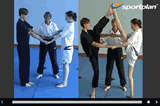
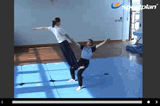
Stand on a squat base - Counter Balance with diagonal grip

Key 5 6 Counterbalance

Wrist to Wrist - one hand counter balance

Counter Balances.(static) The pair lean away from each other, whilst remaining in contact by means of a grip or an interlock. The gymnasts body weights being used as counter agencies to create a final state of equilibrium, and produce a static counterbalance image.

Key 5 6 Counterbalance

Wrist to Wrist Counter balance grip. Face to back One hand

Counter Balances.(static) The pair lean away from each other, whilst remaining in contact by means of a grip or an interlock. The gymnasts body weights being used as counter agencies to create a final state of equilibrium, and produce a static counterbalance image.

Key 5 6 Counterbalance

Wrist to Wrist Counter balance grip. One hand - change of level

Counter Balances.(static) The pair lean away from each other, whilst remaining in contact by means of a grip or an interlock. The gymnasts body weights being used as counter agencies to create a final state of equilibrium, and produce a static counterbalance image.

Key 5 6 Counterbalance

Wrist to Wrist Counter balance grip. One Hand Back to back

Counter Balances.(static) The pair lean away from each other, whilst remaining in contact by means of a grip or an interlock. The gymnasts body weights being used as counter agencies to create a final state of equilibrium, and produce a static counterbalance image.

Key 5 6 Counterbalance

Wrist to Wrist Counter balance grip. Side to side

Counter Balances.(static) The pair lean away from each other, whilst remaining in contact by means of a grip or an interlock. The gymnasts body weights being used as counter agencies to create a final state of equilibrium, and produce a static counterbalance image.

Key 5 6 Counterbalance

Wrist to Wrist Counter balance grip. Two Hand Face to back

Counter Balances.(static) The pair lean away from each other, whilst remaining in contact by means of a grip or an interlock. The gymnasts body weights being used as counter agencies to create a final state of equilibrium, and produce a static counterbalance image.

Key 5 6 Counterbalance

Wrist to Wrist Counter balance grip. Two hands - change of level

Counter Balances.(static) The pair lean away from each other, whilst remaining in contact by means of a grip or an interlock. The gymnasts body weights being used as counter agencies to create a final state of equilibrium, and produce a static counterbalance image.

Key 5 6 Counterbalance

Wrist to Wrist grip - Counter balance

Counter Balances.(static) The pair lean away from each other, whilst remaining in contact by means of a grip or an interlock. The gymnasts body weights being used as counter agencies to create a final state of equilibrium, and produce a static counterbalance image.

Key 5 6 Counterbalance

Wrist to Wrist grip - Diagonal variation

Counter Balances.(static) The pair lean away from each other, whilst remaining in contact by means of a grip or an interlock. The gymnasts body weights being used as counter agencies to create a final state of equilibrium, and produce a static counterbalance image.

Key 5 6 Counterbalance

Wrist to Wrist Grip - Face to face up and down motion

Counter Balances. (mobile) The pair lean away from each other, whilst remaining in contact by means of a  grip or interlock. Once a static balance has been achieved, the state of equilibrium may be disturbed by lowering and raising the C of G of one or both of the gymnasts. The counter balance will thereby become a mobile action. By tilting a static balance to one side, and skittering to move the feet quickly,the original balance will become a mobile spin. By a Base gymnast lowering a Top gymnast out of a static balance, the equilibrium may be disturbed, to become a mobile counter balance, and thereby create an exit idea from static balance.

Key 5 6 Counterbalance
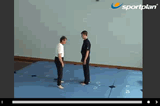
Wrist to Wrist Grip - one hand side to side

Counter Balances.(static) The pair lean away from each other, whilst remaining in contact by means of a grip or an interlock. The gymnasts body weights being used as counter agencies to create a final state of equilibrium, and produce a static counterbalance image.

Key 5 6 Counterbalance

Wrist to Wrist Grip - up and down motion - one hand

Counter Balances. (mobile) The pair lean away from each other, whilst remaining in contact by means of a  grip or interlock. Once a static balance has been achieved, the state of equilibrium may be disturbed by lowering and raising the C of G of one or both of the gymnasts. The counter balance will thereby become a mobile action. By tilting a static balance to one side, and skittering to move the feet quickly,the original balance will become a mobile spin. By a Base gymnast lowering a Top gymnast out of a static balance, the equilibrium may be disturbed, to become a mobile counter balance, and thereby create an exit idea from static balance.

Key 5 6 Counterbalance
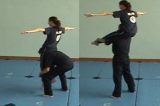
Sportplan App

Give it a try - it's better in the app

X
POPULAR SEARCH TERMS
YOUR SESSION IS STARTING SOON... Join the growing community of support coaches plus drills and pro tools to make coaching easy.
LET'S DO IT