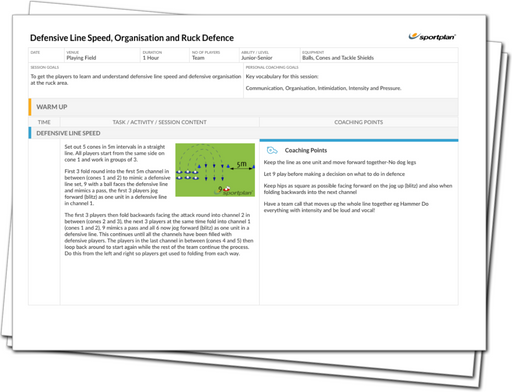
The aim of this defensive plan is to ensure your team are able to move as a unit (no dog legs) and have a clear understanding of how to defend the ruck area. This plan also teaches your team how to work as smaller pods of 3, while concentrating on the defence as a whole.
Common mistake defending the ruck:
The most common mistake when defending rucks is that the outside defensive players watch the ball and not where the secondary attacking threat is coming from as the ball is passed or kicked. To ensure this doesn't happen in your next match this plan gives your players clear roles and calls to help them defend as a unit. Defences that communicate make fewer mistakes.
What's in the session?
We open with a line speed warm up and then get to work, teaching players to look for threats from the fringes of the ruck. Following on from this we continue to develop your guard, bodyguard and general's positioning and responsibilities at the ruck - teaching them to take responsibility for their own defensive position and to trust the teammate inside and outside of them (while being ready to react if a mistake is made).
Session outcomes:
Players will finish the session with an understanding of how to be a better organised defensive team around the ruck area and the structure needed to make this happen. Also getting the players to improve their Communication, Organisation, Intimidation, Intensity and Pressure at the ruck area.

in more ways than one
 sportplan_netball



in more ways than one
sportplan_rugby

Your players can pass beautifully in a warm-up grid. Then a defender closes, their lungs are burning, and the ball goes to ground. Here is how to build catch-pass skills that hold up when it matters.
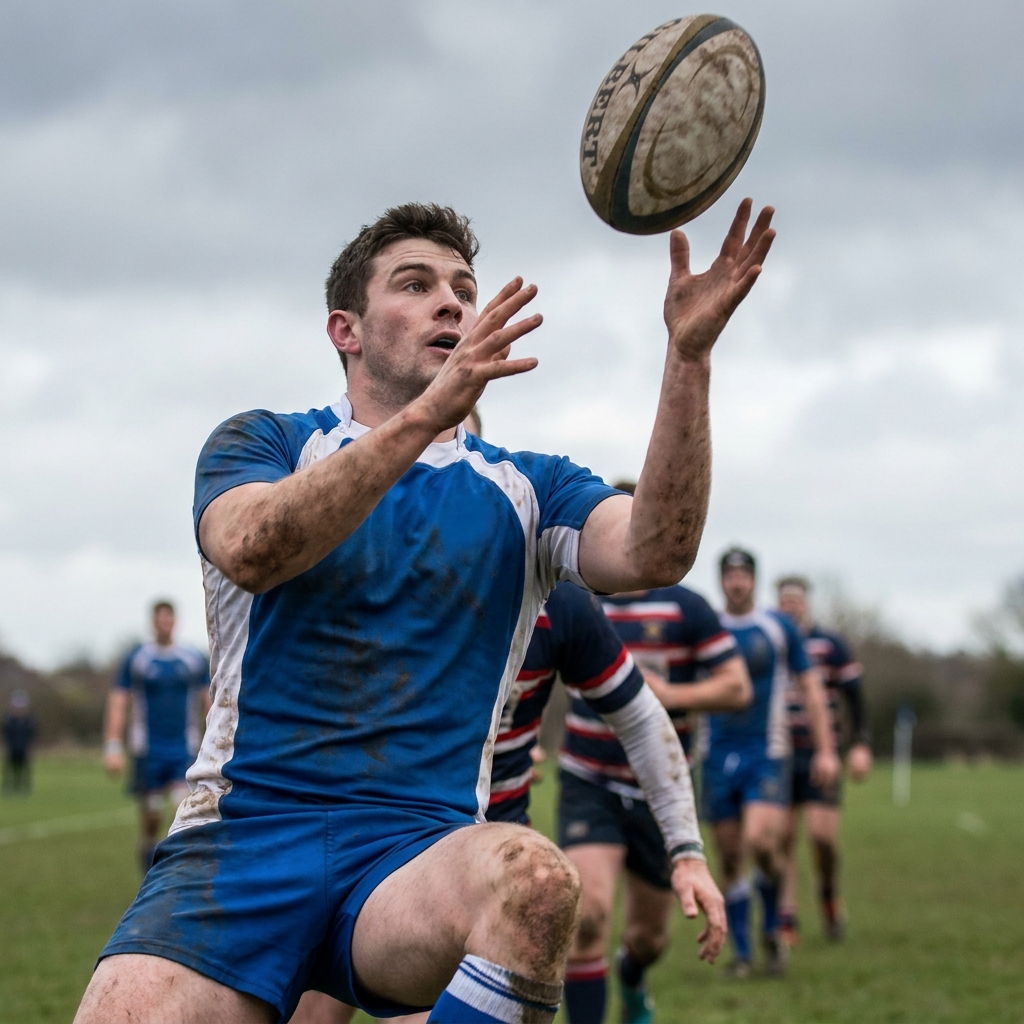
A box kick or up-and-under is only as good as the chase behind it. Here is how to organise your chase line, compete in the air safely, and make sure your own catchers are ready for what comes next.
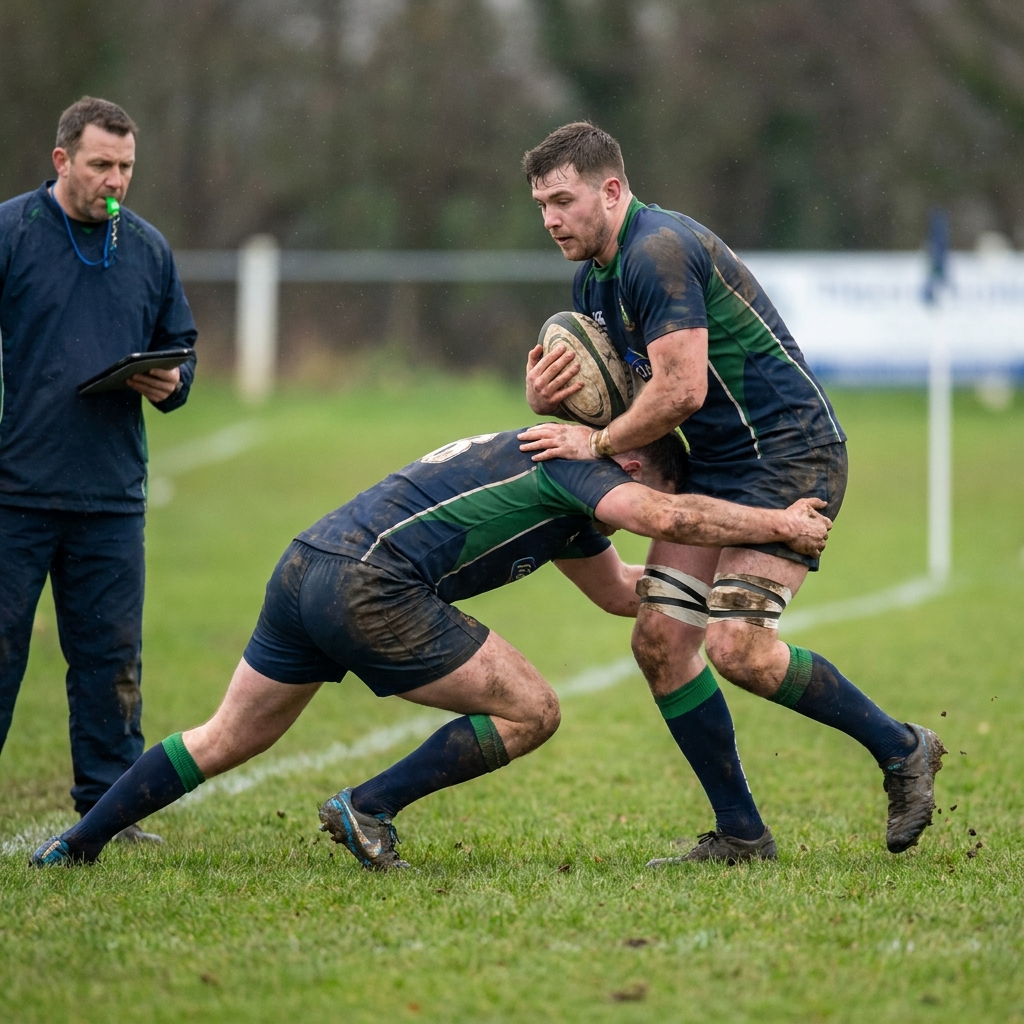
World Rugby's lower tackle height is no longer a trial. It is law in community rugby from this season, and unions choose waist or base of the sternum. Here is how to retrain your defence.