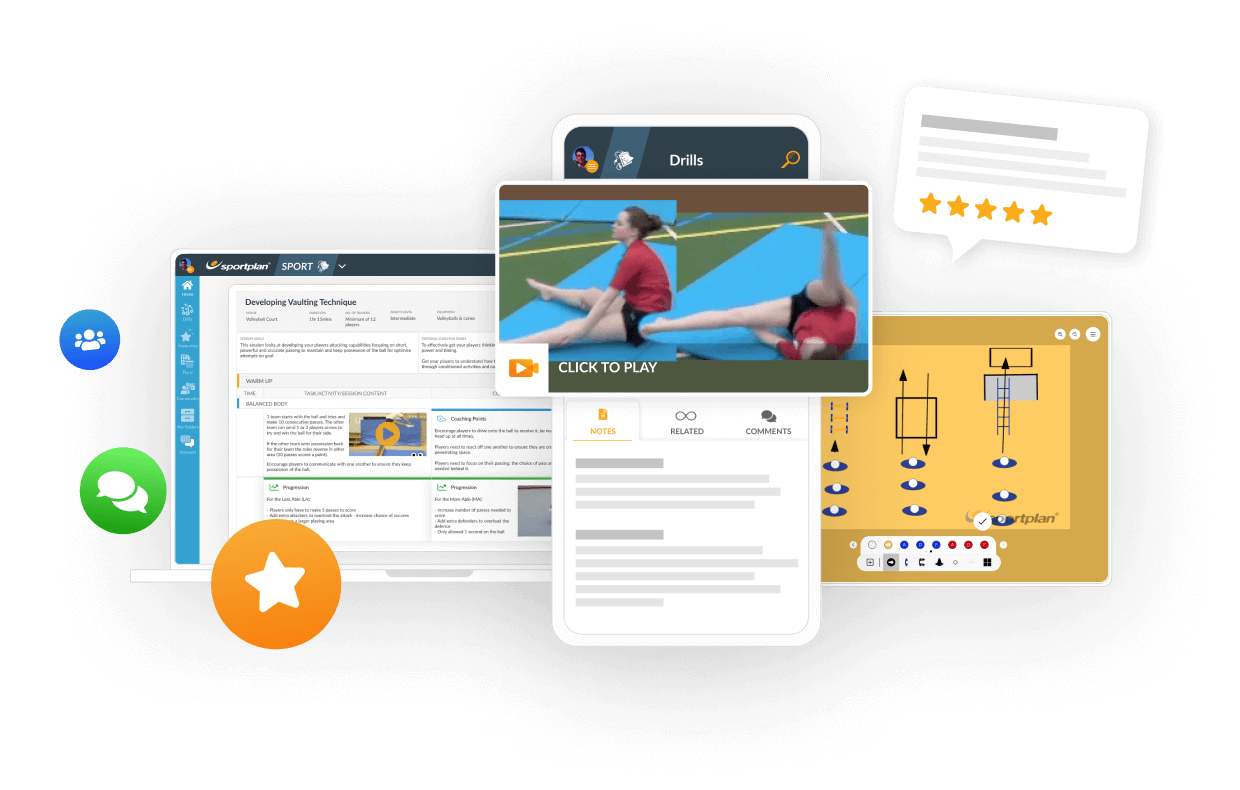
Starting situation.
A stands upright, and holding a Wide position, in front of B and Face on to B.
B stands upright in front of A, and face on to A.
Grip. Hand to Wrist. The inside hand of B grips the outside Wrist of B. eg, the left hand of B grips the right wrist of A.
Works when Gymnast A is face on to B and standing in a Wide shape. Gymnast B is face on to A and close to A. Gymnast B grips the outside wrist of A with their outside hand; then squats down to push their inside arm through the legs of A. By pushing their shoulder into the tummy of A, and pulling on the wrist of A, gymnast B is able to pull the body of A across their shoulders and squat lift A, into a Firemans Lift. To exit the action B may lower A onto hands and into a roll, a cartwheel, or a handstand roll.

The 2026 World Cup is nearly upon us. Here is Sportplan's preview for the tournament on who we think is going to do well and which teams to look out for.

Discover our new Coaching Trends section - in-depth articles covering the latest tactics, techniques and innovations across Football, Hockey, Cricket, Rugby, Netball, Basketball, Tennis, Handball and Volleyball.
Save yourself a scare this Halloween and ensure your session runs smoothly. No chaos, no fright, just structure.


Register for FREE and get coaching tips, top drills, session and more every week!