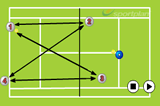
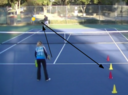
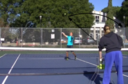
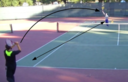
The player stands close to the net on the deuce side. The coach feeds diagonal ball to the ad side. The player then sprints across the centre and hits a backhand stop volley cross-court.
Poaching is the primary skill that all net players should possess. Poaching consists of anticipation, courage, speed, and control of the shots. To encourage players to play more volleys from cross-court shots, the coach has to create simple environment where players can practice poaching in an easy way.
In this drill, the player works on poaching skills. The most common situation that happens during doubles at junior level is poaching and hitting the ball down the line. Unfortunately this strategy is not effective because there is an opponent at the net as also we open half of the court unsecured. Much better solution is stop volley cross-court so players have to learn how to control the ball and create right racquet angle to put the ball close to the doubles alley. To make it competitive, the coach can give points for each successful shot in the zone.
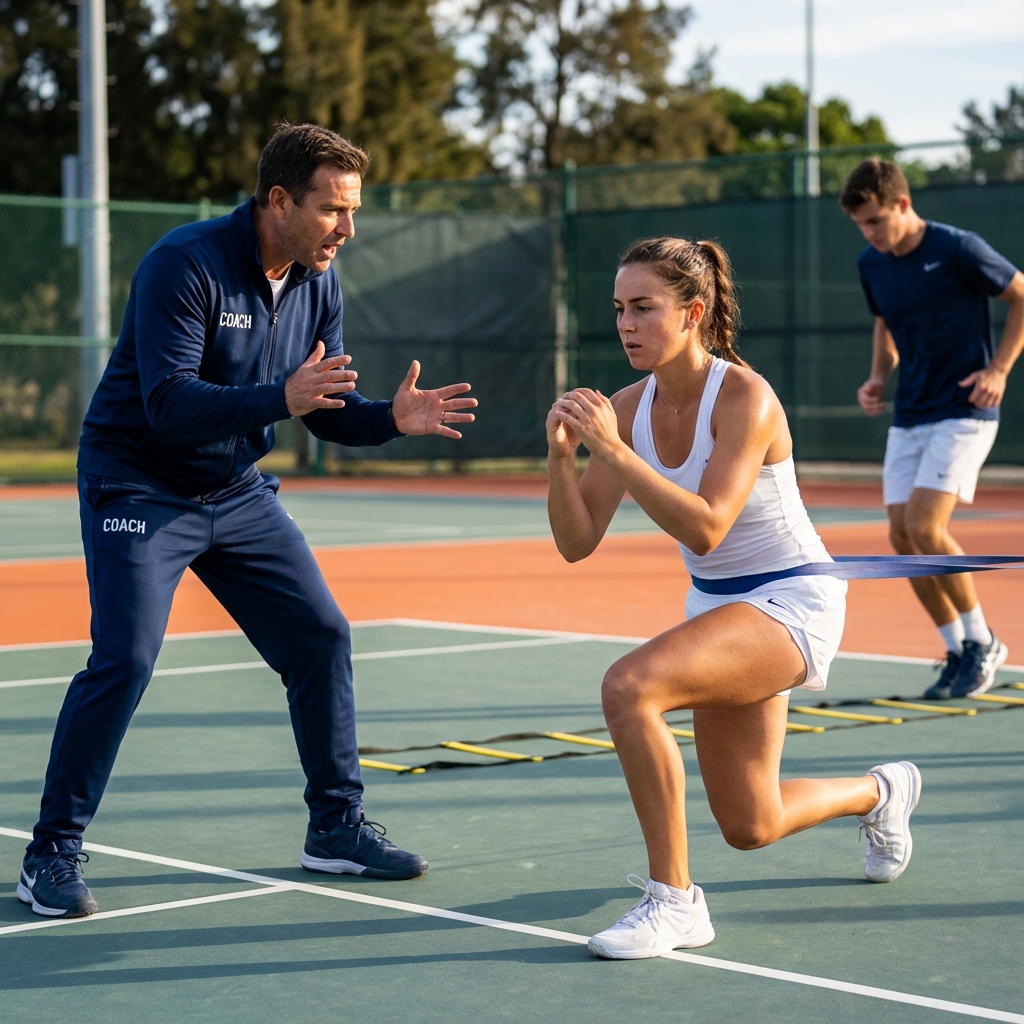
Tennis demands a unique combination of endurance, power, agility, and flexibility. Physical preparation determines how long careers last and how players perform when it matters most.
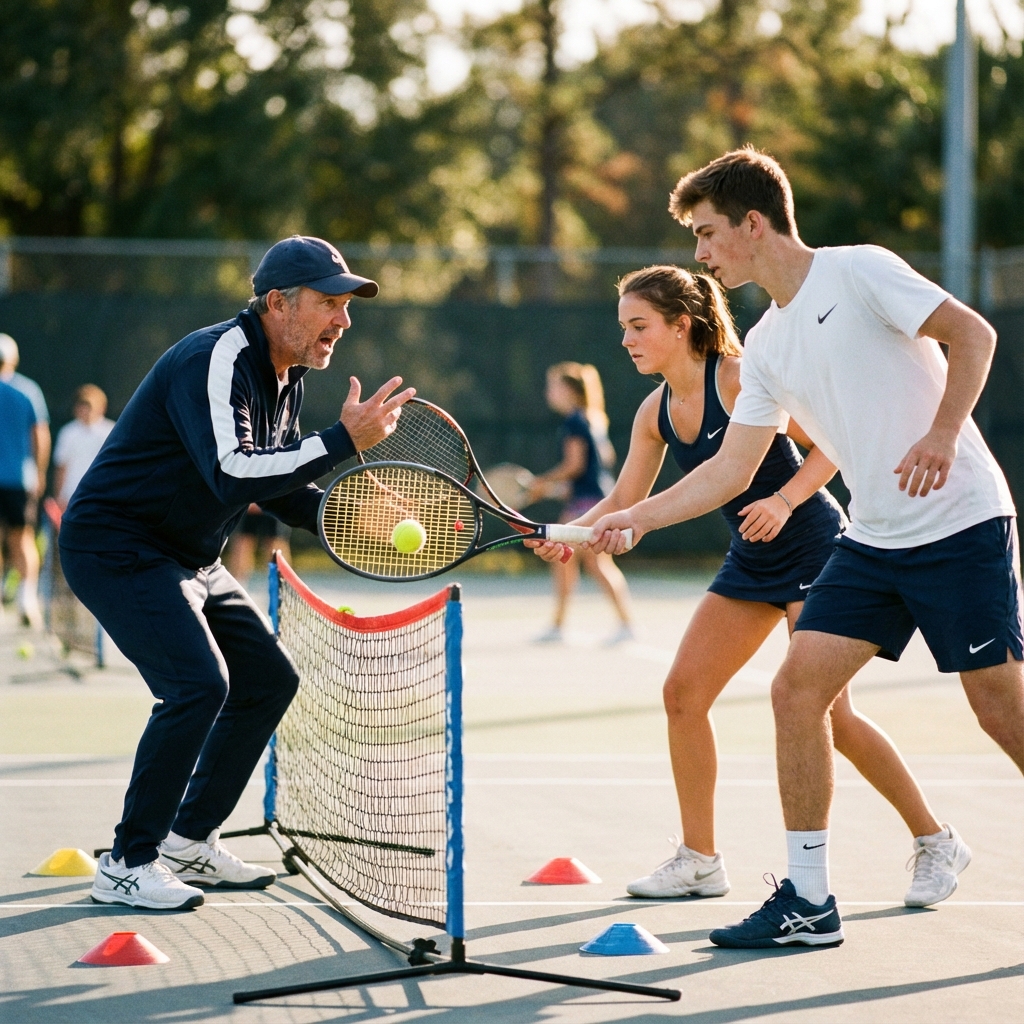
Ecological dynamics is transforming tennis coaching. This constraints-led approach develops adaptable, creative players who can solve problems in competition, not just execute drilled patterns.
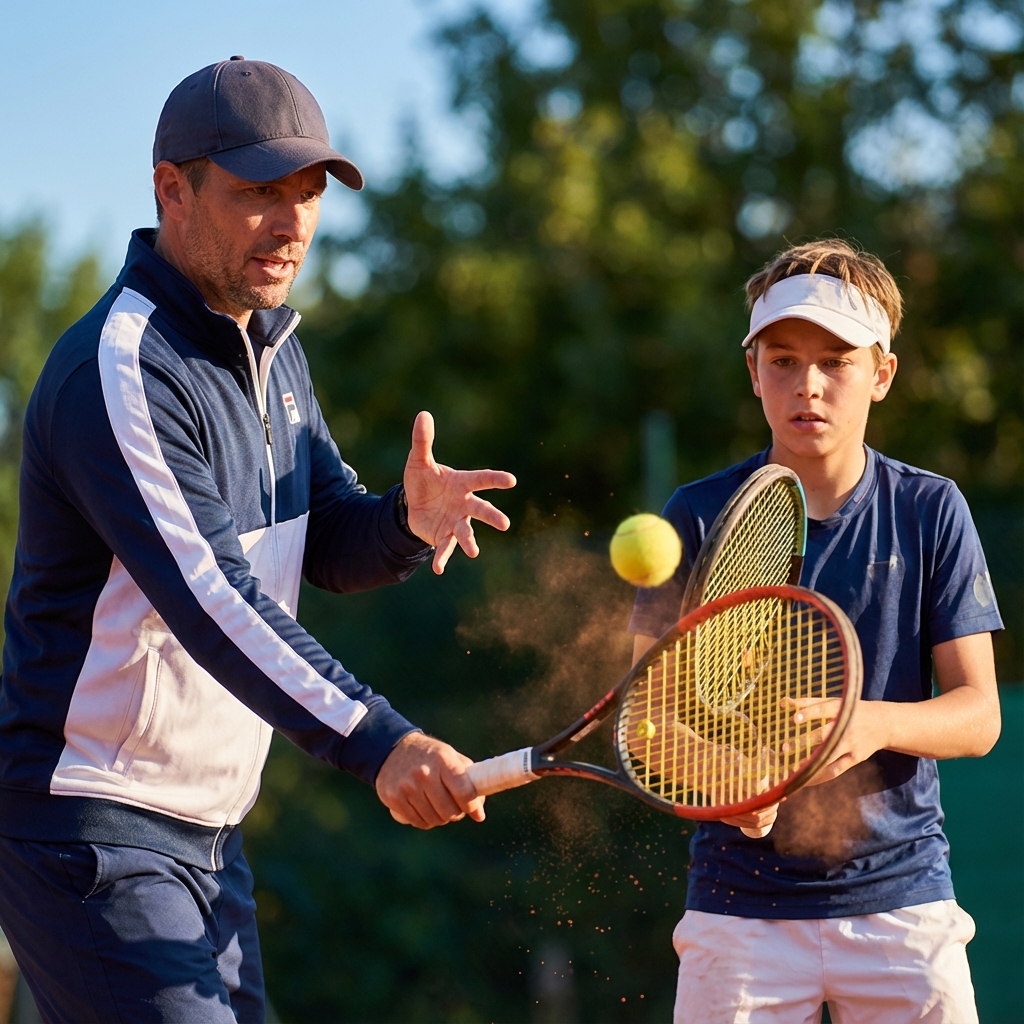
The one-handed backhand is becoming rare, but when executed well, it remains one of tennis's most elegant and effective shots. Is it a dying art or a tactical advantage?


Register for FREE and get coaching tips, top drills, session and more every week!