

Oefening 4 (blauw): Speler rood pusht de bal naar speler grijs. Hij neemt de bal aan en passt 4 keer tussen de pionnen tegen de balk aan. Aan het einde van de pionnerij versnelt hij over de achterlijn en legt de bal haaks terug op de ingekomen speler rood. Die rondt de bal met een sleeppush af.Oefening 5 (oranje): Estafette. Slalom --> rondje om de pionnen --> pass tegen de balk --> terug sprinten met bal --> doorgeven aan de volgende spelerOefening 6 (rood): Speler geel passt de bal naar speler blauw. Die neemt de bal aan en speelt hem naar speler oranje. Hij neemt de bal aan, doet een forehandturn en rondt af op doel. Zet de oefening eventueel twee keer uit.
This practice has no coaching points
This practice has no progressions

in more ways than one
 sportplan_hockey



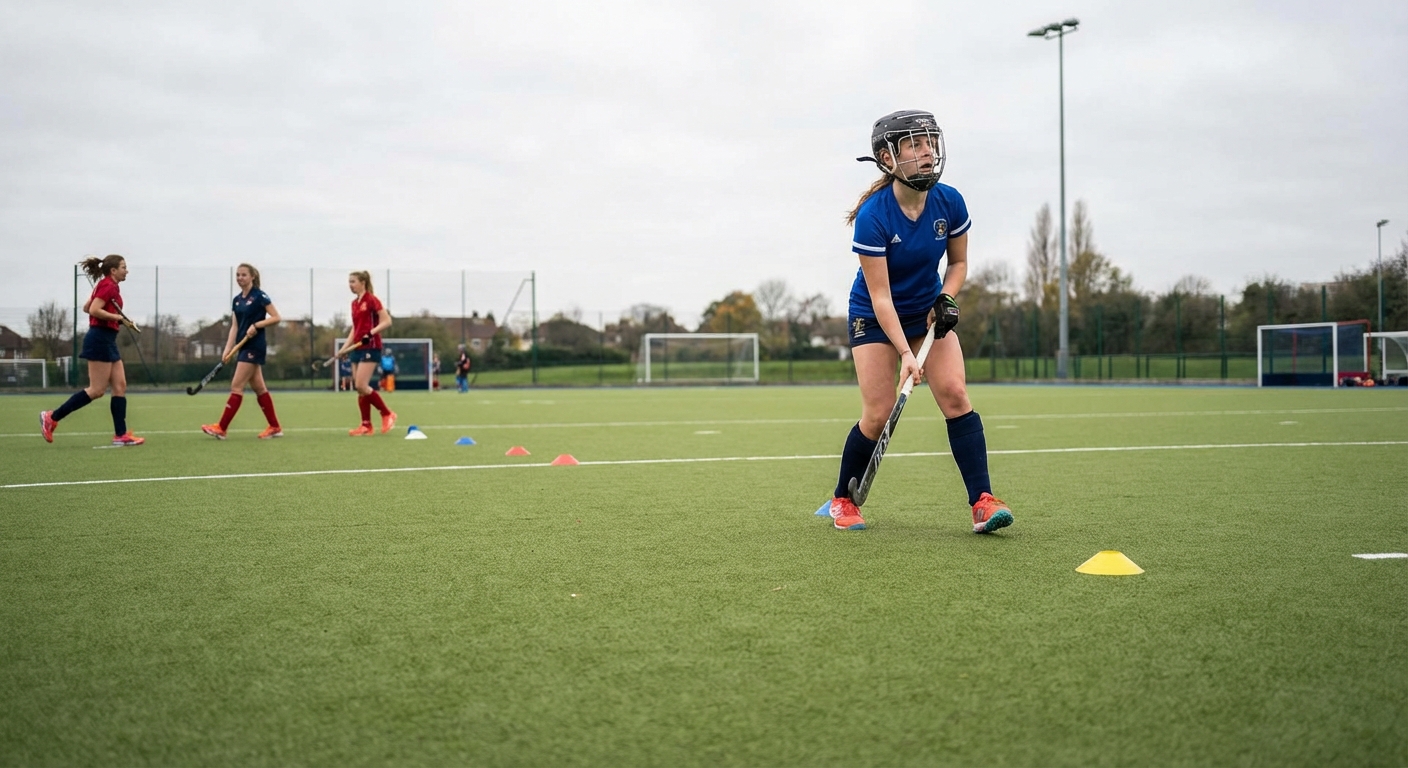
The best hockey players in the world do not just react faster; they scan more frequently and process information before the ball arrives. This article explores the science behind scanning, how to coach spatial awareness as a habit, and practical drills that force players to lift their heads and read the game.
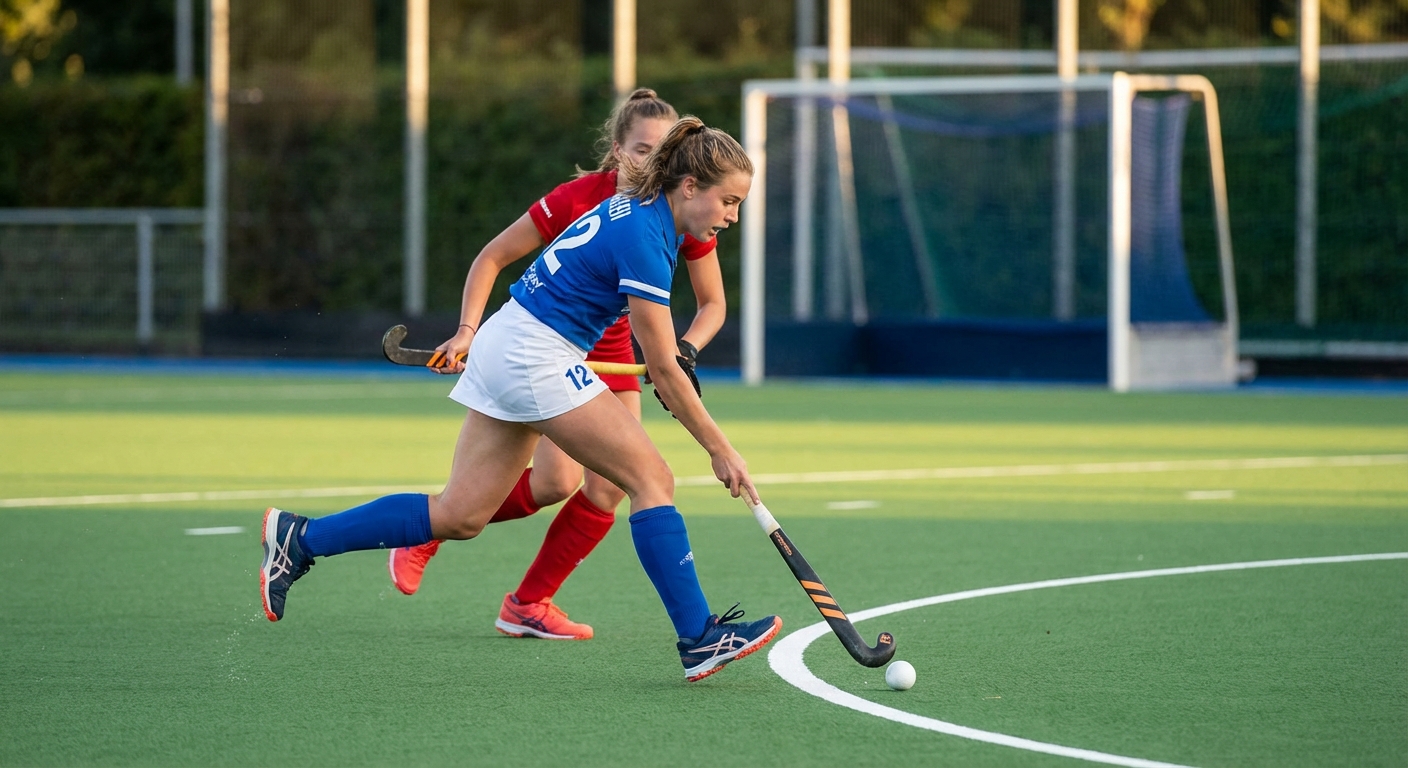
In hockey, you can only score from inside the circle. Getting the ball into the D with purpose and creating genuine shooting chances is the hardest part of attack. This article examines the different types of circle entry, why entry angle determines shot quality, and how to train your team to penetrate the most congested area on the pitch.
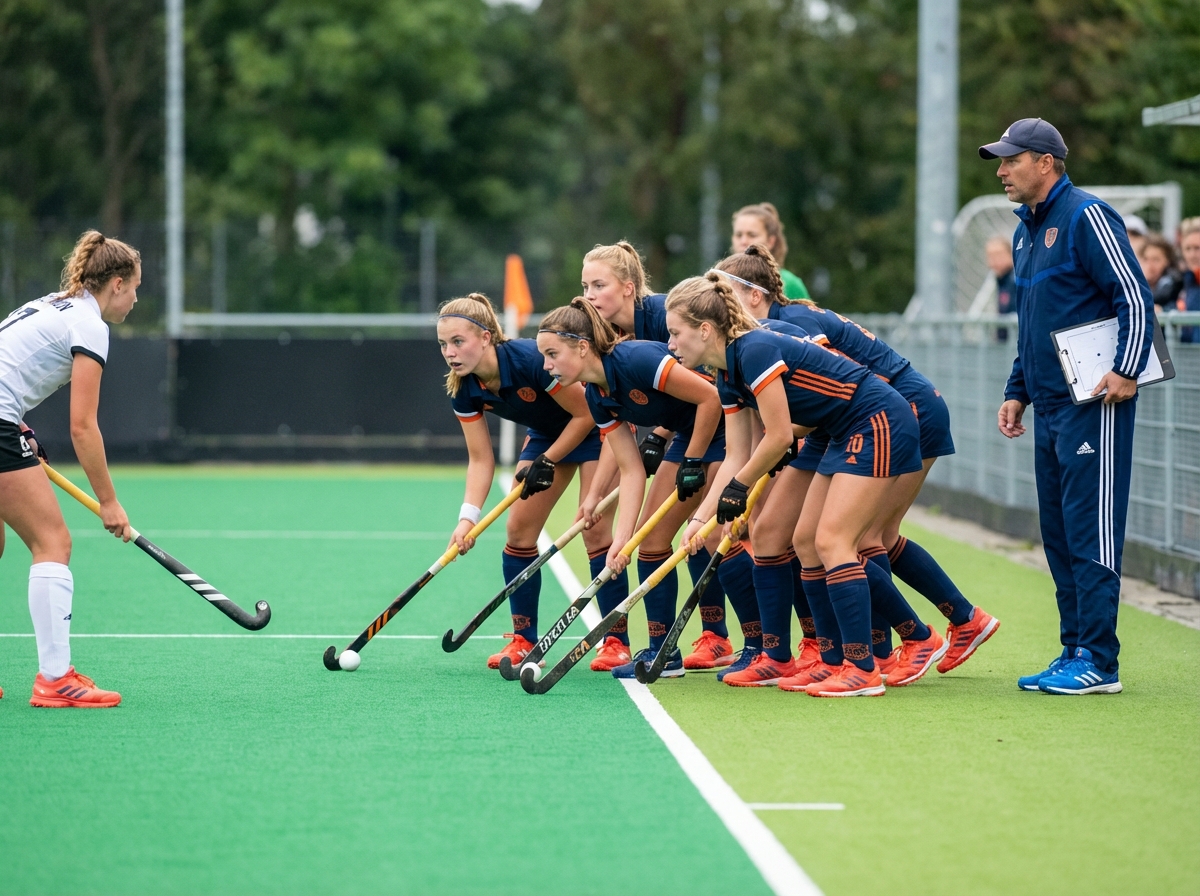
The best teams don't just press - they press at the right moment. Here's how to train your players to read the cues.









