Why Pressing Without Triggers Fails
Every hockey coach wants their team to press. The problem is that most teams press randomly. Players charge at the ball carrier with enthusiasm but without coordination, leaving gaps behind them that the opposition exploits with a simple square pass or an overhead.
Watch the best international sides - the Netherlands, Australia, Belgium - and you'll notice something critical. They don't press constantly. They wait, they observe, and then on a specific cue, the entire unit springs forward together. That cue is a pressing trigger.
A pressing trigger is a visual signal that tells your players the opposition is vulnerable. It's the moment when the odds of winning the ball shift in your favour. Without triggers, pressing is just chasing. With them, it becomes a coordinated hunt.
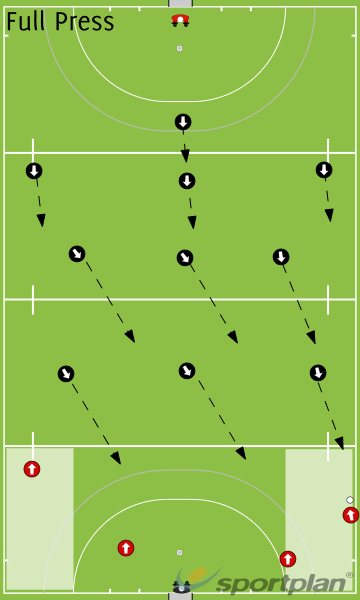
The 4 Pressing Triggers Every Hockey Team Must Recognise
1. The Backward Pass
When an opponent passes backwards, they're admitting they can't go forward. The receiver is typically facing their own goal with limited options. This is your green light. Train your front line to recognise this trigger and attack immediately - the backward pass is the single most reliable pressing cue in hockey.
2. The Poor First Touch
On astroturf, a bobbling reception or a touch that takes the player away from their intended direction creates a window of vulnerability. They need an extra half-second to recover the ball. That half-second is your opportunity. Drill your players to spot heavy first touches and close the distance before the opponent regains control.
3. The Predictable Rotation
Teams fall into patterns. When the same passing sequence appears twice, your players should be anticipating the third. If the opposition always goes right-back to centre-half to left-half, your midfield can position to cut that channel off. Predictability is the attacker's enemy.
4. The Sideline Trap
When the ball goes wide, the player's passing options are halved. The sideline acts as an extra defender. This is the moment to press with numbers, funnelling the ball carrier towards the boards and cutting off the escape route back inside.
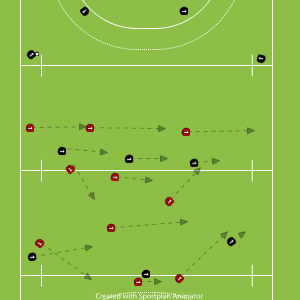
Collective Pressing vs Individual Pressing
One player pressing alone is worse than nobody pressing at all. When a single player breaks from the defensive shape to chase the ball, they create a passing lane that the opposition can exploit. The ball moves faster than any player can run.
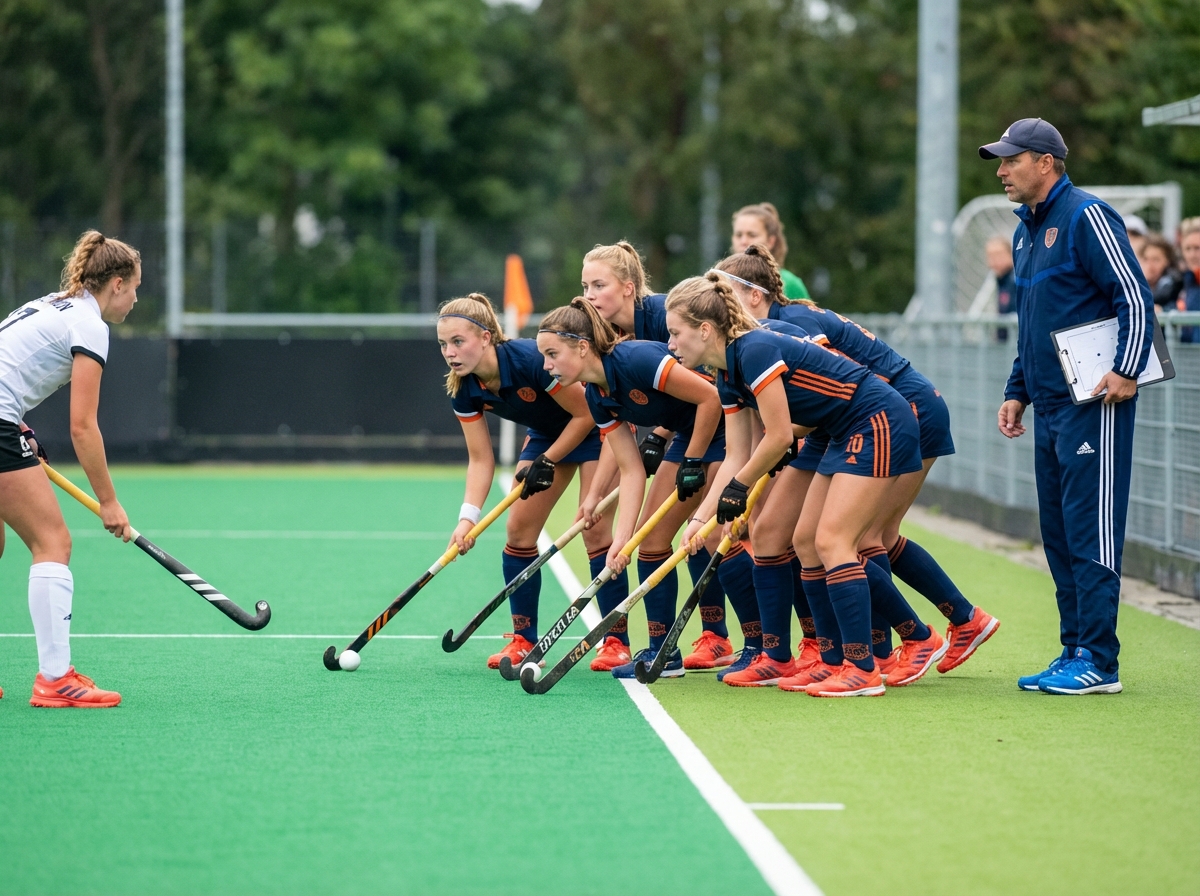
Collective pressing means the entire unit moves together. The ball-side player applies direct pressure. The nearest teammates cut off the obvious passing options. The rest of the unit compresses the space, squeezing the opposition into a smaller area where mistakes are more likely.
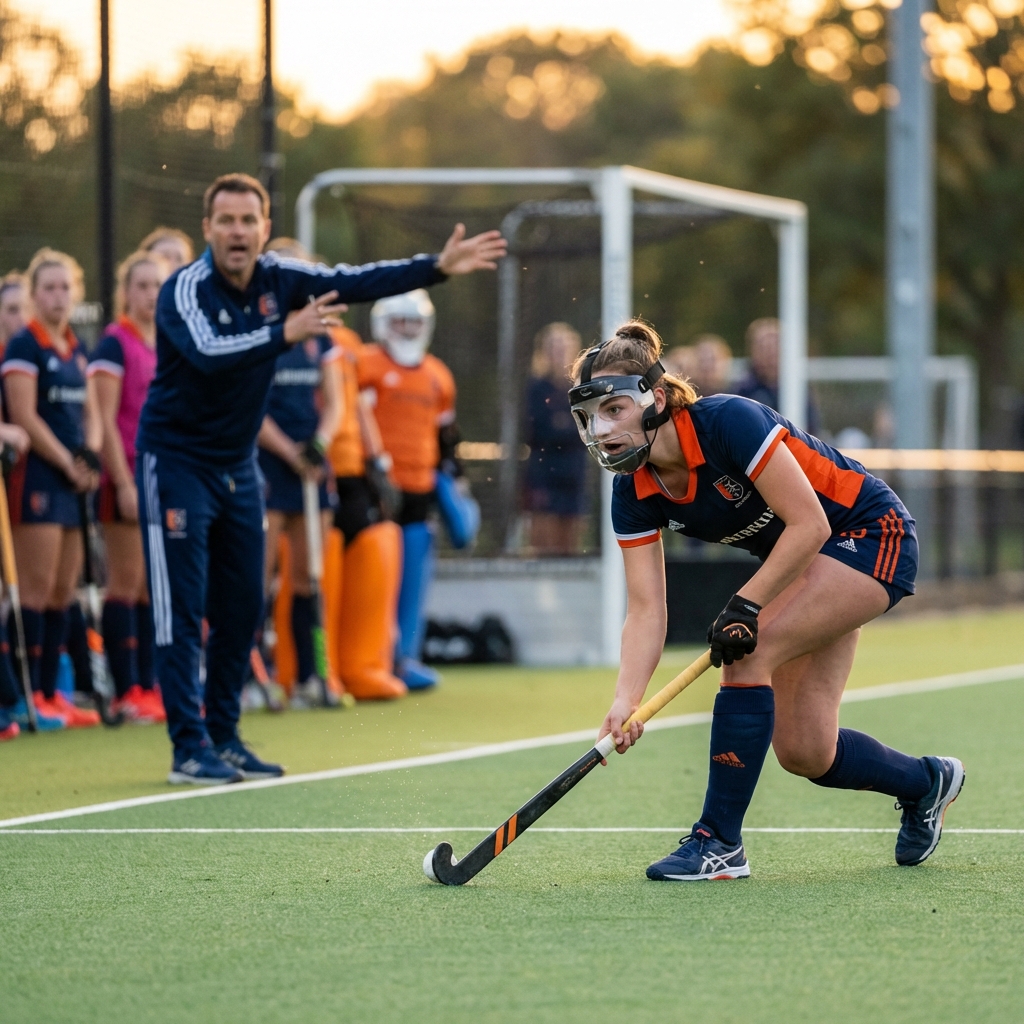
Communication is the glue. Simple calls like "now", "hold", or "trap left" keep everyone on the same page. Without verbal and non-verbal cues, you have individuals chasing shadows. With them, you have an organised hunting pack.
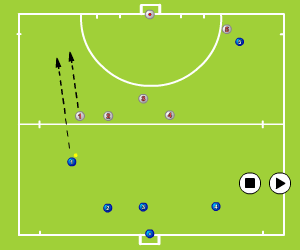
Counter-Pressing After Turnovers
The most dangerous moment in modern hockey is the transition. When your team loses possession, you have roughly three seconds to win it back before the opposition organises their attack. This is counter-pressing.
Counter-pressing doesn't require a trigger in the traditional sense - the trigger is the loss of possession itself. The nearest players immediately press the new ball carrier, while others cut off the quick outlet passes. The aim isn't necessarily to win the ball back immediately but to slow the opposition down and prevent them from building momentum.
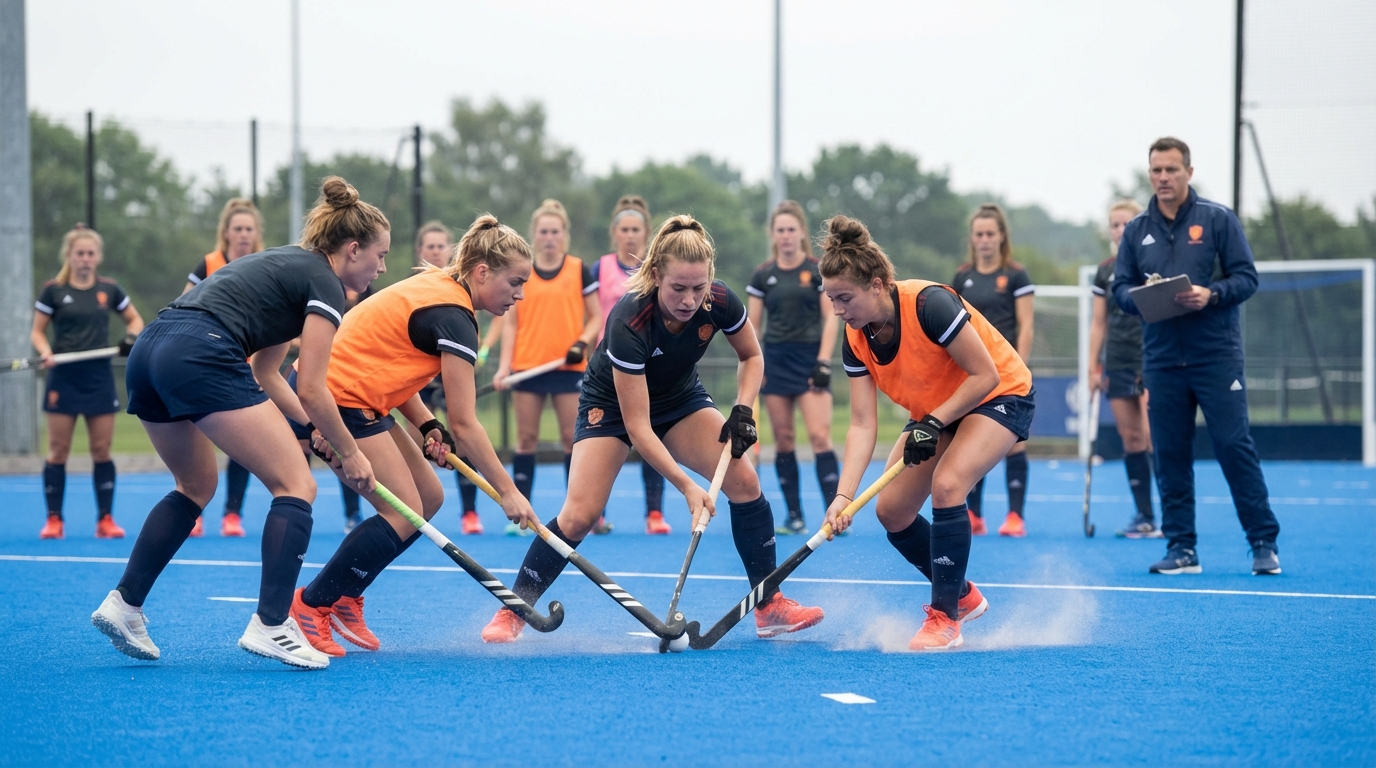
Train this by playing small-sided games where the team that loses the ball has five seconds to win it back for a bonus point. This creates the habit of reacting instantly to turnovers rather than dropping into a defensive shape.
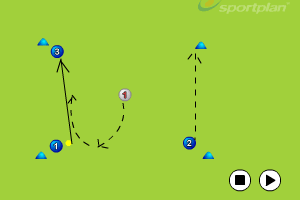
Session Structure for Pressing Work
Here's a 60-minute session plan you can use this week:
- Warm-up (10 mins): 4v2 rondos. Defenders can only press on a backward pass or heavy touch. Rotate every 90 seconds.
- Technical (15 mins): Shadow pressing in groups of four. Walk through trigger recognition without opposition, then add passive defenders.
- Game-related (20 mins): 6v6 half-pitch game. Pressing team scores a bonus point for winning the ball inside the attacking quarter from a recognised trigger. Individual pressing (one player going alone) results in a free ball to the opposition.
- Game (15 mins): Full-pitch conditioned game. Both teams play with pressing triggers. Freeze play periodically to ask "What was the trigger? Should you have pressed?"

Common Pressing Mistakes
- Pressing too high with no cover: If your front line presses but the midfield doesn't follow, you create a massive gap through the middle. The press must be connected from front to back.
- Pressing individually: One player going alone is easily bypassed. If the trigger isn't clear to everyone, hold your shape and wait.
- Pressing when fatigued: A half-hearted press is worse than no press. In the final quarter, be honest about your energy levels and drop into a mid-block if the legs have gone.
- Forgetting the recovery: Every press has a fail state. If the opposition breaks your press, someone must be behind to cover. Train the recovery run as much as the press itself.
- Pressing against strong aerial players: If the opposition has a player who can consistently deliver accurate overheads, pressing high invites the ball over the top. Adjust your line accordingly.
Frequently Asked Questions
At what age should I introduce pressing triggers?
From U14 upwards, players can understand and apply basic triggers like the backward pass and poor first touch. Younger age groups should focus on individual defending skills and basic body positioning first. Introduce one trigger at a time and build from there.
How do I stop players pressing individually?
Use constraints in training. If only one player presses without support, award the ball to the opposition. The "three players or nobody" rule works brilliantly - it forces collective movement and communication before any press is initiated.
What's the difference between a full press and a half-court press?
A full press starts from the opposition's 23-metre area, pressuring from the goalkeeper distribution. A half-court press allows the opposition to build out but engages once they cross halfway. The half-court press is less risky and better suited to teams still learning trigger recognition.
How fit do my players need to be to press effectively?
Pressing based on triggers is less demanding than constant pressing because players wait for the right moment rather than chasing every ball. That said, short bursts of high-intensity running are essential. Focus on repeat sprint ability in your fitness sessions rather than long-distance endurance.

 sportplan_hockey