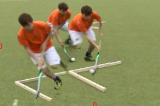
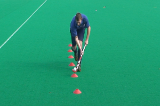
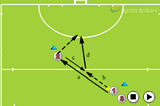
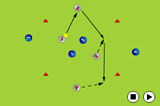
- Player peforms a sharp change of direction, followed by a stick dink from hockey position, and finish with a one handed lift
- Combining 2D and 3D skills together
- The initial 2D drag away should be convinving enough that a defender would begin to track the carrier. Rolling the shoulders will assist this
- The secondary drag should be sharp, to quickly move the ball away from the defender
- If players struggle with the initial dink (due to it moving away from the body, making it difficult to get under) have them move the ball at an angle
- Different rules can be applied to the lifts (long low lift, a 45 degree at blue cones etc.)
- Introduce a passive defender to track the run to put more pressure on the ball carrier

in more ways than one
 sportplan_netball



in more ways than one
sportplan_hockey

A few weeks into the league season, poor first touches are costing teams the ball. Coach body shape, scanning and receiving on the move to keep possession.

Pre-season fitness fades fast once the league starts. Build conditioning into ball work and use rolling subs well to keep your squad sharp all season.

The first weeks of the season decide whether a junior or new player sticks with adult hockey. Here is how to keep them safe, give them a clear job and build their confidence from the very first bully.