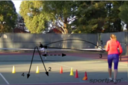
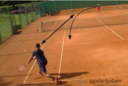
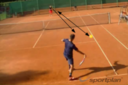
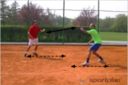
The coach stands on the service line and serves to the deuce side, then the player returns using forehand down the line stroke.
Return is a really important skill but only few players spend enough time on drills that improve it. It doesn't matter which level you play because your return can give you easy points (if you attack weak serves) or can help you to stay in the rally (if the serve is powerful and well-placed).
In this drill player works on returning skills. The coach's position makes return harder to perform because player has less time for reaction. Down the line direction is required to learn how to force the opponent to hit backhand from the first shot or can make players more confident to attack easier serves. For players who love to compete, the coach can set few targets to hit into to make their interest at high level. Additionally this exercise is great for coaches who can't consistently serve well-placed serves from the baseline.
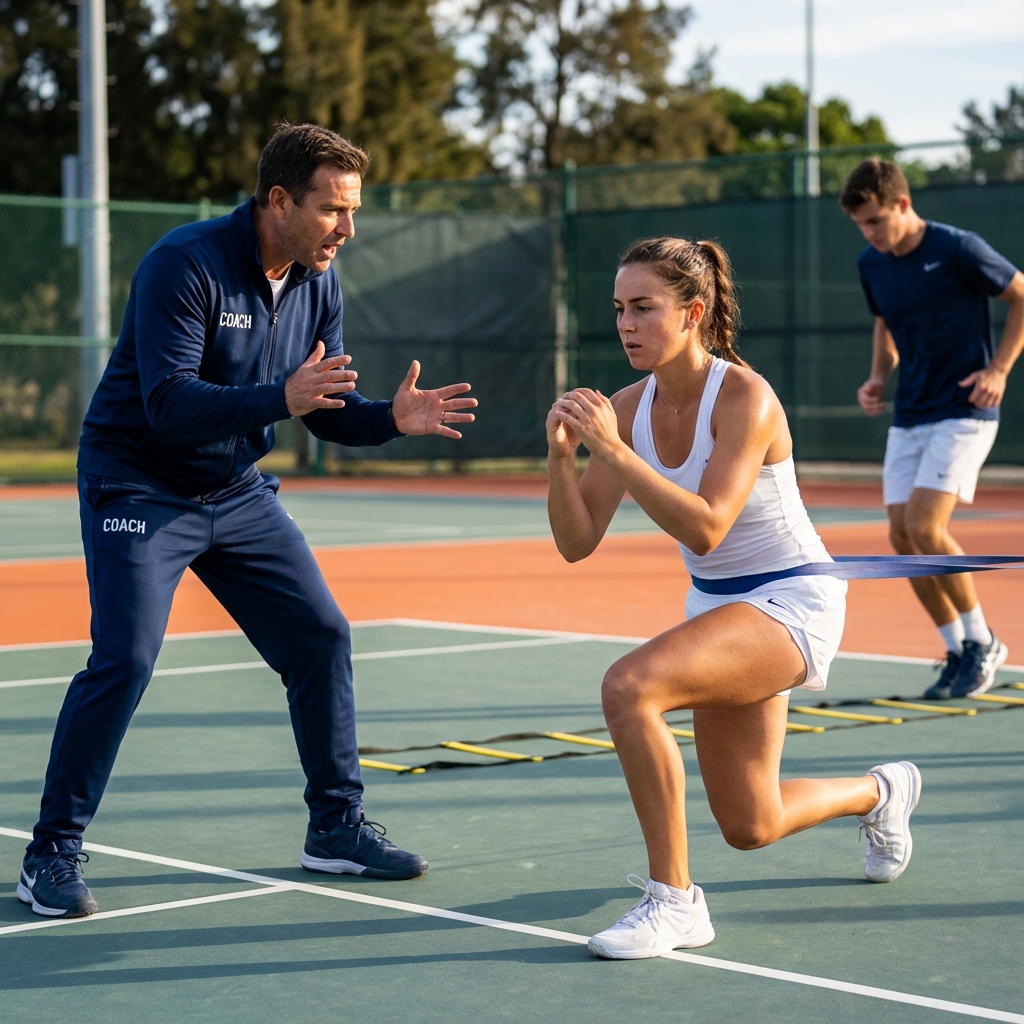
Tennis demands a unique combination of endurance, power, agility, and flexibility. Physical preparation determines how long careers last and how players perform when it matters most.
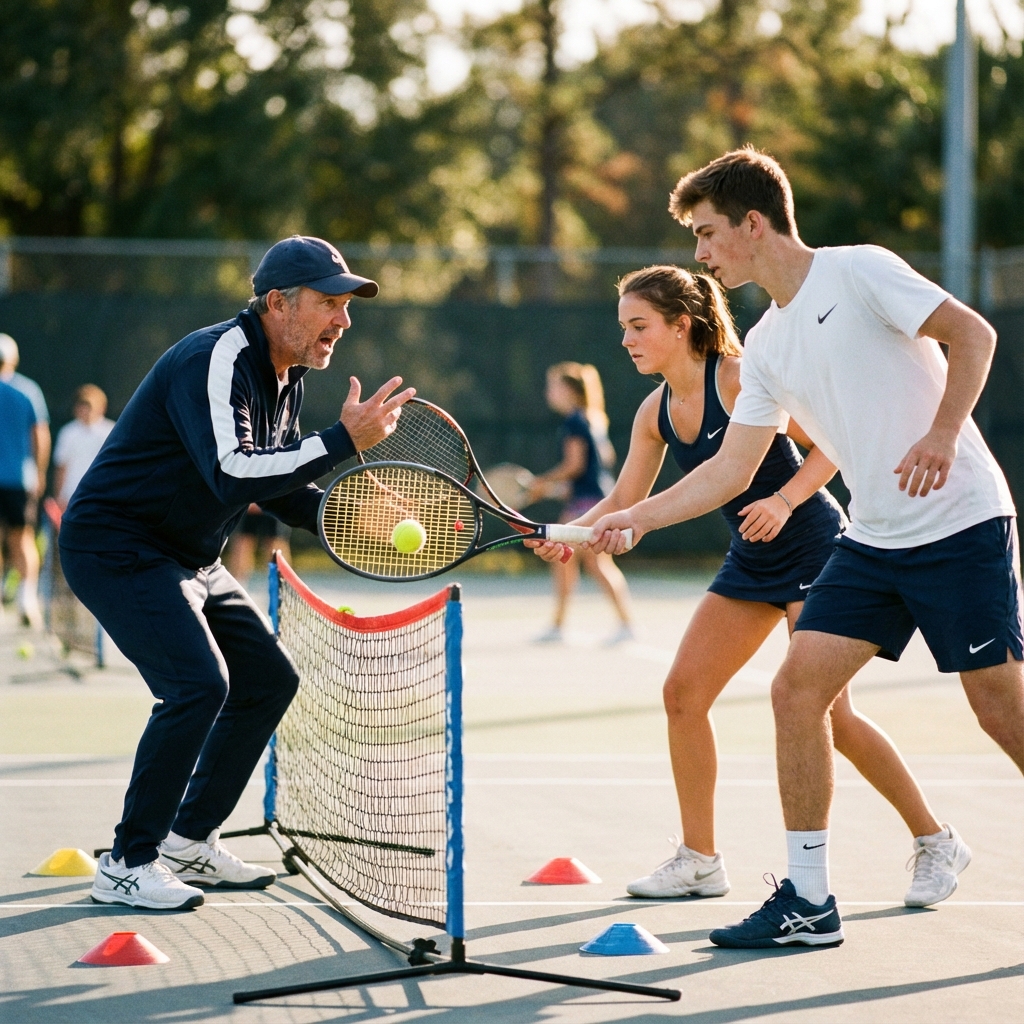
Ecological dynamics is transforming tennis coaching. This constraints-led approach develops adaptable, creative players who can solve problems in competition, not just execute drilled patterns.
The one-handed backhand is becoming rare, but when executed well, it remains one of tennis's most elegant and effective shots. Is it a dying art or a tactical advantage?


Register for FREE and get coaching tips, top drills, session and more every week!