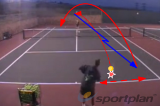
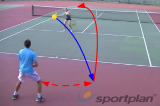
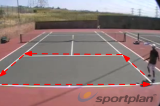
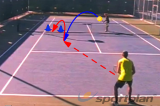
Hitting on the run is a skill that has to be practiced often because players must learn to control the distance between the body and the ball and how to hit the shot while still moving.
In this exercise, the player aims for the middle of the court because it is the best defensive tactical return. This is because there is more court to aim for and the middle of the net is lower.
Players should also know that hitting on the run forces them to lose time as they stop, change direction and recover.
So tell your players to aim high over the net to gain additional recovery time while the ball is in the air.
Hitting on the run is a skill that has to be practiced often because players have to learn to control the distance between the body and the ball and how to hit the shot while still moving.
In this exercise, the player aims for the middle of the court because it is the best defensive tactical return. This is because there is more court to aim for and the middle of the net is lower.
Players should also know that hitting on the run forces them to lose time as they stop, change direction and recover.So tell your players to aim high over the net to gain additional recovery time while the ball is in the air.
This drill is a great exercise to improve technical (slice), tactical (middle of the court), physical (endurance) and mental (perseverance) skills.
Tennis demands a unique combination of endurance, power, agility, and flexibility. Physical preparation determines how long careers last and how players perform when it matters most.
Ecological dynamics is transforming tennis coaching. This constraints-led approach develops adaptable, creative players who can solve problems in competition, not just execute drilled patterns.
The one-handed backhand is becoming rare, but when executed well, it remains one of tennis's most elegant and effective shots. Is it a dying art or a tactical advantage?


Register for FREE and get coaching tips, top drills, session and more every week!