Three different coloured cones are placed on the try line; one on the left 15-meter line, one under the posts, and one of the right 15-meter line. The defensive team is split evenly between the three cones (e.g. 5 players on each). The Attacking team is then randomly set up between the 22-meter line and the half-way line. To start the game the coach calls out three numbers which corresponds to the number of active defenders from each cone. The ball is kicked out from the try line and the designated defenders move onto the field to defend the attacking team who counter-attack and aim to score a try.
Constraints (Ways to manipulate the game to highlight different learning outcomes) Field size can be manipulated to change the way the game is played. A narrow pitch will encourage tighter game skills like short fast passes and offloads, handling in high traffic scenarios, playing through the line with 2nd and 3rd offload support. A wider pitch opens up space and encourages playing through the line and moving the ball to space, wide passing skills and attacking wide channels while tracking skills for the defence are challenged and work rate is increased. Adding channels to the field in which players can only operate will help with âhoney pottingâ, where players gather around the ball and donât spread out to fill the field. Players have to stay in their channels and the ball needs to be moved well through the channels to ensure the full field is being used. Extra points can be given to teams using the channels and scoring out wide. Different balls can be used to challenge and develop players skills. Smaller balls increase players catching skills and passing accuracy, while heavier balls will increase players passing power. Rules can be modified to highlight key learning areas and modify pressure on either attack or defence. The number of phases the attack has before scoring can be changed to tactically challenge the attacking team as well as the multi-phase defensive organisation. The number of phases a team can have in the middle of the field and the 15-meter channels (edges) can be set to encourage teams to use the whole width of the field in attack and for defences to maintain width and defend the wide attacks. Offload rules can be used to encourage continuity or breakdown rules can be introduced to encourage close support in attack and decision making in defence. Hopefully this gives you a good understanding of the game âSpringbok Touchâ and how to modify it to encourage learning and development for your players.
This practice has no coaching points
This practice has no progressions

in more ways than one
 sportplan_rugby



From France's collision dominance to England's folding defence - what grassroots coaches can learn from the 2026 Six Nations.
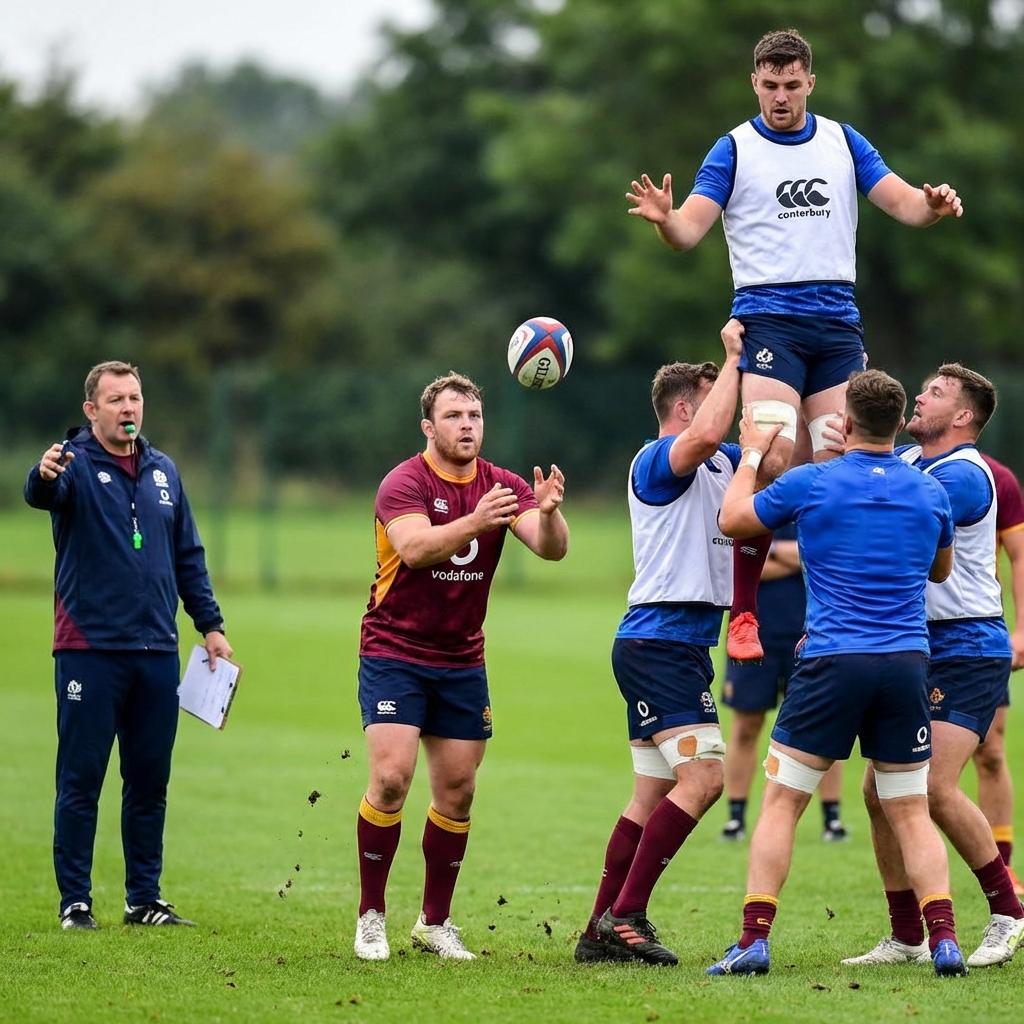
The removal of "not-straight" on uncontested lineouts transforms your set-piece options. Here's how to exploit the new rule.

2026 brings revolutionary changes to international rugby: a brand new global tournament, historic tours, and law changes that will reshape the game. Here's everything coaches need to know.