Expired Page

What a fantastic tool. I 've found a few drills that are unfamiliar,...
Wes, Rugby Coach
READ MORE
READ LESS

Whoops - you've found an old page

You have some how come to an old link - please try one of these:

javax.servlet.jsp.JspException: java.io.FileNotFoundException: The requested resource [/relatedContent/drills/sessions_drills_21.html] is not available
1009

SIGN UP NOW FOR FREE

  • search our library of 1100+ rugby drills
  • create professional rugby coaching plans
  • or access our tried and tested rugby plans
STAY CONNECTED

in more ways than one

sportplan_netball
MORE DRILLS

Arch onto a squat base - Tummy Up

Balances may be understood as Static, held positions, where one partner supports all the weight of; or some of the weight of the other partner, to create a co-operative pair image. All static balances must be held and shown for three seconds. Whatever the base created, the top gymnast may choose to place full weight onto the partner

Key 5 2 Balances and Bases
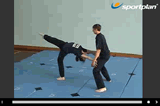
Arch onto a squat base - Tummy Up Variation

Balances may be understood as Static, held positions, where one partner supports all the weight of; or some of the weight of the other partner, to create a co-operative pair image. All static balances must be held and shown for three seconds. Whatever the base created, the top gymnast may choose to place full weight onto the partner

Key 5 2 Balances and Bases
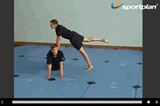
Box Base - Tummy Down

Balances may be understood as Static, held positions, where one partner supports all the weight of; or some of the weight of the other partner, to create a co-operative pair image. All static balances must be held and shown for three seconds. Whatever the base created, the top gymnast may choose to place full weight onto the partner

Key 5 2 Balances and Bases
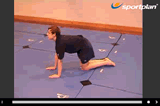
Box Base

BASES. One of the pair becomes a Static object and \or a means of support for the other partner by creating a Base.

Key 5 2 Balances and Bases

Box Base

BASES. One of the pair becomes a Static object and \or a means of support for the other partner by creating a Base.

Key 5 2 Balances and Bases

Box Base Lean Sideways - Variation

Balances may be understood as Static, held positions, where one partner supports all the weight of; or some of the weight of the other partner, to create a co-operative pair image. All static balances must be held and shown for three seconds. Whatever the base created, the top gymnast may choose to place full weight onto the partner

Key 5 2 Balances and Bases
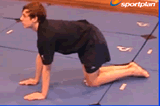
Box Base Lean Sideways

Balances may be understood as Static, held positions, where one partner supports all the weight of; or some of the weight of the other partner, to create a co-operative pair image. All static balances must be held and shown for three seconds. Whatever the base created, the top gymnast may choose to place full weight onto the partner

Key 5 2 Balances and Bases
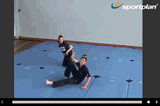
Box Base Variation - Tummy Down

Balances may be understood as Static, held positions, where one partner supports all the weight of; or some of the weight of the other partner, to create a co-operative pair image. All static balances must be held and shown for three seconds. Whatever the base created, the top gymnast may choose to place full weight onto the partner

Key 5 2 Balances and Bases
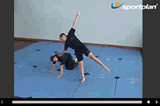
Box Base Variation 2 - Tummy Down

Balances may be understood as Static, held positions, where one partner supports all the weight of; or some of the weight of the other partner, to create a co-operative pair image. All static balances must be held and shown for three seconds. Whatever the base created, the top gymnast may choose to place full weight onto the partner

Key 5 2 Balances and Bases
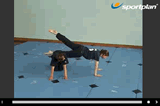
Box base variation

One of the pair becomes a "Static object" and/or a means of support for the other partner by creating a Base.

Key 5 2 Balances and Bases

Front Angel - Variation

Balances may be understood as Static, held positions, where one partner supports all the weight of; or some of the weight of the other partner, to create a co-operative pair image. All static balances must be held and shown for three seconds. Whatever the base created, the top gymnast may choose to place full weight onto the partner

Key 5 2 Balances and Bases
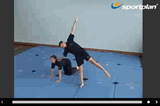
Handstand onto a Lunge Base

Balances may be understood as Static, held positions, where one partner supports all the weight of; or some of the weight of the other partner, to create a co-operative pair image. All static balances must be held and shown for three seconds. Whatever the base created, the top gymnast may choose to place full weight onto the partner

Key 5 2 Balances and Bases
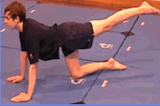
Handstand onto a modified lunge base - Variation

Balances may be understood as Static, held positions, where one partner supports all the weight of; or some of the weight of the other partner, to create a co-operative pair image. All static balances must be held and shown for three seconds. Whatever the base created, the top gymnast may choose to place full weight onto the partner

Key 5 2 Balances and Bases
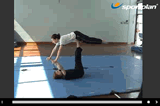
Handstand onto a right angled base - Variation

Balances may be understood as Static, held positions, where one partner supports all the weight of; or some of the weight of the other partner, to create a co-operative pair image. All static balances must be held and shown for three seconds. Whatever the base created, the top gymnast may choose to place full weight onto the partner

Key 5 2 Balances and Bases
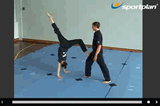
Handstand onto a right angled base

Balances may be understood as Static, held positions, where one partner supports all the weight of; or some of the weight of the other partner, to create a co-operative pair image. All static balances must be held and shown for three seconds. Whatever the base created, the top gymnast may choose to place full weight onto the partner

Key 5 2 Balances and Bases
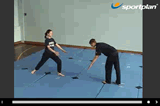
Handstand onto a standing base

Balances may be understood as Static, held positions, where one partner supports all the weight of; or some of the weight of the other partner, to create a co-operative pair image. All static balances must be held and shown for three seconds. Whatever the base created, the top gymnast may choose to place full weight onto the partner

Key 5 2 Balances and Bases
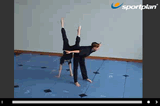
Handstand onto a standing base Variation

Balances may be understood as Static, held positions, where one partner supports all the weight of; or some of the weight of the other partner, to create a co-operative pair image. All static balances must be held and shown for three seconds. Whatever the base created, the top gymnast may choose to place full weight onto the partner

Key 5 2 Balances and Bases
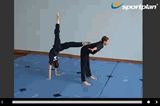
Invert on a box base

Balances may be understood as Static, held positions, where one partner supports all the weight of; or some of the weight of the other partner, to create a co-operative pair image. All static balances must be held and shown for three seconds. Whatever the base created, the top gymnast may choose to place full weight onto the partner

Key 5 2 Balances and Bases
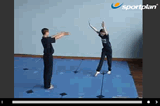
Invert on a modified sitting base

Balances may be understood as Static, held positions, where one partner supports all the weight of; or some of the weight of the other partner, to create a co-operative pair image. All static balances must be held and shown for three seconds. Whatever the base created, the top gymnast may choose to place full weight onto the partner

Key 5 2 Balances and Bases
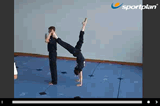
Invert on a reverse box base

Key 5 2 Balances and Bases
Sportplan App

Give it a try - it's better in the app

POPULAR SEARCH TERMS
YOUR SESSION IS STARTING SOON... Join the growing community of rugby coaches plus 1100+ drills and pro tools to make coaching easy.
LET'S DO IT