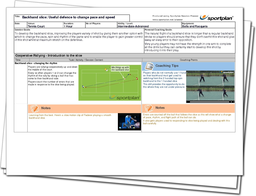
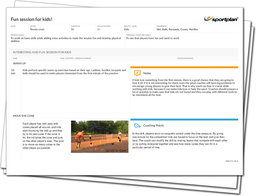
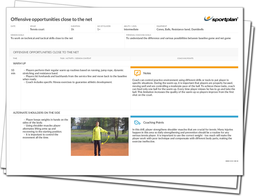
This plan looks at developing your player's ability to return the first serve of their opponent.
The drills concentrate on minimising backswing, making tactical shots and simplifying your player's stroke to make it more effective against a fast first serve.
Tactical response to a big first serve
This plan works on taking the pace off the ball using a slice or a minimised follow through. This is an especially important tactic in the modern game when power is as important as accuracy when hitting the first serve.
Minimising backswing and follow through
Return of the big first serve requires total control to get the ball over the net, so players have to get rid of any unnecessary movement of their body and racquet.
Whenever the ball is hit hard it reduces your player's reaction time, so by simplifying complex moves your player will maximise the control they get on the ball, making the return of the serve more achievable.
By progressing through the drills your players will learn to adjust the length of their backswing so they are able to execute a compact swing while under pressure. This is important because a regular backswing is not effective against fast first serves or while playing on fast surfaces such as grass.Grip selection for particular shots
There is not one perfect grip for tennis so players have to be flexible with the way they handle the racquet. Knowing the advantages of different grips will help your player to pick the correct one to ensure they hit a successful shot.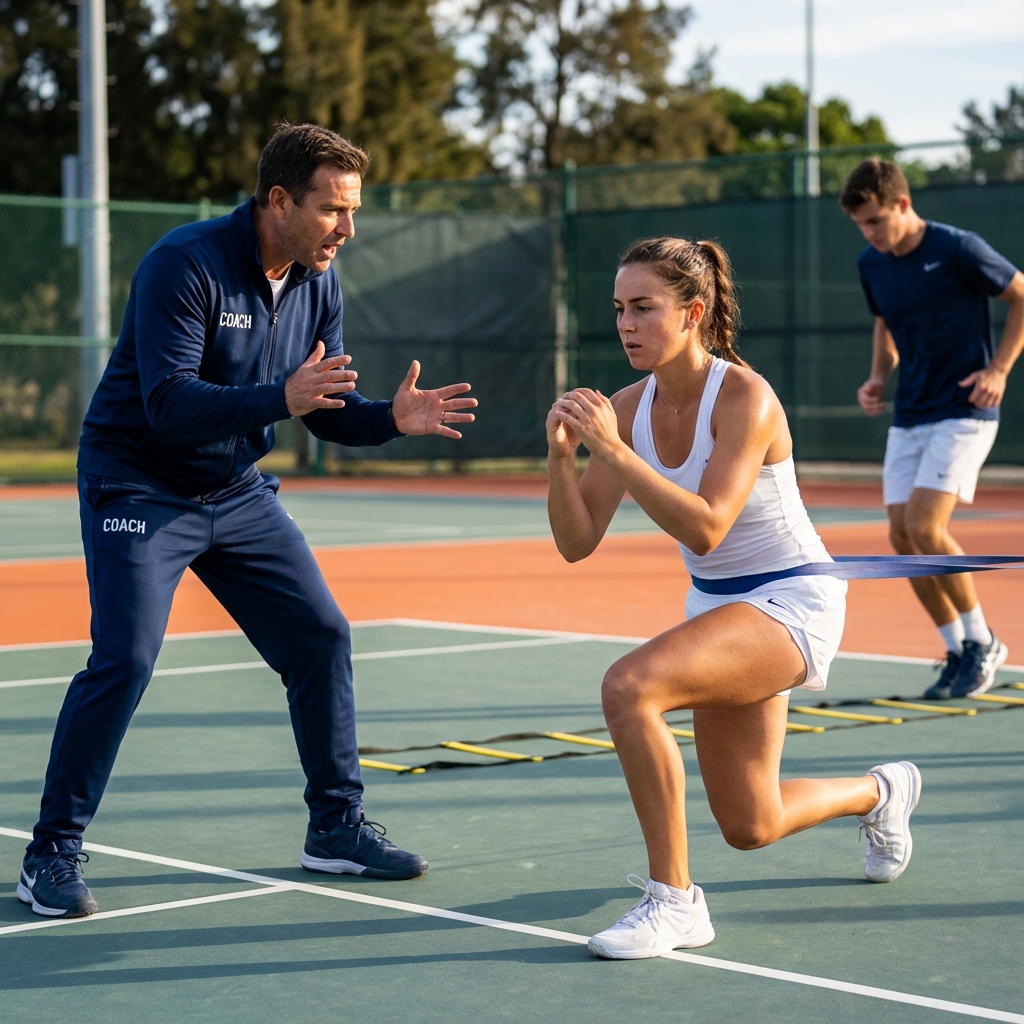
Tennis demands a unique combination of endurance, power, agility, and flexibility. Physical preparation determines how long careers last and how players perform when it matters most.
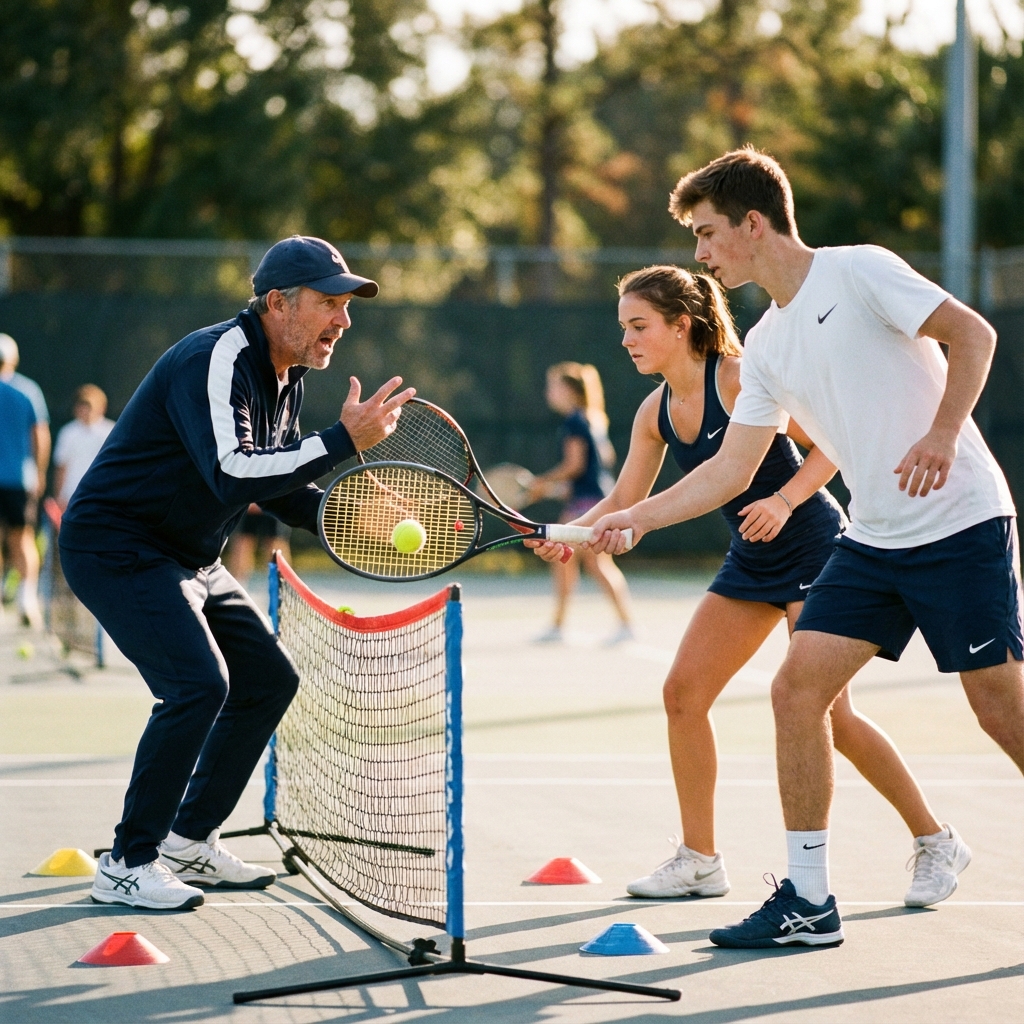
Ecological dynamics is transforming tennis coaching. This constraints-led approach develops adaptable, creative players who can solve problems in competition, not just execute drilled patterns.
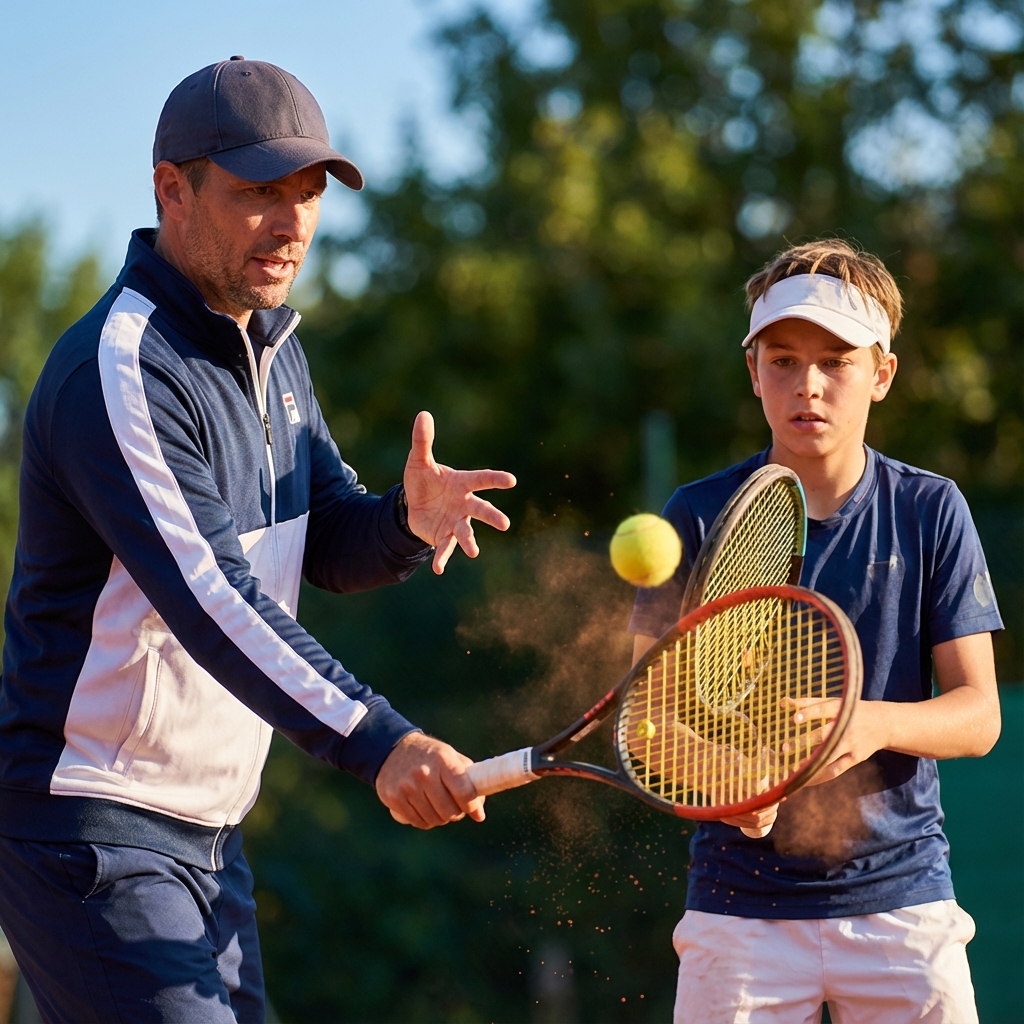
The one-handed backhand is becoming rare, but when executed well, it remains one of tennis's most elegant and effective shots. Is it a dying art or a tactical advantage?


Register for FREE and get coaching tips, top drills, session and more every week!