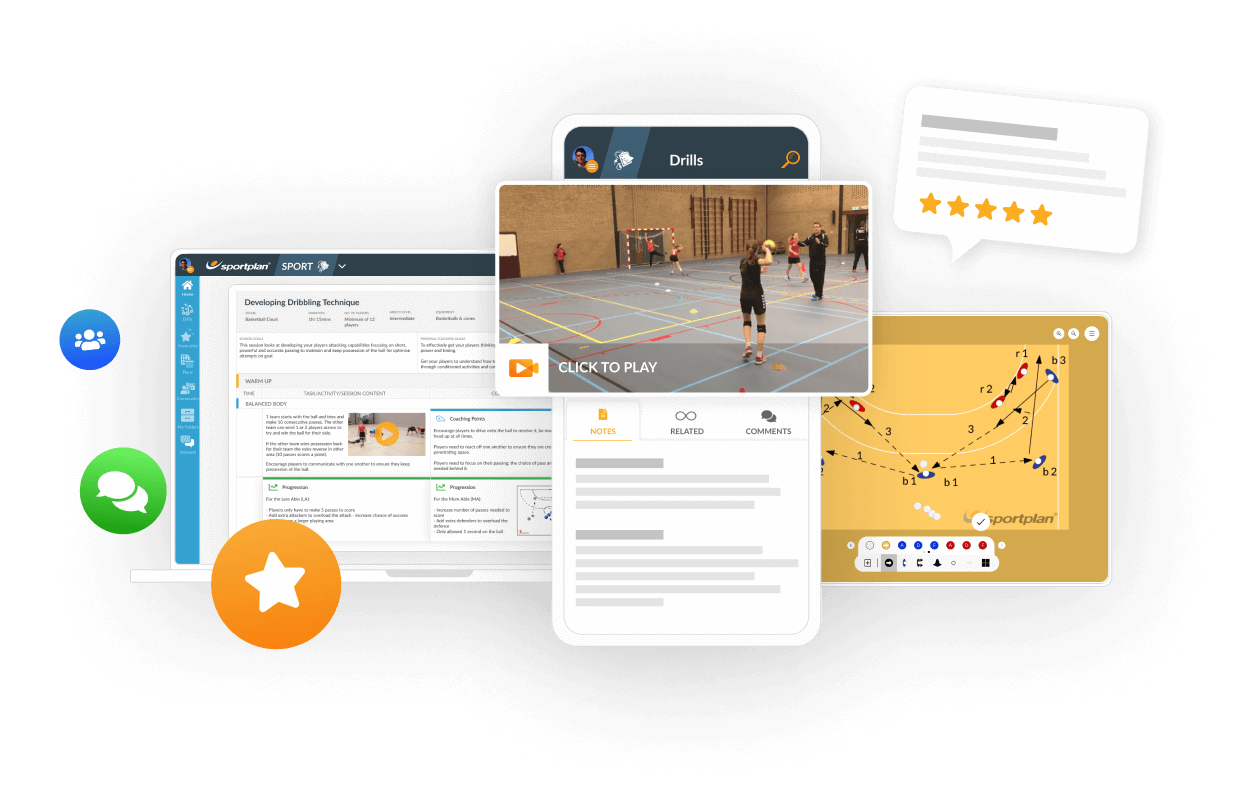
airs are formed, and everyone stands in a circle. One person from each pair gets on all fours (the "horse"), while the other sits on their back (the "rider"). At the signal of the game leader's whistle, the riders jump off their horses and walk a full lap (either left or right) around the circle until they return to their horse. While the rider is walking, the horse stands up and spreads its legs. The rider must then crawl under the horse's legs and quickly blow the whistle or touch a cone that has been placed in the center of the circle before the game starts.
Make it harder: Introduce different movements, such as running faster or adding obstacles.
Variations:
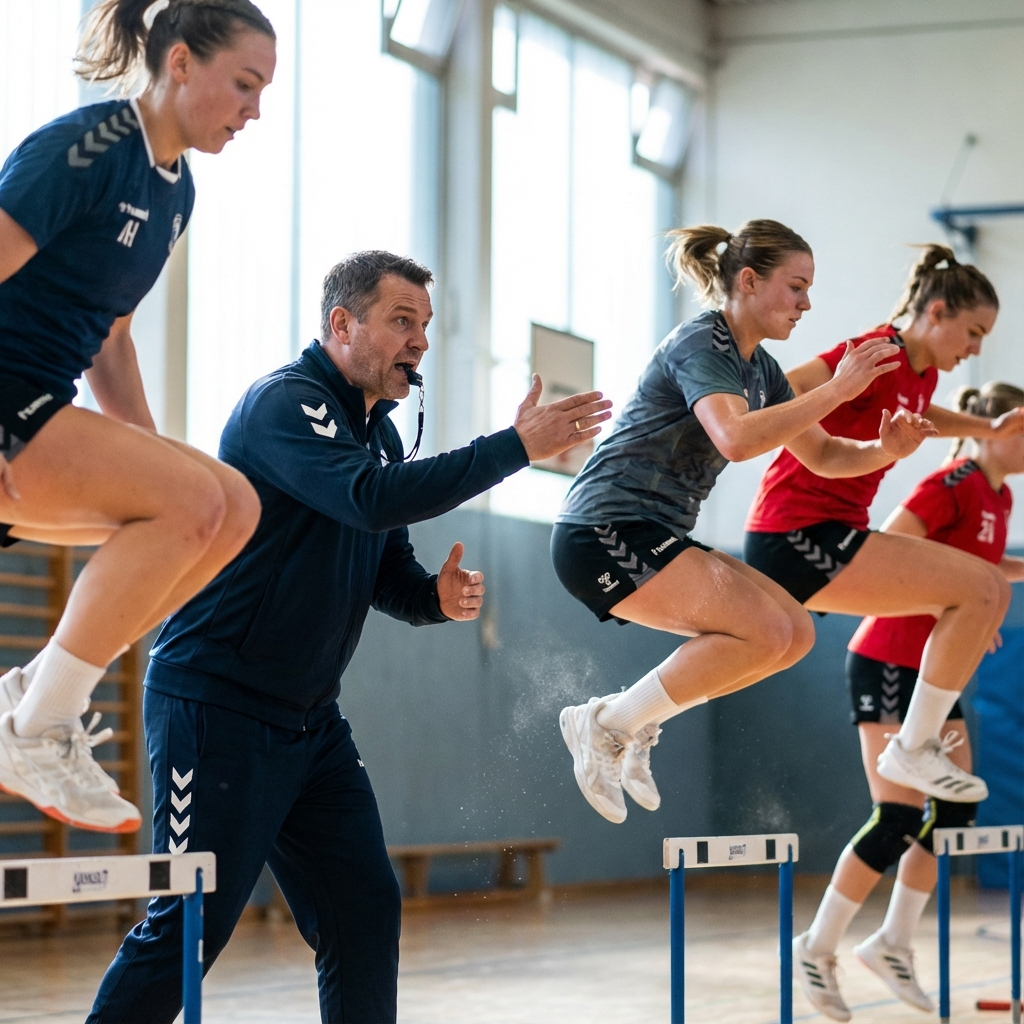
Handball demands explosive power, repeated sprint ability, and the strength to compete physically for 60 minutes. Sport-specific conditioning develops the athletic qualities that underpin elite performance.
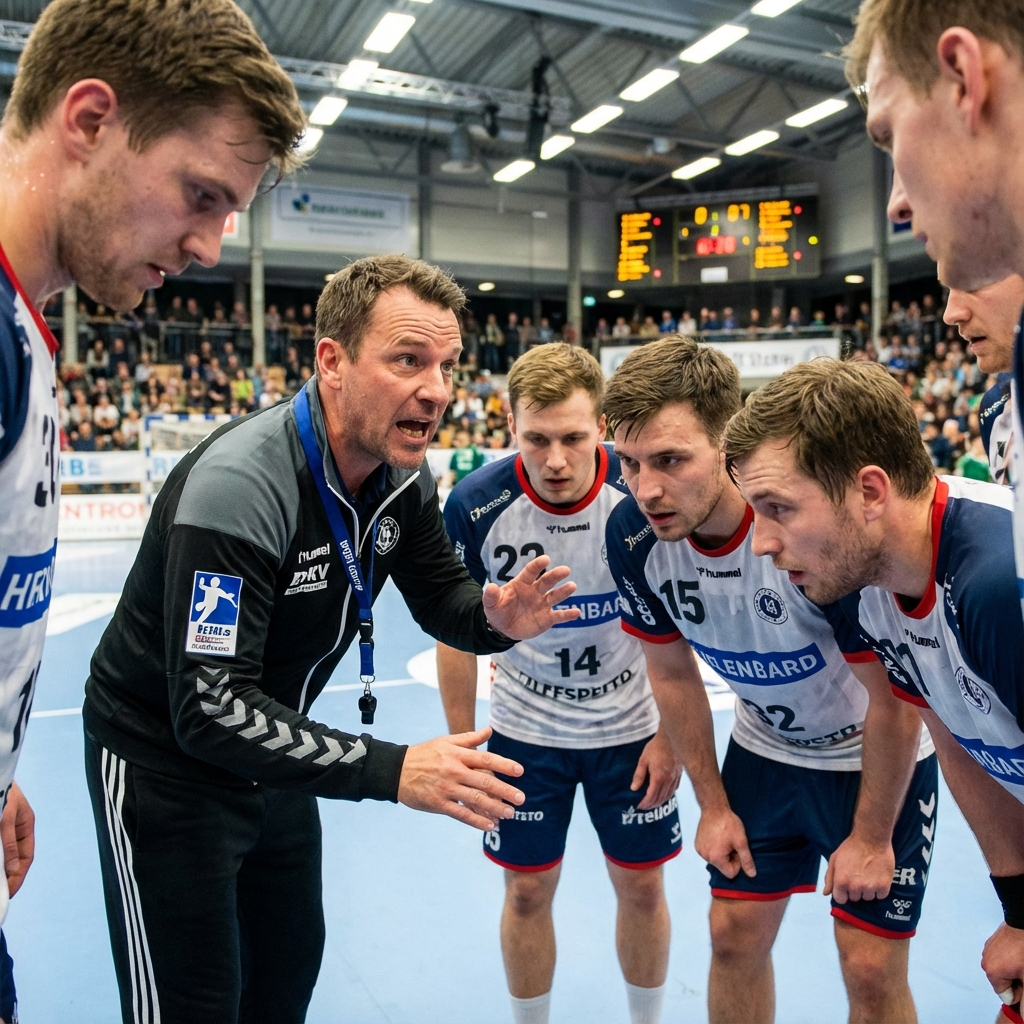
Handball matches are won and lost in critical moments. Mental toughness determines who executes under pressure, who recovers from setbacks, and who maintains concentration throughout 60 intense minutes.
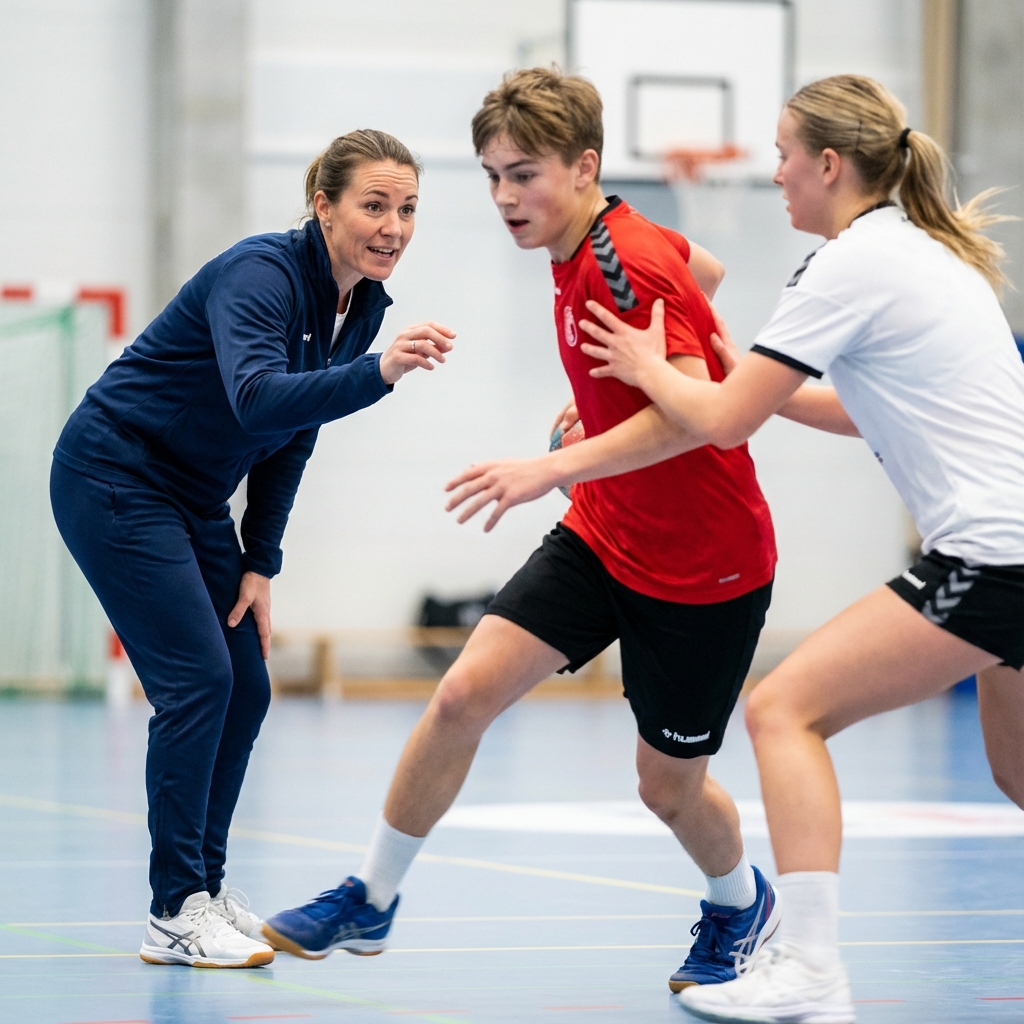
Deception is the great equaliser in handball. Smaller, less powerful players can beat defenders through feints and misdirection. Mastering these skills creates breakthrough opportunities against even the most organised defences.


Register for FREE and get coaching tips, top drills, session and more every week!