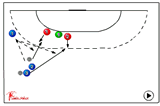
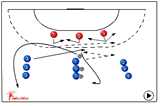
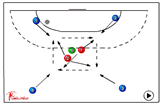
The blue team (back court players) are attacking and are passing the ball along the line, looking to find a chink in the defence so that they can pass the ball to either of the two forward green players (pivots).
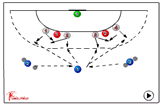
Meanwhile the blue defending players must work together and make good defending decisions. When an attacker comes forward a defender must step forward to mark the back court players while another defender moves across the cover the pivot.
Cover defence:
Communication is key! Your players must talk so that they know who is running out to meet the ball and who is marking the pivot!
Small, fast side-steps, staying low to the floor. Arms should be slightly bent.
As you run back into defence ensure you are always watching the ball and are taking small, short steps with arms wide open to prevent a pass through to the pivot.
Defending the pivot :
* Static pivot: Stand in front
* Agile pivot: Try to defend when standing, moving behind him
- one hand in the back of pivot
- other hand between the hands of the pivot (his eye height)
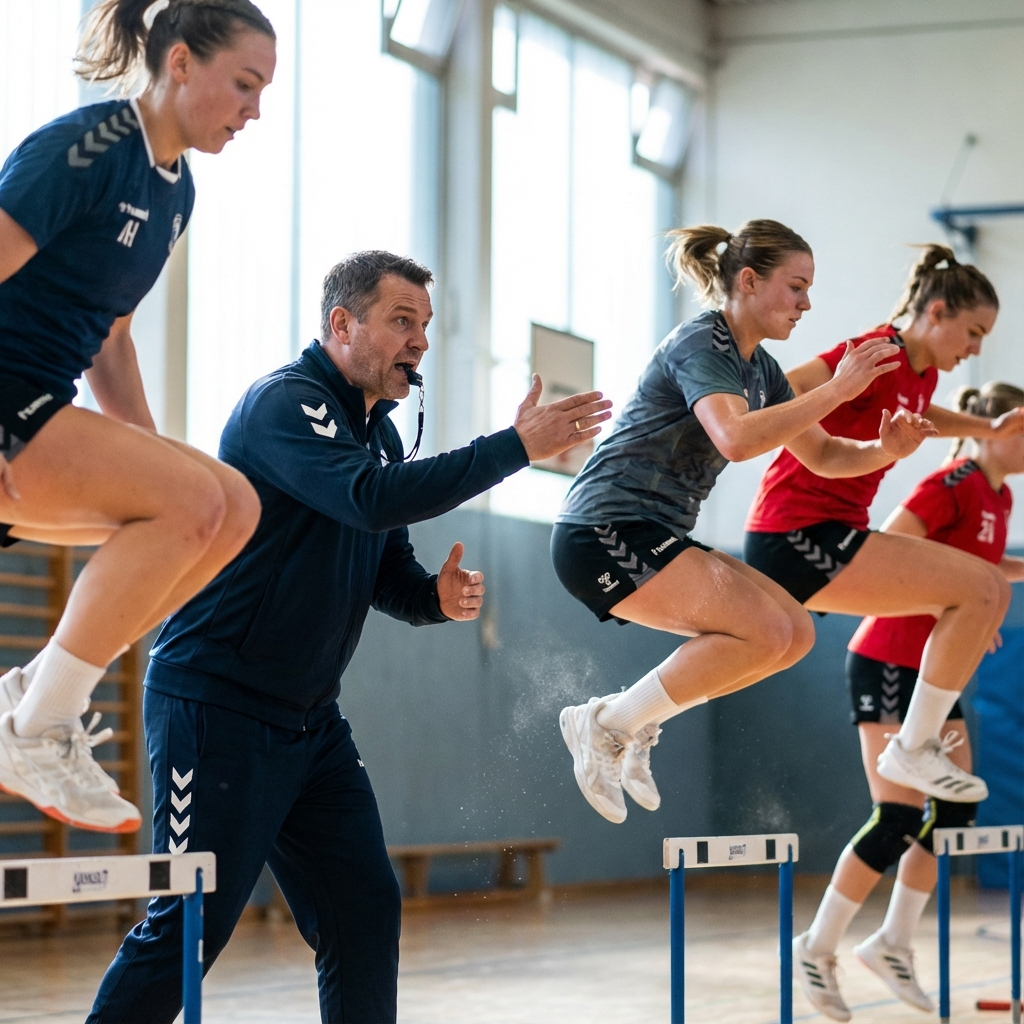
Handball demands explosive power, repeated sprint ability, and the strength to compete physically for 60 minutes. Sport-specific conditioning develops the athletic qualities that underpin elite performance.
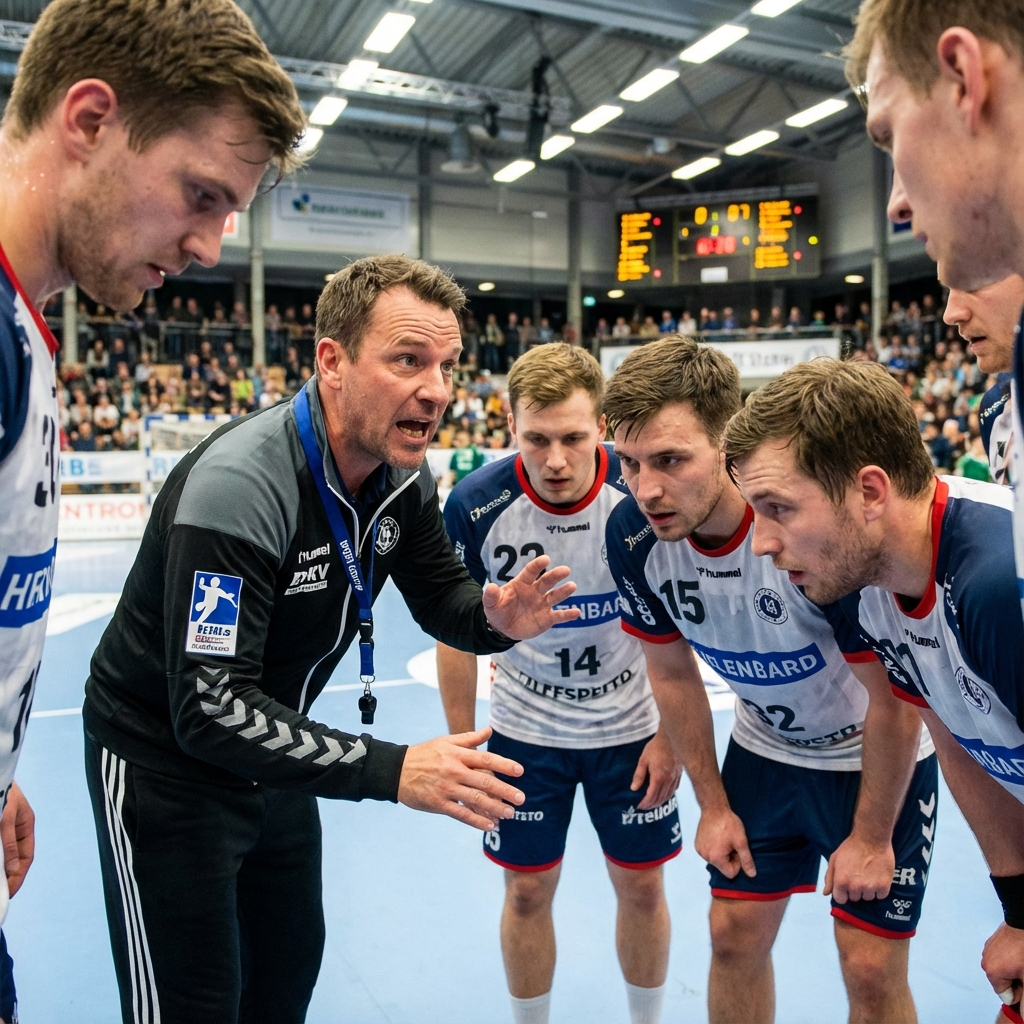
Handball matches are won and lost in critical moments. Mental toughness determines who executes under pressure, who recovers from setbacks, and who maintains concentration throughout 60 intense minutes.
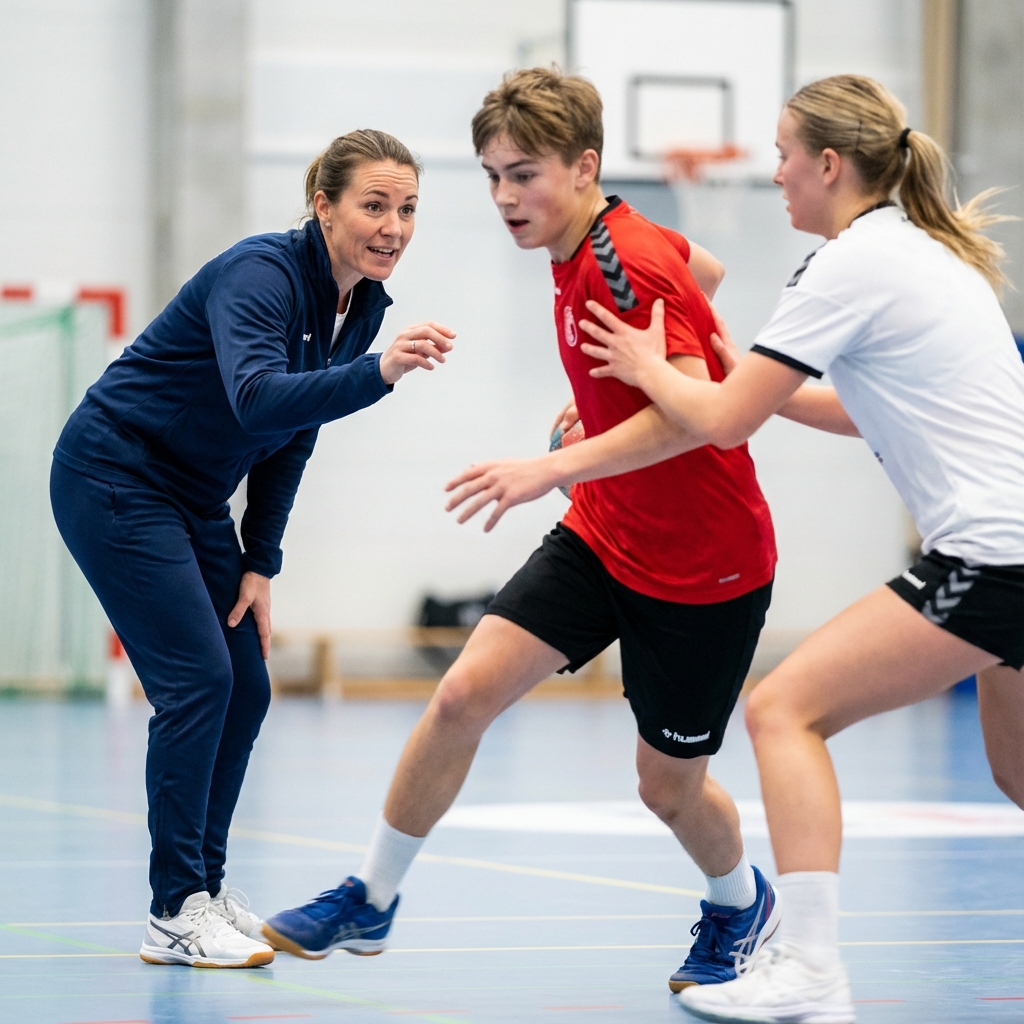
Deception is the great equaliser in handball. Smaller, less powerful players can beat defenders through feints and misdirection. Mastering these skills creates breakthrough opportunities against even the most organised defences.


Register for FREE and get coaching tips, top drills, session and more every week!