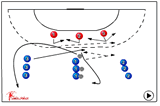
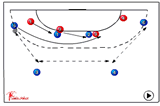
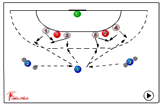
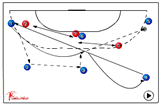
Players work in groups of 5, with one feeder (B1), two attackers (B2 and B3) and two defenders (R1 and R2).
B1 starts the drills with a pass into the run of B2. When the pass is played R1 runs out to cut out the danger. At the same time as this B3 also runs out to set up an inside screen on R1 - creating space for B2 to run into.
The defenders must then work together to prevent the attackers from having a shot on goal, continuing to mark their man while not allowing the attacker to get the better of them.
Repeat on other side.
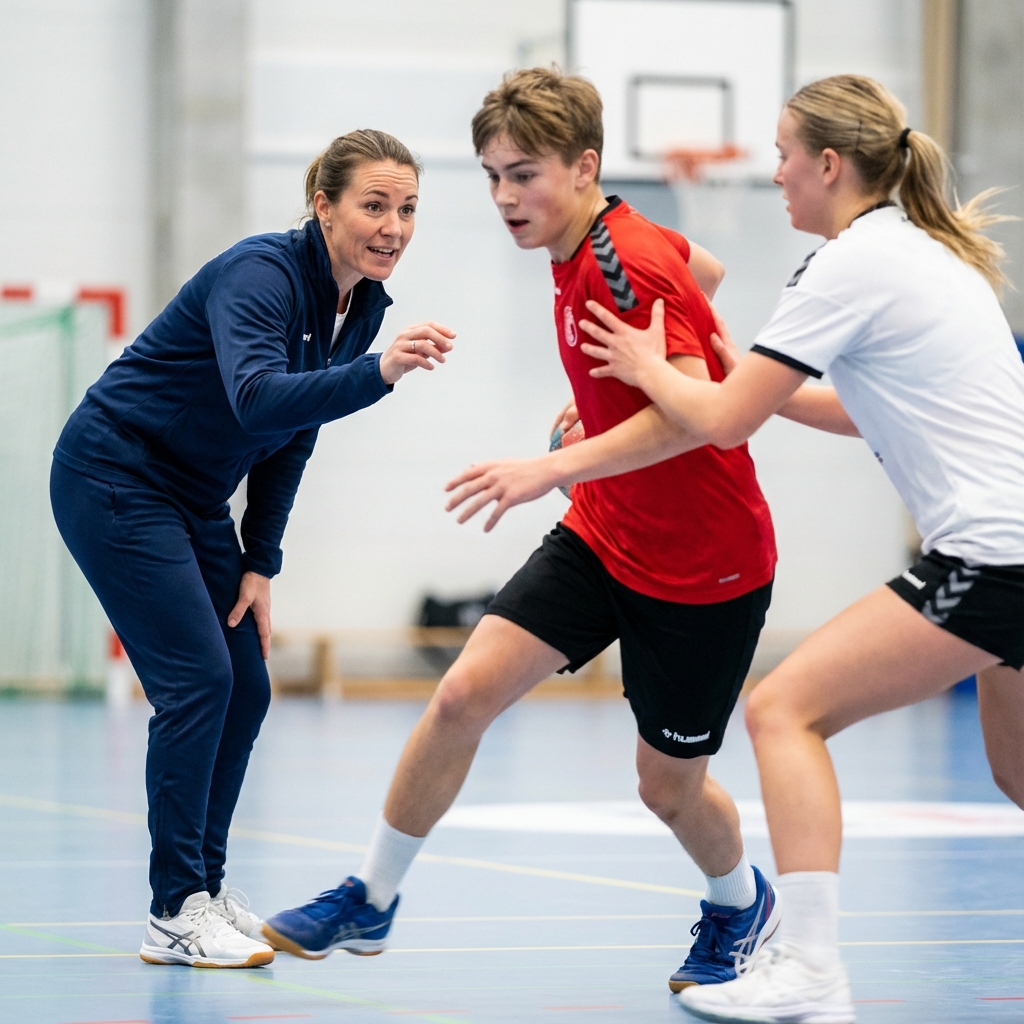
Key Points - defending in a personal duel:
- Arms slightly bent and slightly in front of you
- Prevent attackers from coming between your arms and move sidewards along with your attacker and stay between goal and attacker
- Pressure the attacker's movements
- Never jump, keep close contact with the floor and lots of small, quick steps to shadow the attacker!
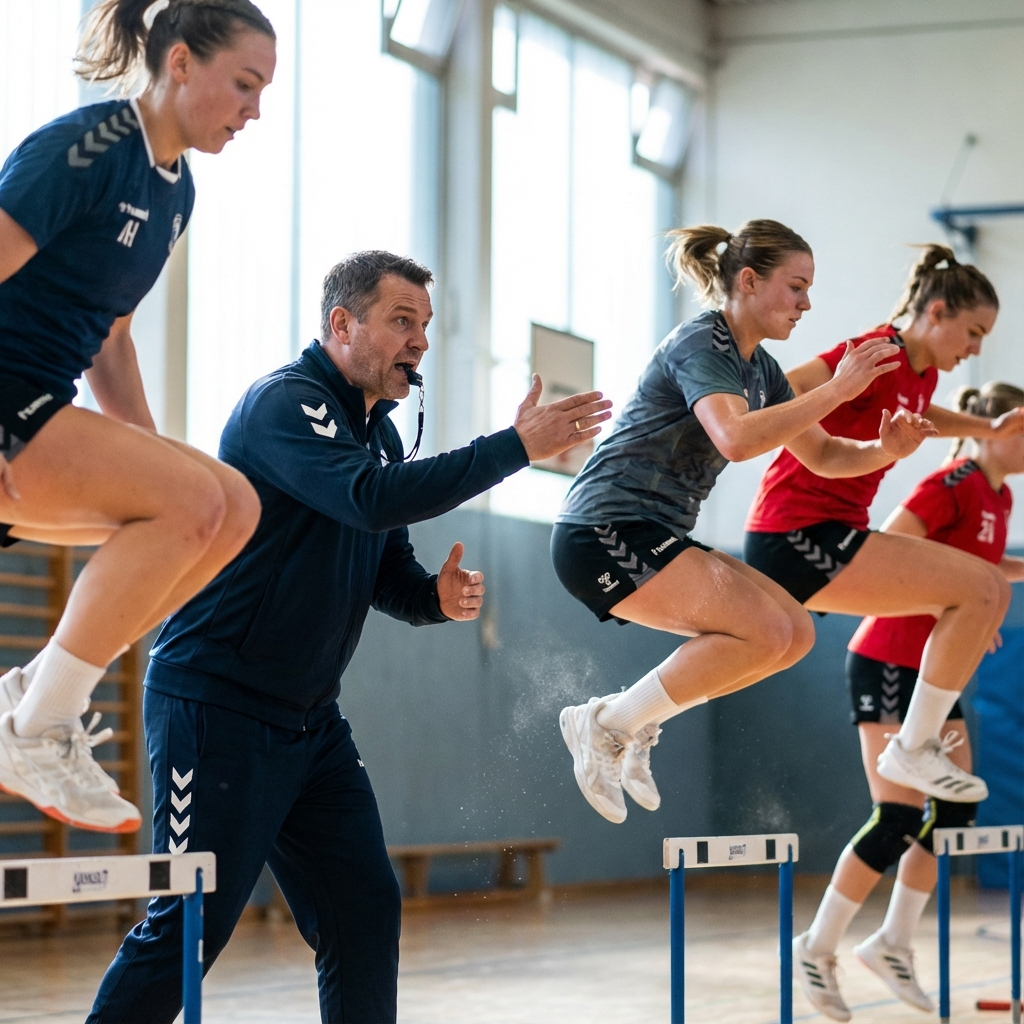
Handball demands explosive power, repeated sprint ability, and the strength to compete physically for 60 minutes. Sport-specific conditioning develops the athletic qualities that underpin elite performance.
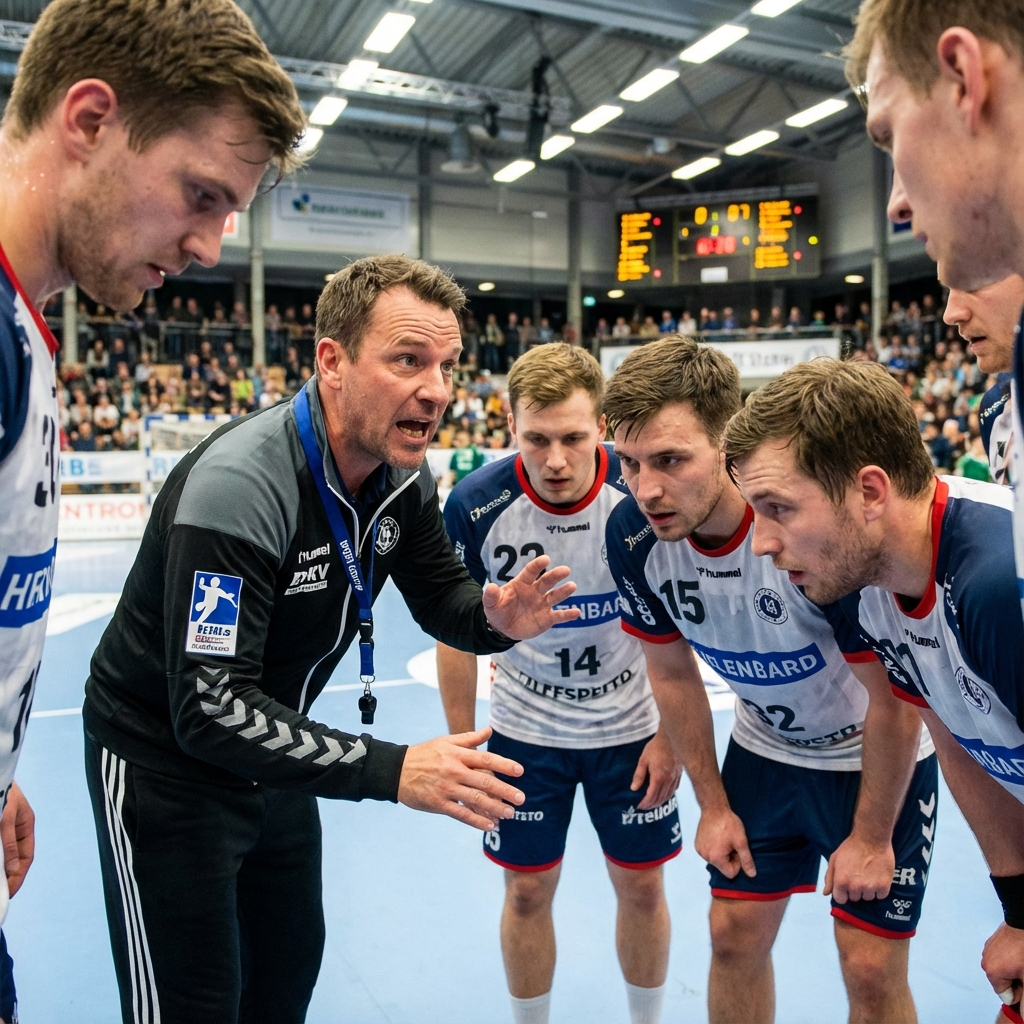
Handball matches are won and lost in critical moments. Mental toughness determines who executes under pressure, who recovers from setbacks, and who maintains concentration throughout 60 intense minutes.
Deception is the great equaliser in handball. Smaller, less powerful players can beat defenders through feints and misdirection. Mastering these skills creates breakthrough opportunities against even the most organised defences.


Register for FREE and get coaching tips, top drills, session and more every week!