

Players in pairs, with one lion (yellow) and one leopard (red). Setup as show, with players facing each other, in parrallel lines about 2-3m apart. Coach calls out one of the animals and players must quickly react. Work through the progressions. Let's imagine that LIONS are called first: 1) No balls. Lions must run back their 'house' while the leopards chase and tag them on the back. 2) Same but with a ball each. Lions turn and dribble the ball home, while Leopards chase without the ball, and tag as before. 3) Switch sides. 1 ball in the middle. Lions quickly take the ball and try to dribble past the Leopards to bring the ball home. Leopards must stay behind the line and try to tackle the ball from the Lions, using a forehand block. They should then dribble it back their own house. 4) Same as above, but leopards must touch their stick on the Lions' starting line before chasing for the ball and maing a tackle using a channel/jab/steal. Coach can change from saying "Lions/Leopards", to signaling with the arm like an umpire does - this is good to train the players to react to the umpire's signal.
Listen + watch the coach very carefully! Have your feet apart and maybe slightly sideways for quick push off the back foot.
This practice has no coaching points
This practice has no progressions

in more ways than one
 sportplan_hockey



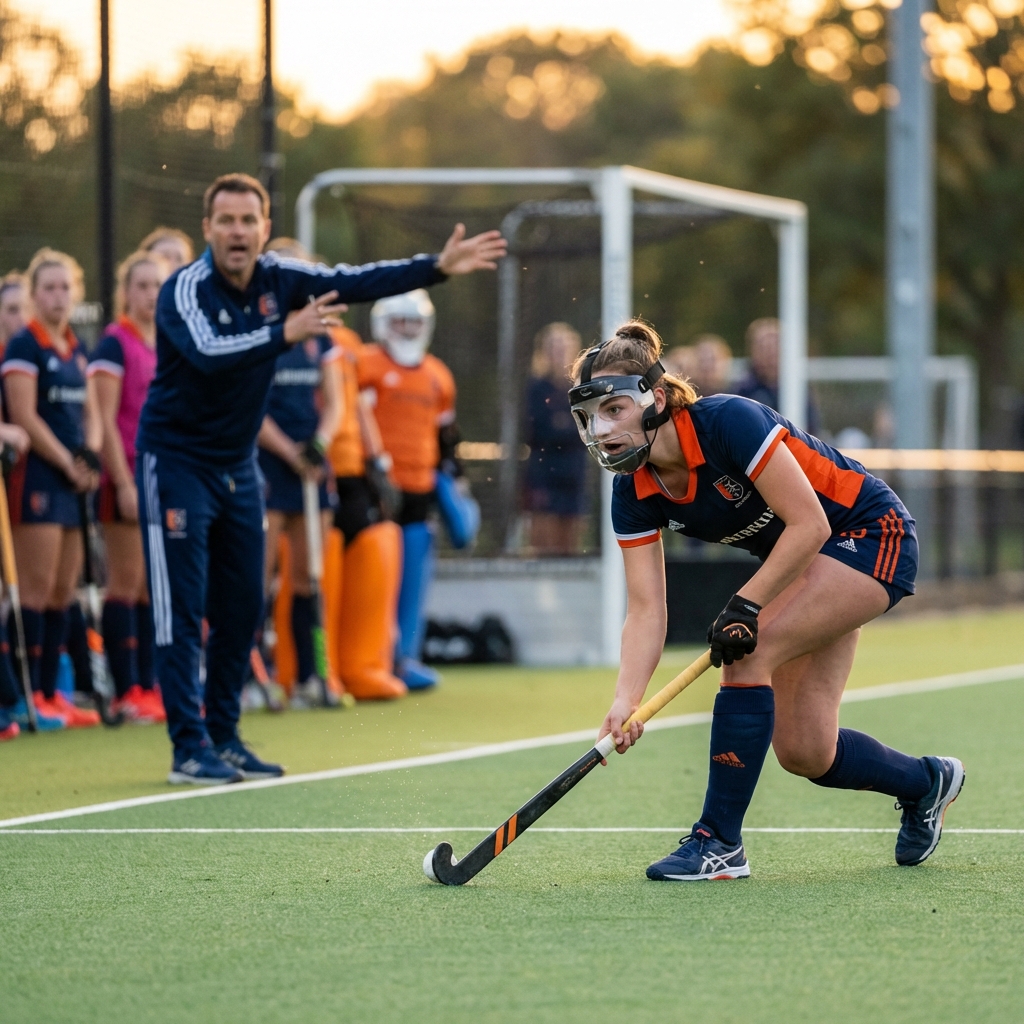
2026 is the first full year with mandatory face masks for penalty corner defence. Here's how to train your defenders for the new equipment reality.
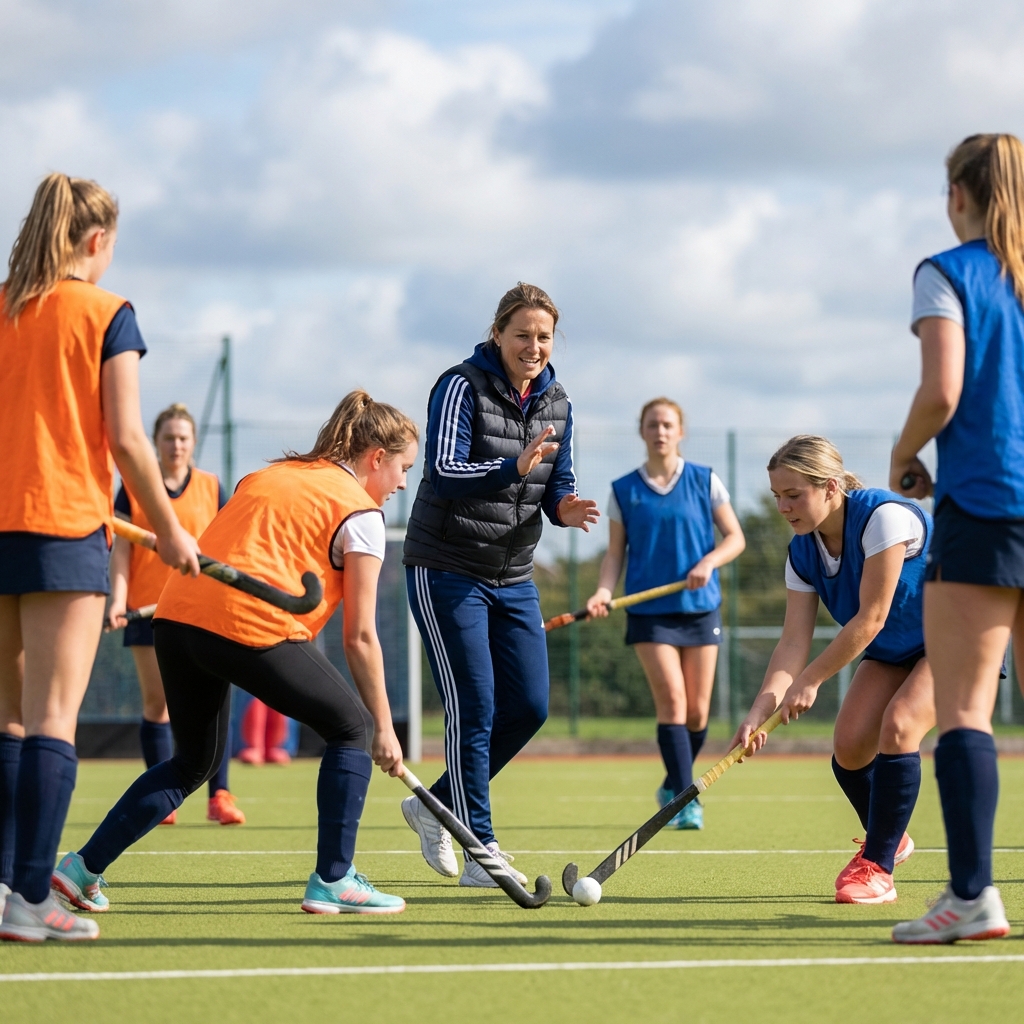
Move beyond drills and let your players discover solutions through play. The constraints-led approach is transforming how hockey is coached at every level.

From mandatory safety equipment to evolving tactical systems and player-centred coaching methods, field hockey is transforming. Here's what every coach needs to know for 2026.









