Community | Angle Cutting Fielding

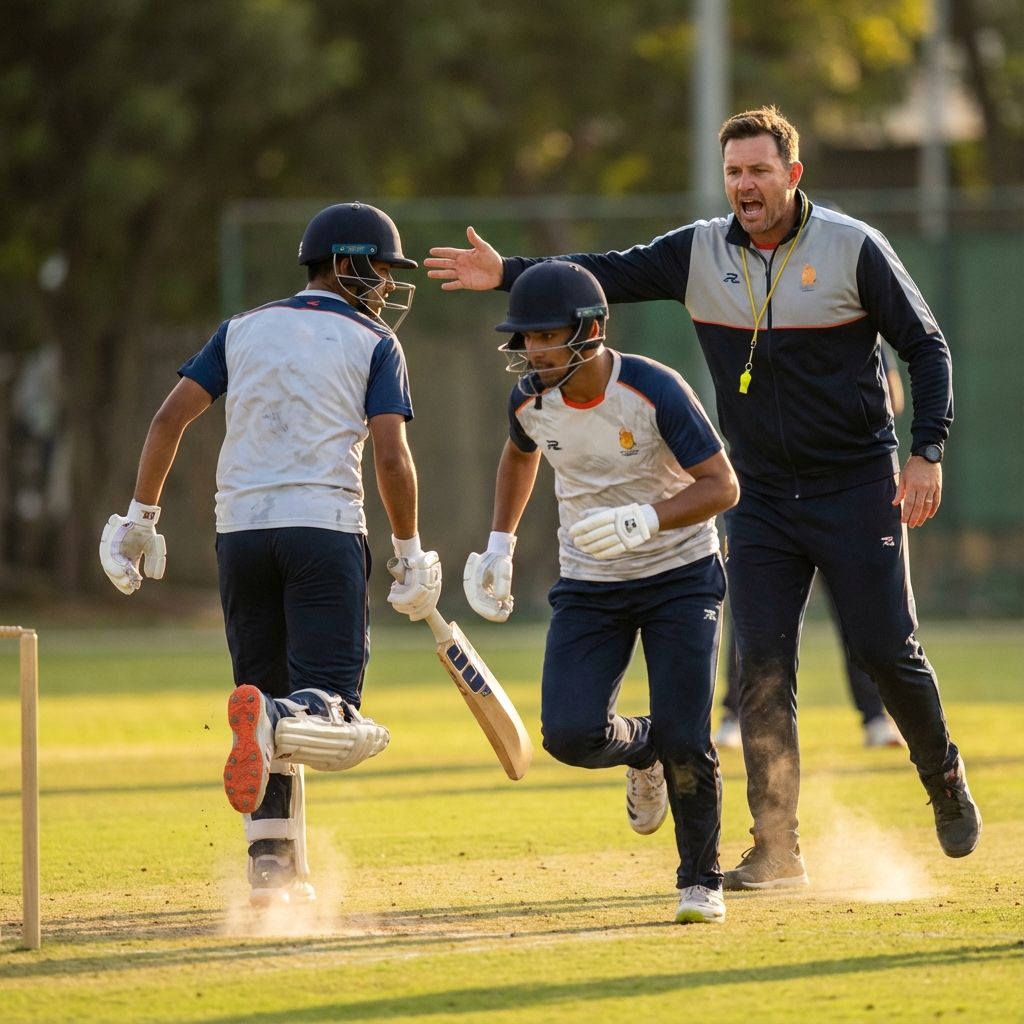
Running between the wickets remains one of cricket's most undervalued skills. Teams that run well can add 15-20 runs per innings without taking additional risks. Good running also puts pressure on fielding teams and creates more boundary opportunities by rotating strike effectively.

Calling and Communication

Clear partnerships:

First call: The striker calls for shots in front of the wicket.

Non-striker's role: Calling for shots behind the wicket where they have the better view.

Decisive calls: Yes, no, or wait - clear and immediate.

Changing calls: Only the person running to the danger end can change a call.

Running Technique

Low bat carry: Running with bat horizontal for faster turns.

Turning efficiency: Planting the outside foot and driving off it.

Ground cover: Maximum speed while maintaining control.

Slide technique: When and how to slide the bat safely.

Judgement and Awareness

Field assessment: Knowing fielder positions and arm strengths.

Reading the ball: Judging how hard the ball was hit.

Backing up: Non-striker moving with the bowler's delivery.

Risk calculation: Understanding when twos are on and when they're risky.

Partnership Building

Strike rotation: Keeping both batters involved and comfortable.

Protecting partners: Taking singles to shield weaker batters from dangerous bowlers.

Momentum building: Using quick running to lift scoring rates.

Energy management: Balancing running intensity with stamina over long innings.

Key Coaching Points

  • Communication between partners must be immediate and clear
  • The first run is always the easiest - look for the second
  • Running technique can be practised without batting
  • Know opposition fielders' strengths and weaknesses
  • Good running adds runs and creates pressure on fielding teams
Drills for Running Practice

VIEW ALL GAME-BASED DRILLS

JOIN SPORTPLAN FOR FREE

  • search our library of 350+ cricket drills
  • create your own professional coaching plans
  • or access our tried and tested plans
Matt Dumesny Player, Australia

DESCRIPTION

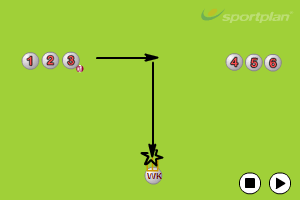
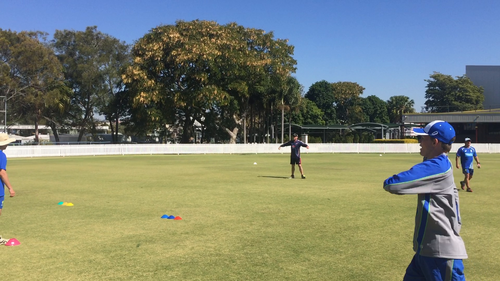
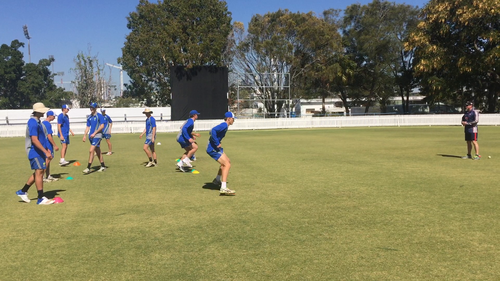
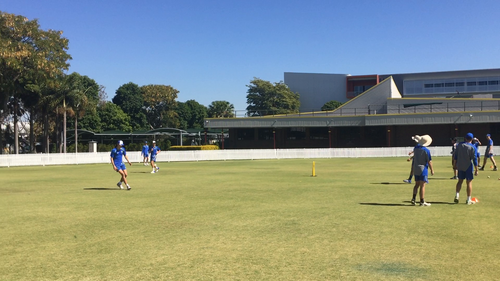
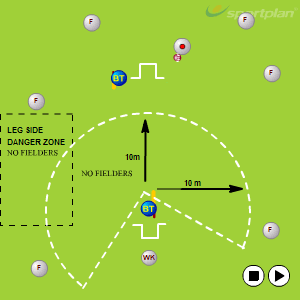
Can be completed with a single fielder or in a group up to 5. Set cones at a challenging distance - 10-15m Cones to be set in a square slightly skewed from the line of the white cone and the stump to ensure angles and distances change with each phase. Players must cut the angle of the ball from varying angles and both sides of their body, with balls moving toward, away and across them. Player starts on blue cone, coach hits ground ball toward white cone. Player collects the ball and throws back to keeper, moving to the white cone. Coach hits second ball toward yellow cone. Player moves off white cone, picks up and throws back to keeper. Coach hits third ball toward orange cone. Player moves off yellow cone, picks up and throws back to keeper. Drill continues in reverse until back at the blue cone.

COACHING POINTS

Ensure players "cut" the angle. Do not run "around" the ball. Focus on clean pick up and smooth, fast release of the throw. A batsman will be inclined to not start a run if the ball has been thrown. Ensure balls are hit at a pace and in an area that makes this challenging. The skewed square shape of this drill ensures angles change - the line which worked with the first diagonal run, may not work on the second. force the players to make this decision by varying the pace and line of the ball.

This practice has no coaching points

PROGRESSION

This practice has no progressions

READ MORE
READ LESS

JOIN SPORTPLAN FOR FREE

  • search our library of 350+ Cricket drills
  • create your own professional coaching plans
  • or access our tried and tested plans

JOIN SPORTPLAN FOR FREE

  • search our library of 350+ cricket drills
  • create your own professional coaching plans
  • or access our tried and tested plans
;

Sportplan App

Give it a try - it's better in the app

X
YOUR SESSION IS STARTING SOON... Join the growing community of cricket coaches plus 350+ drills and pro tools to make coaching easy.
LET'S DO IT