Handspring to cradle catch

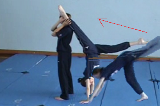
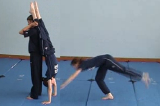
Starting situation. A face onto the side of B. Face to Side. B Side onto the front of A. Holding a cradle catch position. Gymnasts are five paces apart. Works when gymnast A starts face onto the side of gymnast B, and is five paces away from B. Gymnast B holds a cradle catch position, and is ready to move towards gymnast A. Gymnast A does a high one step - tumble step preparation into a Handspring, and holds a tense body line. Gymnast B has to time their movement towards, A in order to Cradle catch A in the early flight phase of the handspring. The aim of B is to cradle catch the body of A either side of the C of G, ie under upper thigh and around their lower back,and hold A in a straight shape.

Key 5 4 Catching
Kick up to a Handstand Balance. (forwards)

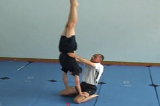
Starting situation. A Face onto the Back of B. Face to Back. B Back onto A and holding an Upright base, or a Lunge base. Works when gymnast A starts face onto the back of gymnast B and two steps away from B. Gymnast B holds either an Upright base or a Lunge base; with hands on, or just behind the shoulders, and pointing backwards, as preparation to catch the ankles of A. Gymnast A makes a long step, long reach kick up to a handstand balance against the Back of gymnast B. Gymnast B aims to catch the ankles of A and hold A in either a Vertical handstand, or a Tilted handstand balance. Note. Gymnast A may kick up into a backwards and forwards split leg handstand balance against either of the bases, to produce variations of this particular gymnastic idea.

Key 5 4 Catching

Kick up to a Handstand Balance. (forwards)

Starting situation. A Face onto the Back of B. Face to Back. B Back onto A and holding an Upright base, or a Lunge base. Works when gymnast A starts face onto the back of gymnast B and two steps away from B. Gymnast B holds either an Upright base or a Lunge base; with hands on, or just behind the shoulders, and pointing backwards, as preparation to catch the ankles of A. Gymnast A makes a long step, long reach kick up to a handstand balance against the Back of gymnast B. Gymnast B aims to catch the ankles of A and hold A in either a Vertical handstand, or a Tilted handstand balance. Note. Gymnast A may kick up into a backwards and forwards split leg handstand balance against either of the bases, to produce variations of this particular gymnastic idea.

Key 5 4 Catching

Thigh catch into handstand

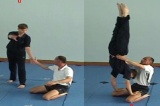
Starting Situation. A Face onto B Face to Face. B Face onto A and holding a Kneeling Squat Base. Works when gymnast A starts face onto B and three steps away. Gymnast B is face onto A, and kneeling back on their heels, holds a wide,low squat base. Gymnast A makes a one step, tumble preparation step and a strong leg kick towards a handstand position. The aim being to grasp the lower thigh of B and to kick into a handstand position. Gymnast B aims to catch the weight of A on their lower thigh, and to catch hold of the hips of A and hold A in a handstand balance. Note. This balance may be achieved slowly by reducing the distance between the gymnasts to two paces. The preparation of gymnast A now becomes a long step, long reach and powerful kick up towards a handstand. Gymnast B grasps the hips early and lifts the C of G of A into the handstand balance position.

Key 5 4 Catching

Thigh Catch to Handstand. (sideways)

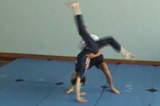
Starting situation. A upright and side onto B. Side to Side. B Side onto the Side of A and holding a kneeling squat position. Works when gymnast A starts side onto gymnast B, two steps away, and slightly forward of B. Gymnast B holds a kneeling squat position, and side onto A, as preparation to thigh catch A. Gymnast A makes a sideways kick and a long sideways lunge, as a cartwheel preparation up to the base B. The aim of gymnast A being to grasp the lower thighs of B and to leg kick strongly in order to wheel into a handstand position. Gymnast B aims to reach early with the outside hand, to lift the hip of A, and help the rotation into a handstand balance. After the lift, gymnast B grasps both hips of A to hold A in a Handstand balance. Note. This catch will work well when gymnast A is either "chest onto B" during the wheeling action; or "back onto B" during the wheeling action.

Key 5 4 Catching