
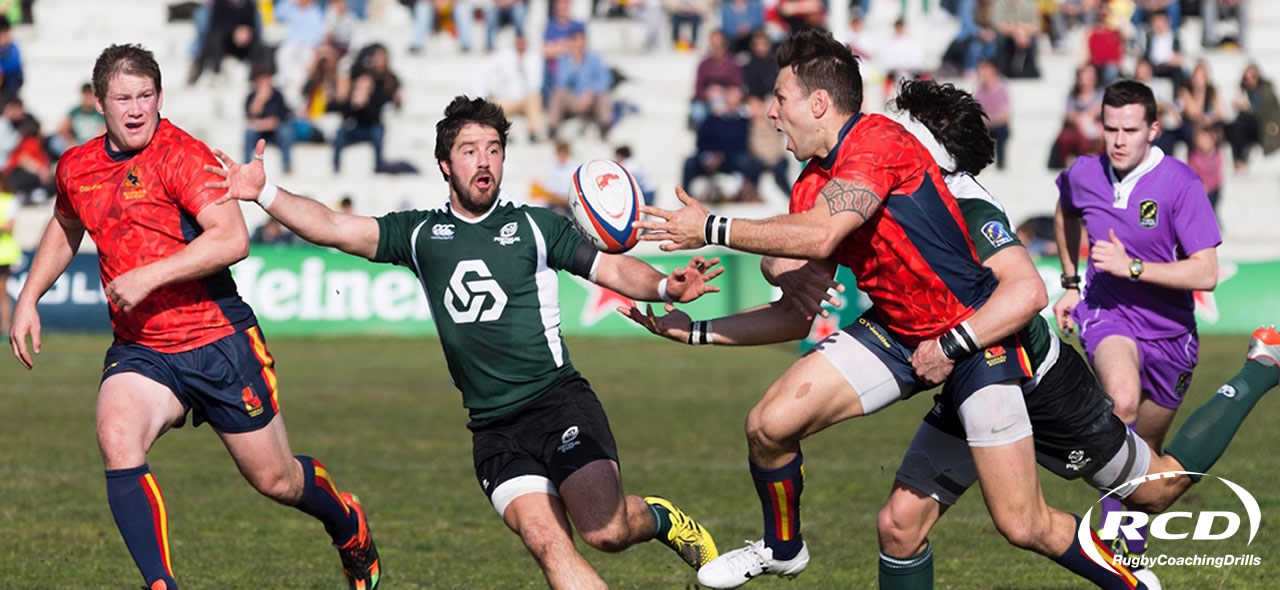
Why we must use specific practices for specific learning.
Game Play vs Specific Skill Practice
Two quotes to start us off - extra points if you know who they are (answers at the end):
We are what we repeatedly do. Excellence, then is not an act it is a habit
...in any physical activity effective practice requires repeated execution of the skill involved... there is a need to concentrate on refining skills techniques to a point where different skills become a matter of habit
The current dominant practice modality is learning through games / teaching games for understanding. This is an excellent way to develop an understanding of the context for which positional and technical skills can be applied.
 How
about the development of rugby specific skills?
How long do you spend on the lateral pass, half-back pass,
kicking variety, lineout throwing in etc. You can break these down even further, why not spend time working on the many skills surrounding catching the ball? It may seem simple, but it can go a long way!
How
about the development of rugby specific skills?
How long do you spend on the lateral pass, half-back pass,
kicking variety, lineout throwing in etc. You can break these down even further, why not spend time working on the many skills surrounding catching the ball? It may seem simple, but it can go a long way!
Very often coaches fail to address the technical aspects, mainly due to time constraints. Some also fail also to apply simple coaching methodology - an understanding of competence. Skills can very often breakdown in a game- but this is rarely addressed. This failure of ability to perform is a demonstration of a lack of competence in the learning of that skill and the coach needs to be aware of this pathway. Here's a simple breakdown of varying skill levels:
Try and guide your players through these skill levels
UNCONSCIOUSLY INCOMPETENT... they don't know what they are doing is wrong, and they perform the skill incorrectly.
CONSCIOUSLY INCOMPENTENT... they start to be aware that their actions are wrong and that they are performing the skill incorrectly but cannot change the outcome.
CONSCIOUSLY COMPETENT... they can perform the skill properly with the correct outcome but they have to think about the execution of it. This often slows down decision making and performance.
 UNCONSCIOUSLY COMPETENT... .they are performing
the skill correctly in the right situation without any cognitive
process required. It becomes an automatic process, these
performers are often perceived as having more time in the decision
making process, therefore displaying higher competence. Simply
put; through spending less of their valuable brain power on the
motor skill, they see events earlier can therefore make the right
decision at the right time. Here's Richard Wigglesworth on why repetition is the key to developing skills!
UNCONSCIOUSLY COMPETENT... .they are performing
the skill correctly in the right situation without any cognitive
process required. It becomes an automatic process, these
performers are often perceived as having more time in the decision
making process, therefore displaying higher competence. Simply
put; through spending less of their valuable brain power on the
motor skill, they see events earlier can therefore make the right
decision at the right time. Here's Richard Wigglesworth on why repetition is the key to developing skills!
Quote answers:
1) Aristotle
2) Sir Alex
Ferguson... can they be wrong?
If you are looking to set up a school or club account
with RCD then please get in touch with info@rugbycoachingdrills.com
