
Martin Johnson's 8 Tips For Successful Rugby Coaching
- October 24, 2013
- John Nurse
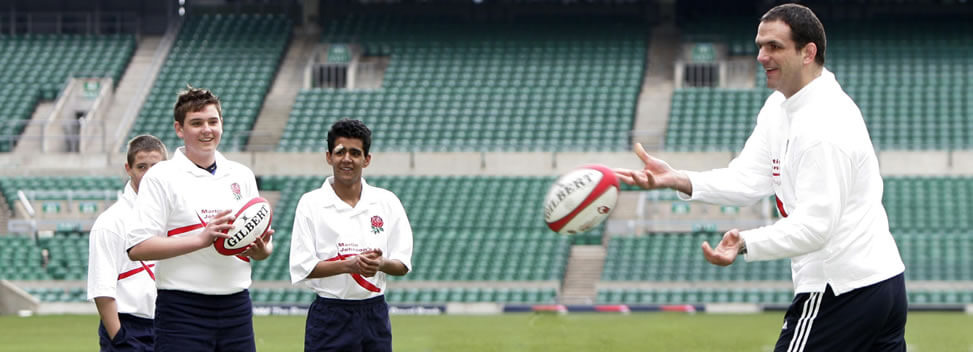
- Drills teach technique not decision making
Drills can only teach children the proper techniques for skills such as kicking, catching, passing etc. Drills can not develop the ability to make the right decision in a game â when to kick and where to pass. A coach, who prepares the squad through sessions filled with drills, is only working at one part of the game. - Encourage team play
A difficult job for any coach is to coach young players the need to modify their individual styles for the good of the team. Conditions and limits must be set for players to experience good teamwork. Try limiting the time that each player can have running with the ball. After time you will see how team-mates learn to make themselves available for passes and support the player on the ball. The ball carrier will also learn to look up and scan for support in order to make the right decision. - Keep children moving
Children should never be standing around waiting in a queue for their turn at a drill. If children are resting for more than 20 seconds to restart the drill, then try and set up another drill again alongside the first. Alternatively set up a second drill of a different skill that the children can do whilst waiting in line. Such as quick hands and passing the ball. - A good balance of hard work and fun
Always remember that fun is definitely part of each game and practice! If you run your team into the ground during hard practice sessions and never let them have a chance to smile, relax, or blow off some steam, you'll soon discover that you have transformed play into work for the children. Let the kids get their work done on the field and then let them have some time off a bit in practice. Come game time, you'll find that they will be more focused. - Lead by example
As a coach you should lead by example to gain the trust and respect of the kids. Coaches of children are seen as role models and therefore the position carries responsibility. How you behave, dress and your attitude all set an example. These high standards will rub off. - Concentration
Children's concentration spans are known to be less than adults. Having the full concentration of the children will increase the value of all exercises and drills considerably. Be realistic, and be ready to move on to the next drill when concentration wanes. A number of skills exercises each done for less than 3 minutes at maximum intensity provides a superior training session compared to one exercise done time after time. - The importance of ball skills
You cannot over-emphasize the importance of ball skills. Encourage parents and children to buy a ball and carry it around everywhere they go. They need to get used to the ball's feel, the way the ball moves, in short to become totally familiar with it. Begin every training session with handling drills. These can be as easy or as difficult as is appropriate to bring the team to the level of confidence and enthusiasm that you want. - Kids don't like fitness
Kids don't actually like doing fitness/conditioning drills, so the best way to motivate them is to conceal it. The lesson is to try and combine the conditioning work within the drills. If you want their support at the breakdown to improve, do your normal bag work, but have the kids move onto the next bag at a higher intensity so they are used to this during a game. Also reduce rest times. Whatever you coach on the park will be translated onto the pitch so how you organise the conditioning sessions is essential.
Related Content
 |
 |
|
|
|
|