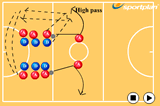
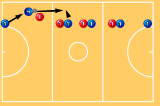
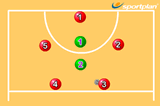
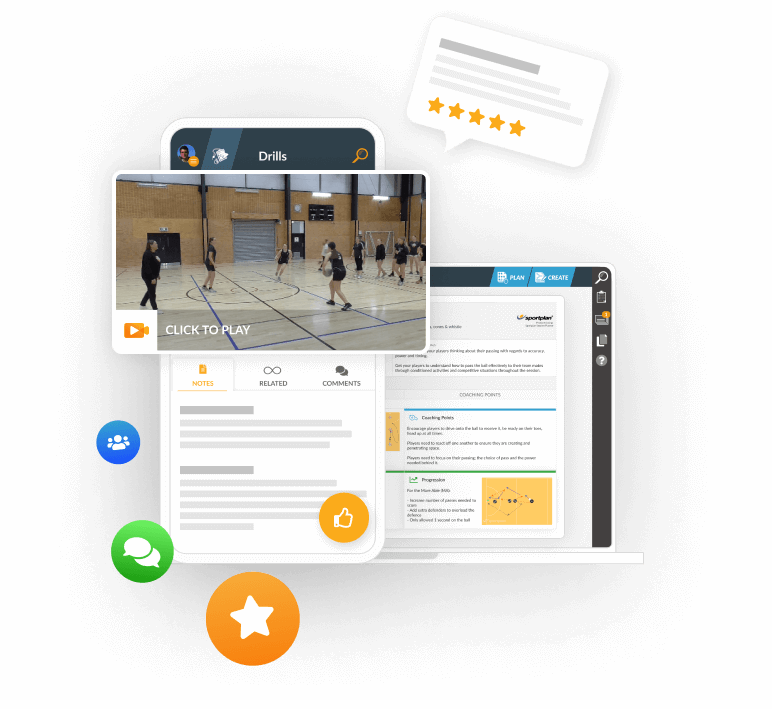
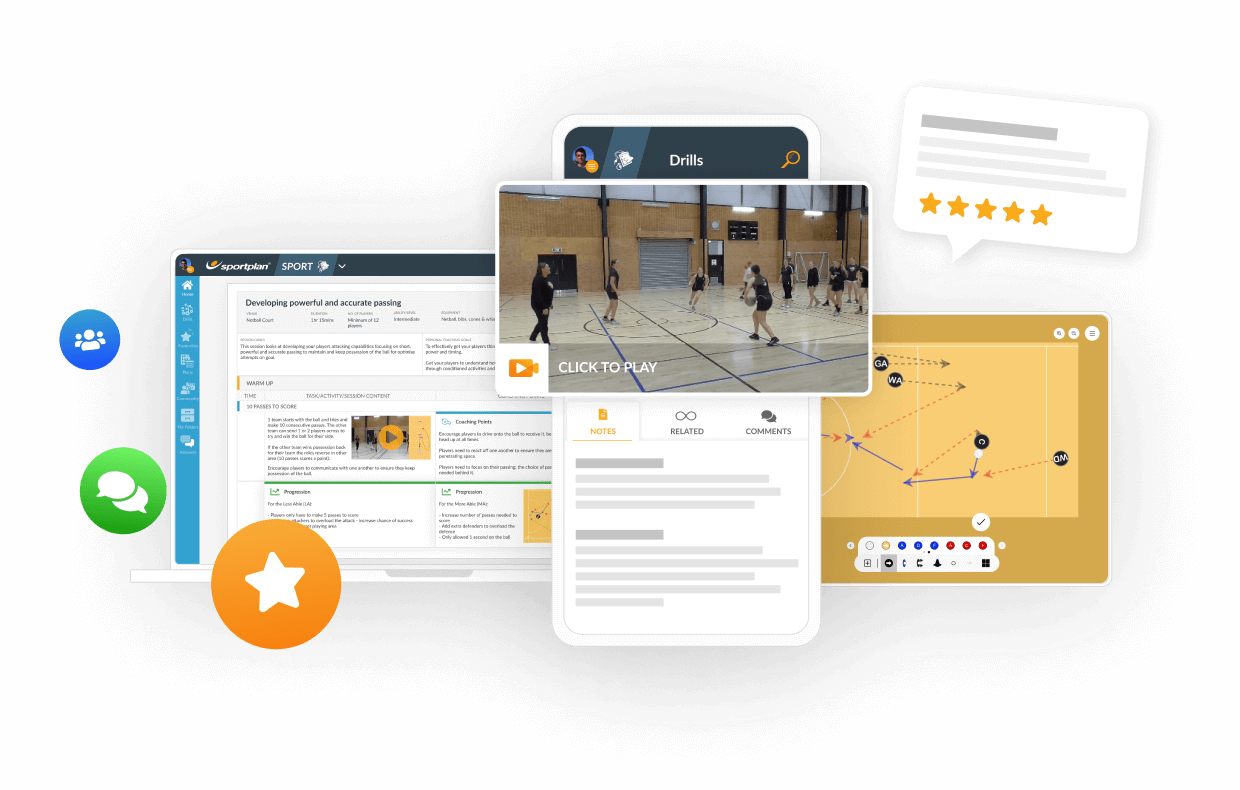
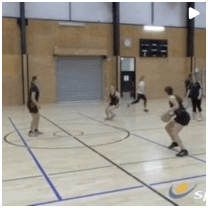
Using cones create two end-zones either side of the middle 3rd on the court and divide your players into 2 equal teams.
One player starts with the ball in their end zone and starts the game with a pass.
The team in possession of the ball has to always keep one player in the oppositon's end zone - This players has to be marked by 2 defenders.
The rest of the players play in the centre, this creates an overload for the team in possession.
The aim of the game is for the team in possession to score as many points as possible before losing possession or within a time limited.
A point is scored with every pass and 5 points are scored for every pass made to the player in the end zone.
Everytime the ball is passed into the zone the game continues but reverses in the other direction (players will need to react quickly to rearrange themselves).
Once your players get used to the game you can allow the defending team to decide how they defend, including if they want to play 2 defenders in the end zone.
in more ways than one
 sportplan_netball

in more ways than one
sportplan_netball
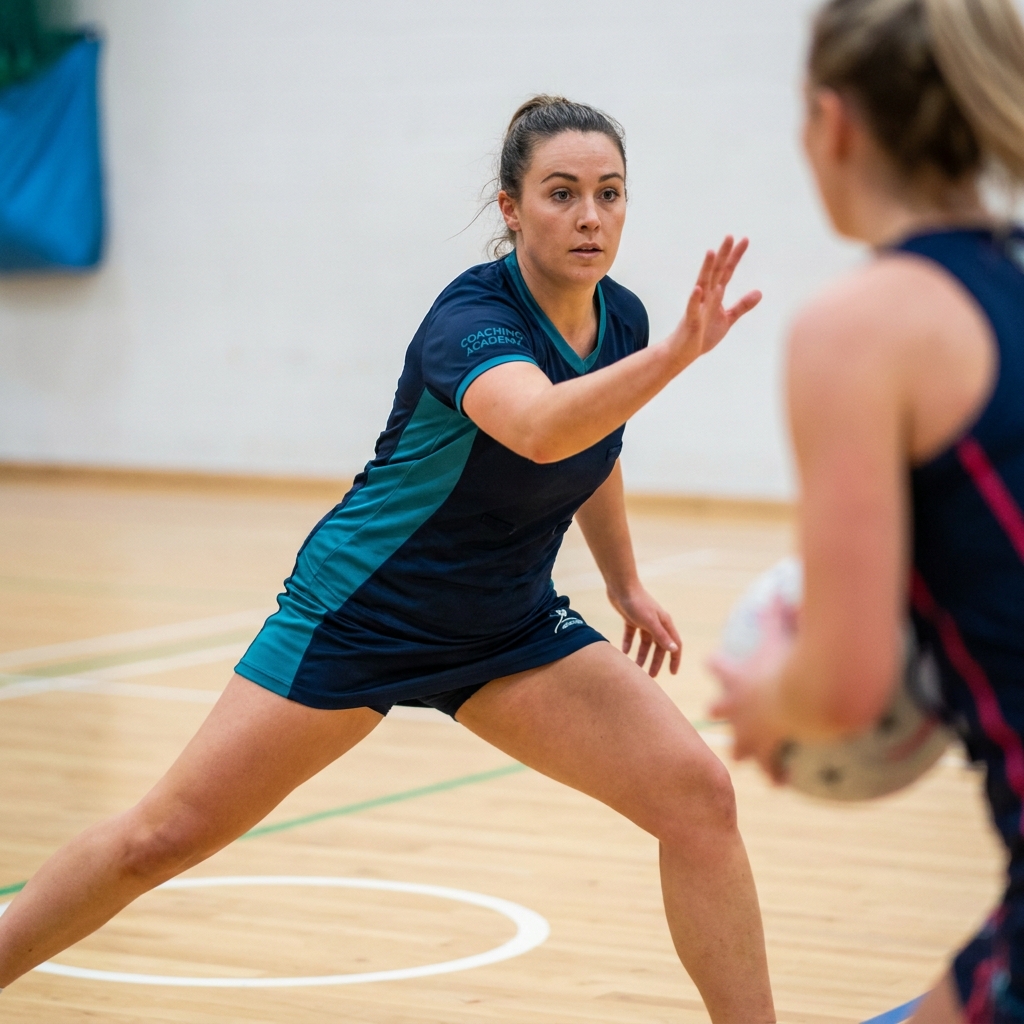
Split circle defence is the system the top three NSL teams have built their identity around in 2026. The Goal Keeper and Goal Defence divide the circle into zones, switch in synchrony, and make every passing option look risky. Here is how to coach it.
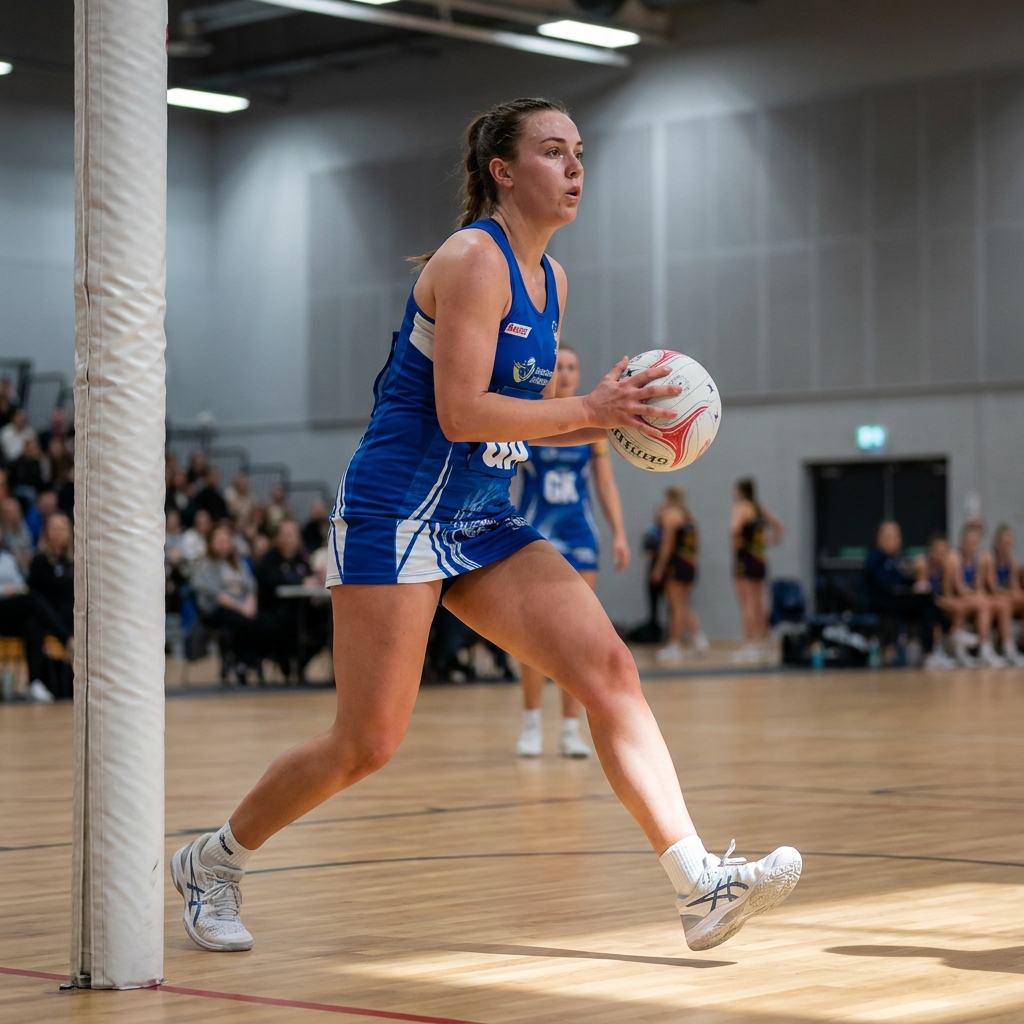
Most netball shooters know how to shoot. The difference at the top is who can shoot when it counts. A structured 10-minute pre-game mental routine is the most under-used performance tool in club netball - and it is the simplest to teach.
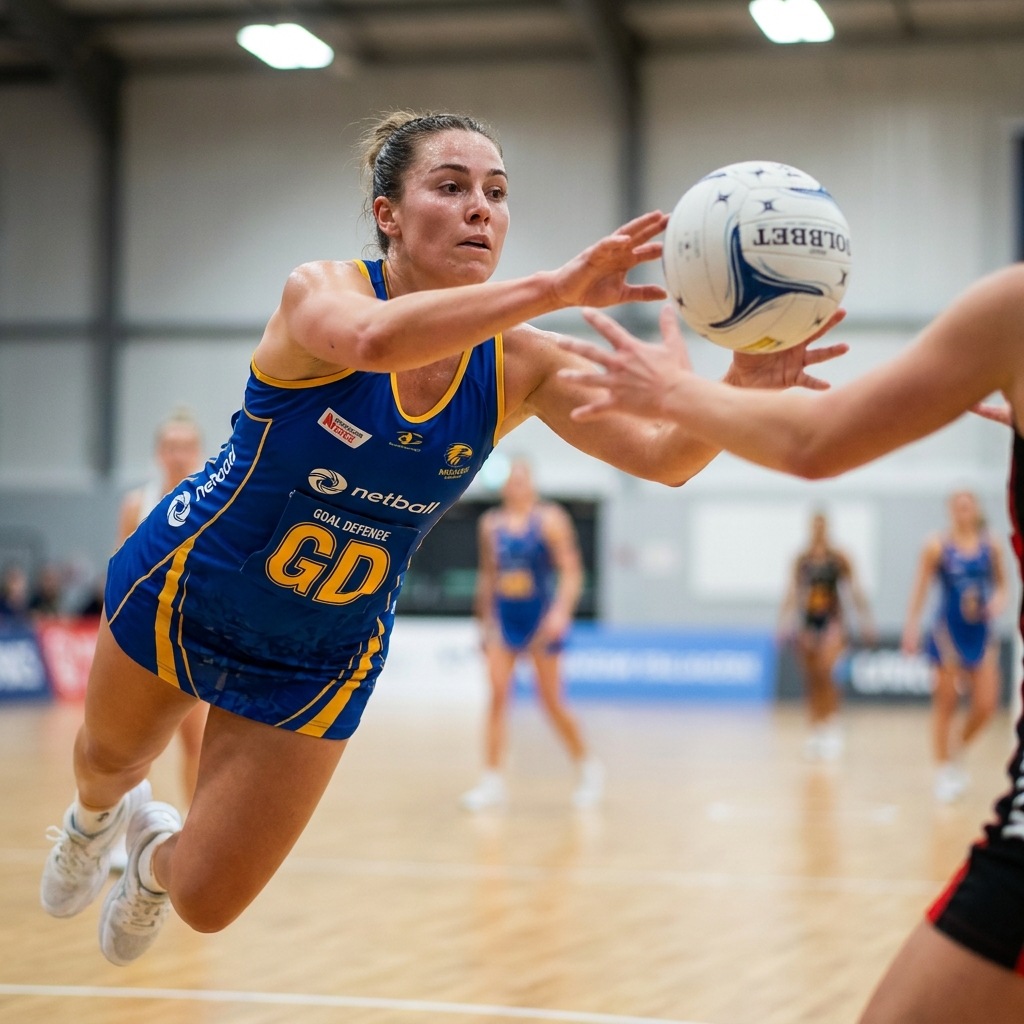
The best Goal Defences in the 2026 NSL season are intercepting more than ever. The reason is not raw athleticism. It is a deliberate shift from chasing the attacker to driving into the flight path of the ball. Here is how to coach it.