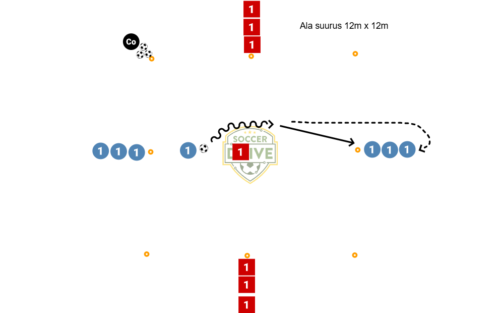
1) 3 grids in line with each other with the 2 end ones being larger squares and the middle a slightly smaller rectangle. Adjust size to competency. 5v2 in active grid. 2 defenders (reds) against the 5 attackers (yellow). The attacking team has to try get one of their players to run with the ball from his square through the red gates towards the end square and once reaching there play a pass to the blue team. He is unopposed in the channel (red gate to red gate). Once the ball is played to the blues the other 2 reds now defend in that square with the blues trying to achieve the same objective. It should always be a 5 v 2 with the player who runs with the ball joining the opposite grid every time. Each team gets a turn at defending. Rotate every few minutes depending on ability of defending team to win the ball back. Defending team stays in for set time. Count how many times they win the ball and also how many times the attackers get the ball across. 2) Level up or down. Start with 1 defender. Increase or decrease field size.
This practice has no coaching points
This practice has no progressions

in more ways than one
 sportplan_football


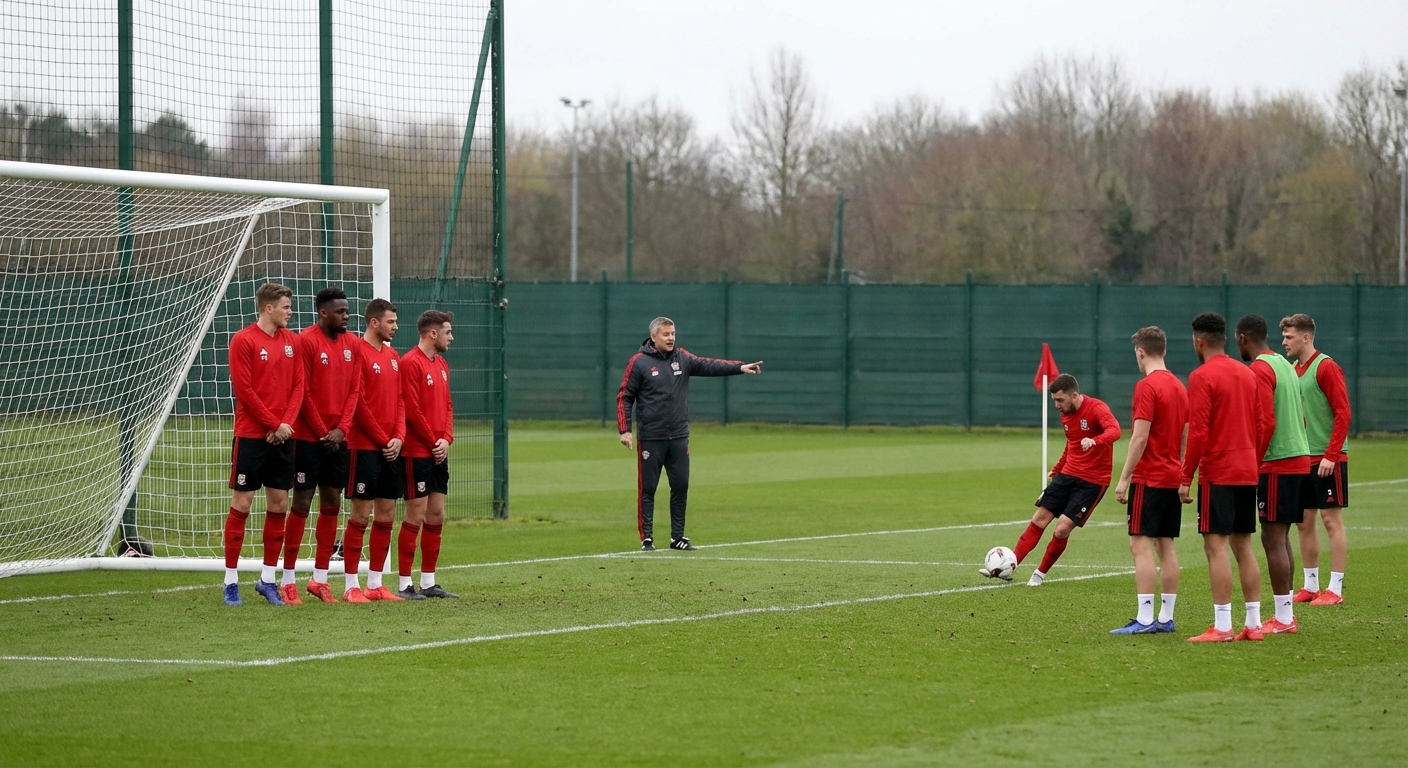
Set pieces account for roughly a third of all goals in football, yet many coaches spend surprisingly little time coaching defensive organisation at corners and free kicks. This article compares zonal and man marking systems, explores hybrid approaches, and provides a practical session structure for building set piece resilience into your team.
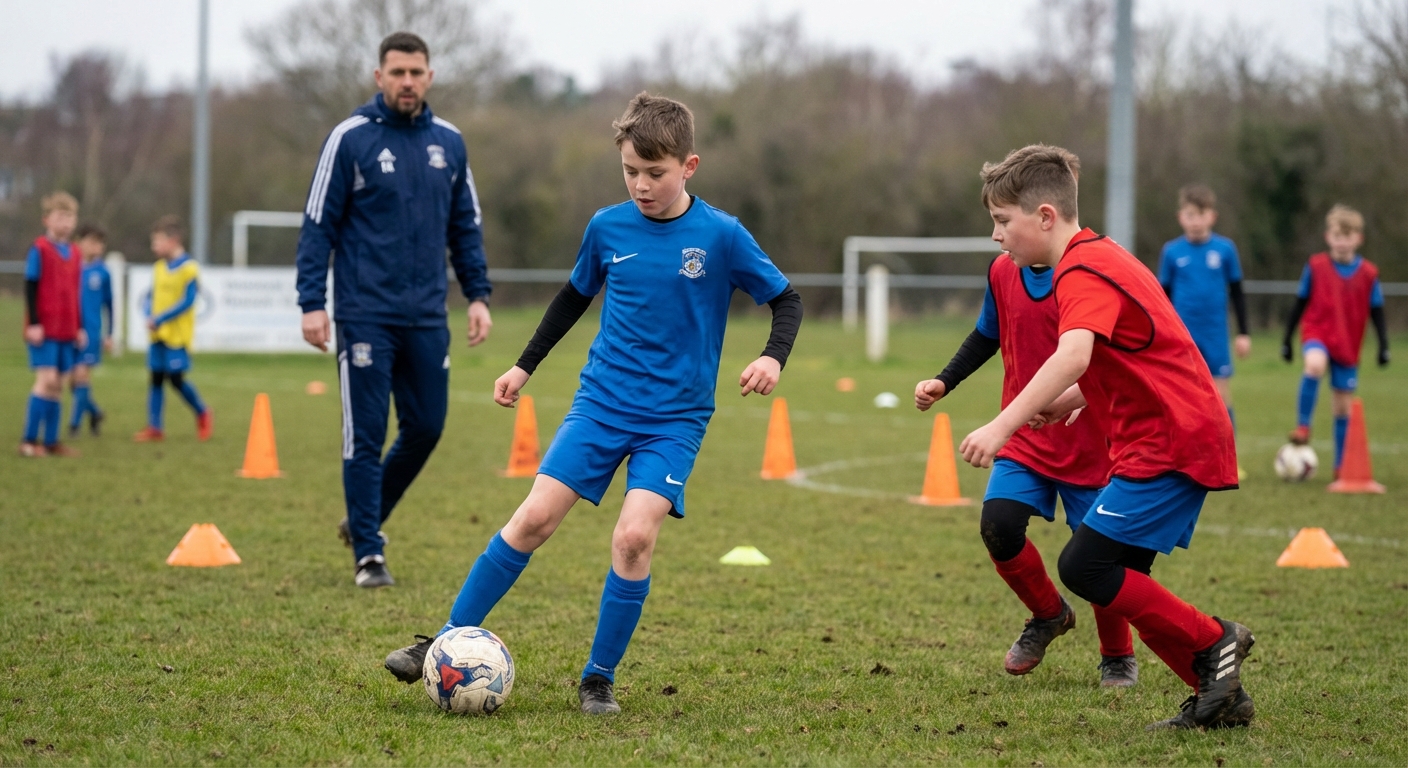
A player's first touch determines everything that follows: whether they can play forward, turn, or simply retain the ball. This article explores why training first touch in isolation is not enough, and how to design sessions that develop this critical skill under realistic game pressure.
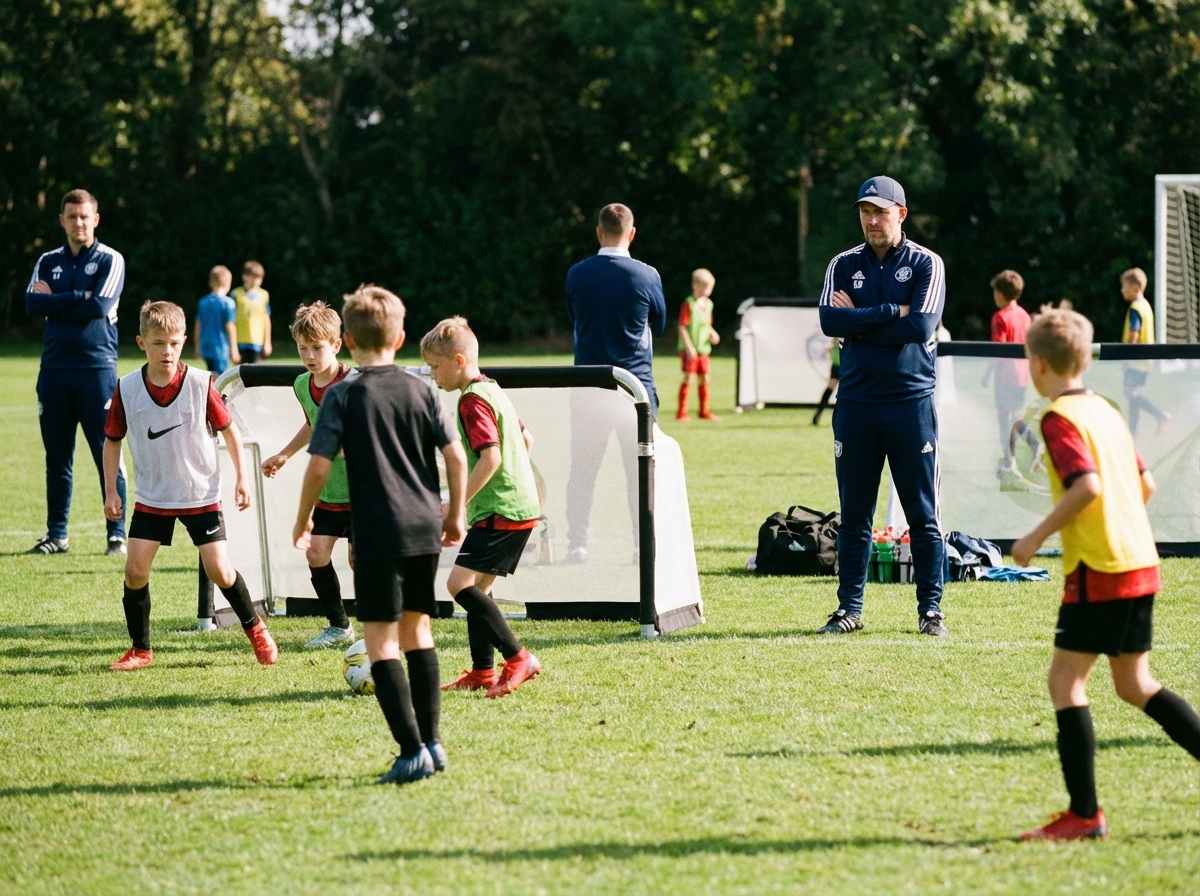
The coaching methodology revolution sweeping grassroots football - and how to implement it at your club this season.